1970s-era stagflation talk is rising on Wall Street, Axios’ Emily Peck reports.
Investors fret a comeback for the dreaded pairing of high inflation and high unemployment. The fear is being fueled by a lousy jobs report and rising oil prices.
Yesterday alone, at least six investment managers and Wall Street analysts warned of “stagflationary” concerns.
Chicago Fed President Austan Goolsbee noted Friday that rising unemployment on top of an oil price shock creates “exactly the kind of stagflationary environment that’s as uncomfortable as any that faces a central bank.”
Analysts and media last tossed out the “s” word when inflation revved up in 2021.
The term “stagflation” really took off the next year, when Russia invaded Ukraine, spiking energy prices.
Many pundits predicted a recession that never materialized.
Today is different for two reasons:
The job market is more sluggish than it was a few years ago.
The oil shock from the Iran war is potentially magnitudes larger than that from Russia’s invasion, taking 20% of the global oil supply off the board.
Reality check: It’s not the ’70s.
Economists believe the Iran war will slow economic growth and cause an increase in inflation — but not to the extremes seen back then.
The bottom line: Michael Madowitz, principal economist at the progressive Roosevelt Institute, said this shock is “probably just going to slow the economy down, rather than trigger some long wave of inflation.”Go deeper.
2. Meta scoops up Moltbook
Illustration: Brendan Lynch/Axios
Meta has acquired Moltbook, a viral social network designed for AI agents, Axios’ Ina Fried scoops.
The deal brings Moltbook creators Matt Schlicht and Ben Parr into Meta Superintelligence Labs.
Meta didn’t disclose Moltbook’s purchase price.
The deal is expected to close mid-March, Meta says, with the pair starting at MSL on March 16.
A Meta representative tells Axios: “The Moltbook team joining MSL opens up new ways for AI agents to work for people and businesses.”What is Moltbook?
Oil prices and food prices move in lockstep with energy prices affecting every stage of the food supply chain. We look at how soaring oil prices due to the US-Israeli war on Iran will impact food cost http://aje.news/utrapg
CBS News chief Washington correspondent Major Garrett sat down with Defense Secretary Pete Hegseth in Washington, D.C. They spoke on Friday, March 6th about the state of the war with Iran, potential American casualties, what an Iranian surrender could look like, and more. Editor’s note: The video above is an extended version of the interview that was broadcast on 60 Minutes on Sunday, March 8, 2026. This extended version was condensed for clarity. “60 Minutes” is the most successful television broadcast in history. Offering hard-hitting investigative reports, interviews, feature segments and profiles of people in the news, the broadcast began in 1968 and is still a hit, over 50 seasons later, regularly making Nielsen’s Top 10.
Can’t-miss innovations from the bleeding edge of science and tech Email address Sign Up
Tankers in the Strait of Hormuz have ground to a halt, cutting off much of the world from vital oil supplies due to the United States’ war on Iran.
Dwindling supplies and cut output by oil producers are sending rippling effects across global markets. As S&P Global vice chair Daniel Yergin argued in a Financial Times essay, it’s looking like a “nightmare scenario” is now unfolding as skyrocketing oil prices “send the world economy plummeting into a deep recession” — a reckoning that’s been decades in the making.
The Strait of Hormuz has turned into a major chokepoint, with around 20 percent of the world’s liquefied natural gas and oil supply typically traveling through its waters.
Now that tankers aren’t taking the risk of being targeted by Iranian drones or weaponized speedboats, that crucial artery has been largely cut off. While Yergin argues Asia could be hit hardest sooner, global oil and gas markets across the world will be “grappling with the crisis.”
On Wall Street, grim effects are playing out, with Dow, S&P 500, and Nasdaq futures plummeting. Both the Dow Jones Industrial Average and S&P 500 slid by a percent or so when trading resumed Monday morning.
Put simply, investors are seriously on edge as they fear the worst: a prolonged war in Iran causing major oil shortages.
Worse yet, domestically, a “flashing red warning light” went off last week when the US Bureau of Labor Statistics issued its February jobs report, finding that the economy had shrunk by 92,000 jobs — far more than expected, raising the unemployment rate to 4.4 percent.
While it sounds like a perfect storm, the budding crisis takes place in a very different economic order compared to previous oil supply shocks.
It’s a precarious moment. And President Donald Trump indicated over the weekend that the administration won’t be tapping into the Strategic Petroleum Reserve to ease the pressure.
“We’ve got a lot of oil,” he told reporters on Air Force One. “Our country has a tremendous amount. There’s a lot of oil out there. That’ll get healed very quickly.”
The Trump administration also promised a $20 billionreinsurance — insurance for insurance — program to get oil flowing through the Strait of Hormuz again.
But whether the president’s reassurances will be able to calm the situation as Wall Street sees red remains to be seen, as the end of his war on Iran is seemingly nowhere in sight.
The “world is looking at the biggest disruption in oil production in history as well as a resounding shock to global gas markets,” Yergin concluded. “The key question for global energy markets now is the duration of this explosive war.”
I’m a senior editor at Futurism, where I edit and write about NASA and the private space sector, as well as topics ranging from SETI and artificial intelligence to tech and medical policy.

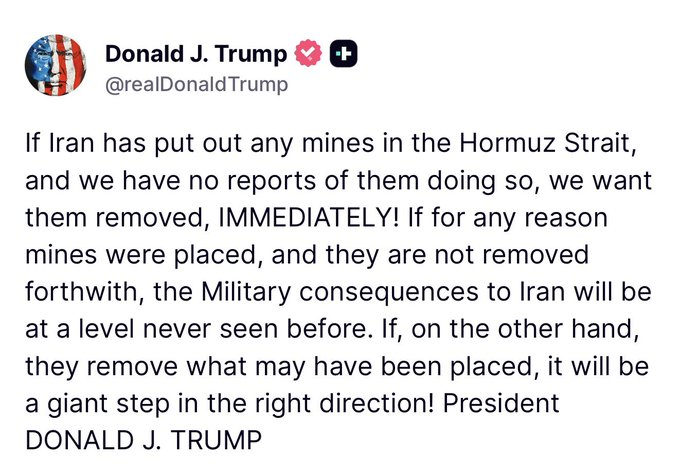
 Illustration: Sarah Grillo/Axios
 Meta scoops up Moltbook
 Illustration: Brendan Lynch/Axios