Become a Big Think member to unlock expert classes, premium print issues, exclusive events and more: https://bigthink.com/membership/?utm_… Acclaimed psychiatrist Bessel van der Kolk, author of “The Body Keeps The Score,” discusses the widespread existence of trauma and how it manifests in our bodies. ►Get Big Think+ for Business Guide, inspire and accelerate leaders at all levels of your company with the biggest minds in business. https://bigthink.com/plus/great-leade… Bessel van der Kolk has studied trauma for 50 years. Though we once considered trauma exclusive to veterans and people growing up in extreme circumstances, we now know it is an extremely common experience. Van der Kolk discusses the impact of trauma and the pathway to healing. Read the video transcript ► https://bigthink.com/series/legends/v…
Mar 17, 2026 The Brendan O’Neill ShowGo to PIAVPN.com/Brendan to get 86 per cent off from our sponsor, Private Internet Access, with four months free! Melanie Phillips – author of Fighting the Hate: A Handbook for Jews Under Siege – returns to The Brendan O’Neill Show. Melanie and Brendan discuss Iran’s decades-long war on the West, the insanity of the ayatollah apologists and why anti-Zionism is indistinguishable from anti-Semitism.
Join us for the spiked summit, our biggest ever live event, on Saturday 27 June in Westminster featuring Konstantin Kisin, Lionel Shriver, Katharine Birbalsingh, Toby Young, Allison Pearson, Brendan O’Neill, Tom Slater and more speakers to be announced. Get tickets: https://www.spiked-online.com/event/s… Become a spiked supporter to access all of spiked’s exclusive content, and get unlimited, ad-free reading and other perks: https://www.spiked-online.com/support/
Spycraft (Netflix, 2021) is actually an 8-episode docuseries (each ~29–38 minutes), not limited to three episodes.
Each standalone episode explores a specific aspect of espionage tradecraft, using expert interviews (CIA/FBI retirees, historians, actual spies), reenactments, archival footage, and clever animations/graphics to trace techniques from WWI-era origins to modern cyber/hi-tech eras.
netflix.comYou likely mean the first three episodes (the most bingeable starting block, all released together on Jan 20, 2021).
I’ll outline and elaborate on the spycraft details in those, then cover Alan Turing + related figures/topics (which appear in Episode 7), and finally give a deep dive on Stuxnet (also featured in Ep 7 as a capstone modern example).
Episode 1: “High-Tech Surveillance and an Eye in the Sky” (29 min) – Eavesdropping & Aerial ReconCore spycraft theme: If you can listen/watch undetected, you control the information war. The episode shows the endless ingenuity in passive/active bugs, from analog to satellite/drone eras. Key examples elaborated:
The Thing (Great Seal Bug, 1945): Soviets gifted the US ambassador a carved wooden Great Seal plaque hiding a passive cavity resonator (no battery/power needed – activated by external radio beam). It bugged the Moscow embassy for years until discovered in 1952. Classic “gift horse” Trojan. https://artifacts.grokusercontent.com/third-party-imagereddit.com
US Embassy Moscow rebuild (1980s): Soviets built it with hundreds of microphones in concrete columns; US ripped out top floors and rebuilt.
US counter-bug on Russian embassy (DC): NSA/FBI modified a drainpipe with thicker walls hiding transmitter + explosive + wire spool. Timed rain/thunder release let FBI catch the wire and connect all mics inside.
Other gadgets: Bullet with tiny mic fired into trees; shoe-heel mic; “eye in the sky” evolution – WWI observation balloons/planes → U-2 → satellites → modern micro-drones (China’s bird/hawk-disguised ones that flock with real birds). Takeaway spycraft lesson: Surveillance is creative engineering + deniability. Passive devices beat detection; air-gapped buildings still fall to insider construction tricks.
Episode 2: “Deadly Poisons” (31 min) – Covert Assassination. Core theme: When the goal is elimination (not intel), toxins provide plausible deniability (“natural causes” or untraceable).Key examples:
Ricin umbrella murder (1978): Bulgarian dissident Georgi Markov stabbed with ricin pellet from KGB-modified umbrella on London bridge; died in days.
Polonium-210 (2006): Ex-FSB agent Alexander Litvinenko poisoned in London tea (traceable via alpha radiation but hard to detect initially); points to Russian state.
Novichok (2018 Skripals + 2020 Navalny): Nerve agent smeared on doorknob/undies; designed to be binary (mixes on contact) and hard to trace. Episode highlights Soviet/Russian “wet work” labs and how poisons evolved from WWII-era to engineered “incapacitants.” Spycraft details: Delivery (umbrella, spray, food), forensic evasion, state attribution challenges. Modern twist: “non-lethal” toxins for blackmail or incapacitation.
Episode 3: “Sexspionage” (33 min) – Honeypots & BlackmailCore theme: Sex + emotion = ultimate human vulnerability for recruitment/blackmail (still used today despite tech). Key examples:
East German “Romeos” (Cold War): Stasi trained handsome agents to seduce lonely West German secretaries in Bonn ministries, marry them, extract NATO docs for years.
Modern: Honeytraps via dating apps, compromise (e.g., compromising photos), and “swallow” operations. Also covers female agents using the same playbook. Spycraft lesson: MICE principle preview (see Ep 8) – Compromise (sexual) is powerful but fragile. Episode shows evolution from ancient courtesans to digital-era.
Broader Series Context & Alan Turing + Others (Especially Episode 7: “The Code Breakers”, 36 min). The full series rounds out with:
Ep 4 Clandestine Collection (tiny bugs in lightbulbs, micro-cameras).
Ep 5 Covert Communication (dead drops in fake rats/poo, one-time pads, burst transmissions).
Ep 6 Special Ops & Saboteur (Saddam capture, bin Laden raid).
Ep 8 Recruiting (MICE: Money, Ideology, Compromise, Ego – with real turned spies like Aldrich Ames).
Alan Turing & codebreaking (Ep 7): Traces encryption from George Washington’s cipher wheel (Revolutionary War) → Jefferson wheel → mechanical → digital. Highlights WWII Enigma machine (German U-boat codes). Turing (mathematician at Bletchley Park) designed the Bombe electromechanical device to test Enigma rotor settings rapidly – cracking ~3,000 messages/day, shortening war by 2+ years (Ultra intelligence). Episode mentions Turing’s role but note: one review flags an inaccuracy claiming he built Colossus (actually Tommy Flowers’ team for Lorenz cipher; Turing’s was Bombe). https://artifacts.grokusercontent.com/third-party-image
Other figures/topics in Ep 7: Early American codes, WWII Allied breakthroughs, then leaps to computer-era (public-key crypto) and offensive “code breaking” via malware.This leads directly to Stuxnet (covered as pinnacle of modern cyber spycraft).
Detailed Breakdown of Stuxnet (Featured in Ep 7 as Cutting-Edge Example). Stuxnet is widely called the world’s first cyber weapon – a sophisticated computer worm (not just virus) discovered in 2010 but deployed ~2007–2010. Believed joint US-Israel operation (“Olympic Games”) to sabotage Iran’s nuclear program without bombs or troops. hollywoodinsider.com +1How it worked (step-by-step genius):
Delivery: Air-gapped target (Natanz uranium enrichment plant – no internet). Introduced via infected USB stick (likely insider or supply-chain trick). Used 4 zero-day exploits (unpatched Windows holes, rare and expensive).
Payload: Once in, it subtly altered centrifuge speeds (e.g., ramped 1,064→1,410 Hz then back, or 2 Hz variations) while feeding fake “normal” sensor data to operators. Caused physical destruction (centrifuges tore themselves apart) over months.
Stealth/Deception: Rootkit hid itself; root certificate forgery made it look legitimate; updated itself over time. Escaped lab accidentally, infecting global PCs (hence discovery by Belarusian firm).
Impact & spycraft significance:
Destroyed 1,000 of ~9,000 centrifuges (20% setback to Iran’s program, bought years of diplomacy time).
First known malware causing physical kinetic damage (cyber-to-real-world bridge).
Cost: ~$2B+ development (nation-state level).
Lessons: Air-gapping fails vs. insiders/USB; SCADA/ICS systems vulnerable; attribution hard (no fingerprints initially); opened Pandora’s box for cyber warfare (now Russia/China/N. Korea have similar tools).
spectrum.ieee.org The series positions Stuxnet as the evolution of “code breaking” from defensive decryption (Turing) to offensive sabotage – pure spycraft in the digital age. Overall series vibe: Entertaining, accessible, non-sensationalized look at real tradecraft (far more inventive and human than Hollywood). Experts emphasize creativity + patience over gadgets alone.
Highly recommended if you enjoyed the first three – the whole thing flows like a spy manual. If you want deeper dives on other episodes (e.g., dead drops in Ep 5 or MICE in Ep 8) or specific clips/transcripts, let me know!
Professor Jeffrey Sachs says decades of conflict across the Middle East can be traced back to Israeli Prime Minister Benjamin Netanyahu's 30-year strategy known as "A Clean Break." pic.twitter.com/RAlcAFYWRi
In this extraordinary episode, Nachi Gordon sits down with Glenn Cohen — former chief psychologist of the Mossad, helicopter pilot, and trauma expert — for one of the most riveting conversations ever featured on Meaningful People. From rescuing soldiers in Lebanon to counseling hostages freed after October 7th, Glenn has witnessed the darkest sides of humanity — and the boundless strength of the human spirit. He shares powerful firsthand accounts from meeting newly released hostages, insights into Mossad’s secret world, and the psychology of resilience that enables ordinary people to do the impossible. With candor and compassion, Glenn reveals how people survive the unimaginable — not by avoiding pain, but by growing from it. He explains the concept of post-traumatic growth, the coping tools that saved lives in captivity, and why he believes every person is capable of far more than they think. This is not just a story about Israel, trauma, or espionage — it’s a masterclass in faith, courage, and the strength embedded in the Jewish soul.
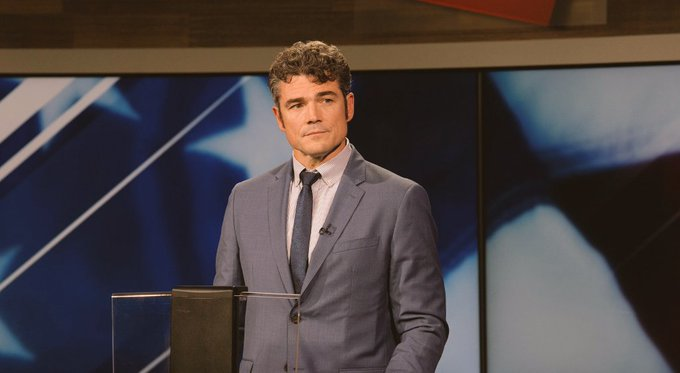
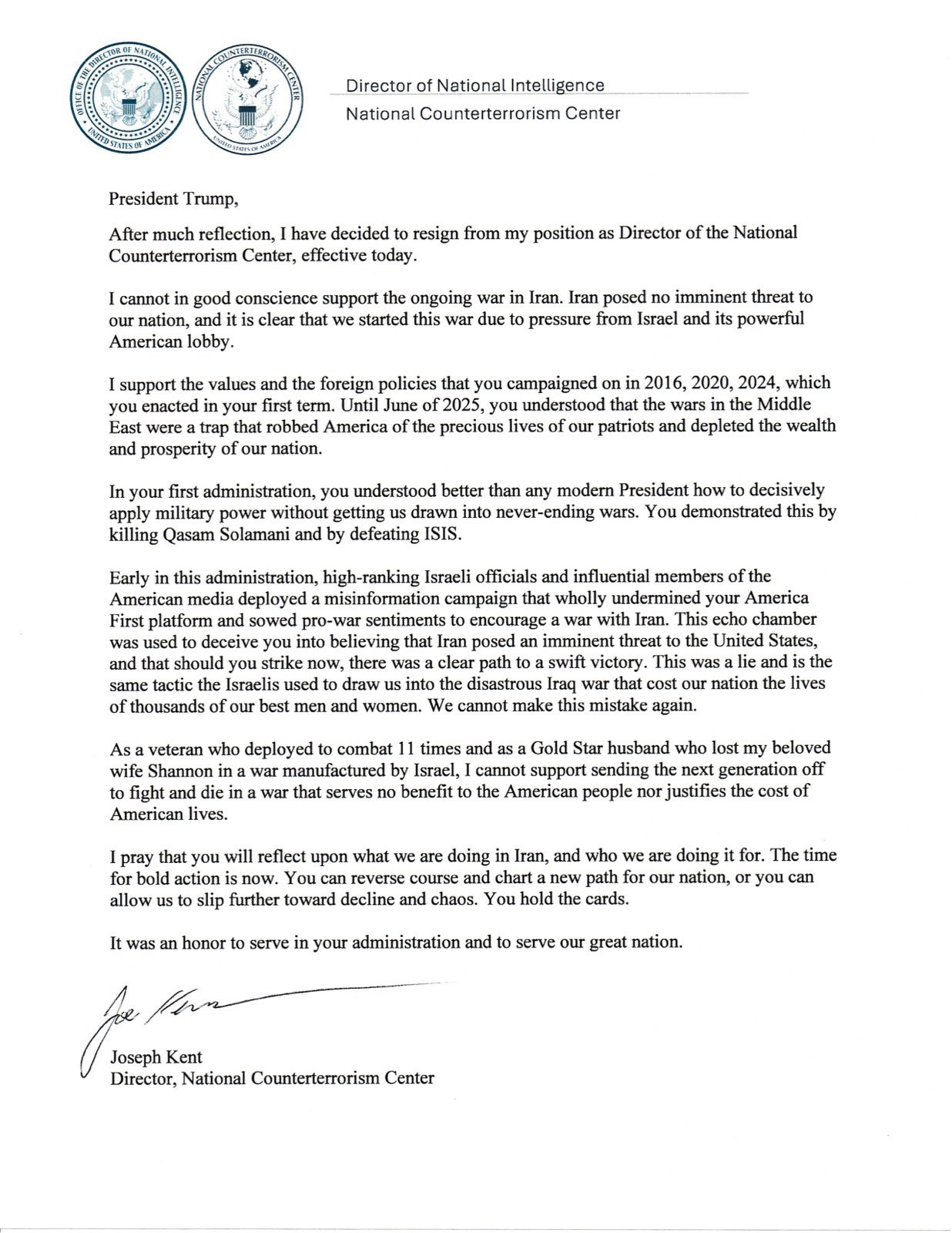
First high-ranking official leaves the Trump administration over the Iran War Joe Kent, head of the US National Counterterrorism Center: “I cannot in good conscience support the ongoing war in Iran. Iran posed no imminent threat to our nation, and it is clear that we started this war due to pressure from Israel and its powerful American lobby.”
Mar 17, 2026The war in the Middle East has now entered its third week and shows no sign of ending any time soon. Oil prices have soared and transatlantic relations between the US and its allies are strained. So what are President Trump’s options now? And will the Europeans support him in policing the strategically important Strait of Hormuz?
00:00 – The Economic Fallout of the Iran War 03:11 – Trump’s Growing Frustration in Washington 04:03 – Shifting Timelines and Unclear Military Objectives 06:25 – Why the Strait of Hormuz Controls Global Oil 09:23 – International Refusal: Trump’s Plea for Help 13:13 – Strategic Leverage: The Attack on Kharg Island 18:26 – Transatlantic Rupture: Starmer vs Trump 26:02 – The Long Game: US Energy Independence This podcast was brought to you thanks to the support of readers of The Times and The Sunday Times. Subscribe today: http://thetimes.com/thestory Guest: George Grylls, Washington Correspondent, The Times.
Still, the millennial CEO has had a hard time building out an AI team he’s happy with, laying off rounds of AI developers after the hiring spree. His relationship with AI head Alexandr Wang has also grown tense as of late, with sources telling the Financial Times in December that he finds Zuckerberg’s micromanagement to be suffocating.
Meanwhile, the expenses for Meta’s enormous spending commitments to build out AI infrastructure are continuing to balloon, leaving the company with major bills to pay. The company is projected to spend up to $135 billion in AI-related expenses in 2026 alone.
Now, as inside sources told Reuters, the company is planning to conduct yet another round of sweeping layoffs that could affect an astonishing 20 percent or more of the company — one of the clearest signs yet that Meta is prioritizing big bets on AI over employing humans who Zuckerberg believes will soon be made redundant by the tech anyway.
Zuckerberg has made it clear he’s looking for labor efficiency in the age of AI, arguingthat “we’re starting to see projects that used to require big teams now be accomplished by a single very talented person,” earlier this year.
The company didn’t outright deny Reuters‘ reporting, but cast doubt on the purported plans, which would affect upward of 15,000 workers.
“This is speculative reporting about theoretical approaches,” Meta spokesperson Andy Stone told the news agency.
If confirmed, it could be one of the company’s biggest rounds of layoffs in history. In 2022, it laid off 11,000 employees. In early 2023, Zuckerberg announced a “year of efficiency,” cutting 10,000 more jobs.
The cuts don’t appear to be a sign that Meta is struggling to find funding. The company is planning to spend a whopping $600 billion to build AI data centers by 2028. The company has also been on a shopping spree, buying a Reddit-like site populated by AI bots, called Moltbook, last week — and a Chinese AI startup called Manus for $2 billion to $3 billion.
Investors are also optimistic. Following the latest news, the company’s shares surged almost three percent when trading resumed on Monday.
Block CEO and Twitter founder Jack Dorsey fired a particularly loud warning shot late last month, announcing his fintech company would be cutting almost half of its staff. Provocatively, Dorsey cited “intelligence tools” that were creating a “new way of working” with smaller teams. His missive once again stoked fears of an imminent — or perhaps ongoing — AI jobs apocalypse, a massive shake-up that has economists on edge.
Whether Meta will be able to keep up as the heated AI race continues remains to be seen. The company’s efforts, including its Llama 4 models, have failed to impress, and it was forced to push back the release of its latest AI model, code-named Avocado, because its performance is still falling short of competing ones from the likes of Google, OpenAI, and Anthropic.
“As we’ve said publicly, our next model will be good but, more importantly, show the rapid trajectory we’re on,” Meta spokesperson Dave Arnold told the New York Times, and “then we’ll steadily push the frontier over the course of the year as we continue to release new models.”
“We’re excited for people to see what we’ve been cooking very soon,” he added.
Zuckerberg has also tried to undercut ongoing reporting that his relationship with Wang has soured, posting a selfie of himself and his company’s AI lead sheepishly smiling into the camera last week.
But given the company’s fight for relevancy, there’s clearly a very different story playing out behind those beaming faces.
I’m a senior editor at Futurism, where I edit and write about NASA and the private space sector, as well as topics ranging from SETI and artificial intelligence to tech and medical policy.

 BREAKING