This is all deflection. He has no idea how to reopen the Strait so he’s trying to blame Europe for not doing its bit. If he knows that that’s what he’s doing then the damage to transatlantic relations should be limited. However, if he actually convinces himself of it, it’s a different matter.
Today I$rael tried to kill me in a targeted airstrike in southern Lebanon as I was reporting on was the targeting of bridges and the forced displacement of 1 million people, an ethnic cleansing operation on a larger scale than the Nakba
Photo illustration: Allie Carl/Axios. Photo: Kevin Dietsch/Getty Images & PhotoQuest via Getty Images
Defense Secretary PeteHegseth confirmed today that the Pentagon will ask Congress for more money to wage war in Iran, Axios’ Dave Lawler reports.
The Washington Post reported last night that the Pentagon asked the White House to request more than $200 billion. (Gift link.)
Hegseth said that figure “could move,” and that the Pentagon wants to boost weapons production to ensure adequate stockpiles.
Hegseth, at a press conference this morning: “Obviously it takes money to kill bad guys, so we’re going back to Congress and our folks there to ensure that we’re properly funded for what’s been done, for what we may have to do in the future, ensure that our ammunition is refilled, and not just refilled, but above and beyond.”
A request on that scale would likely face stiff opposition from many Democrats and some Republicans.
The war inIran is unpopular, and the Pentagon already has a $1 trillion budget.
The cost of the war has reportedly run into the billions — but nowhere near $200 billion.
Hegseth’s request could turn into a referendum on the war.
Appearing on Fox Business, Sen. Roger Marshall (R-Kan.) called the $200 billion figure “a little tall.” “They do need to come to … Capitol Hill and tell us what that money is going to be spent on.” Go deeper.
Meanwhile: Six U.S. allies announced their support for a potential coalition to reopen the Strait of Hormuz — but didn’t commit to sending naval vessels or other resources.
For now, it’slargely a gesture to placate President Trump, who has railed against allies for declining to help secure the vital shipping corridor. More from Barak Ravid.
When 3.5% of a population actively participates in sustained, peaceful protest, it can topple authoritarian regimes — like the one currently in the Oval Office.
We need 12 million people to show up on March 28 to get to 3.5%. Will you be one of them?
Did you know you can visit an exhumed body on Gardiner Street, the coffin of a Dubliner on the road to sainthood?
Blessed John Sullivan was born in 1861 at Eccles Street into a wealthy Protestant family. But his cozy life would experience a massive twist. His father, Sir Edward Sullivan, was Lord Chancellor of Ireland. His mother, Lady Elizabeth Bailey, was Catholic. Like many such marriages in 19th-century Ireland, the compromise was sons raised Protestant, daughters Catholic. At school in Portora Royal School, and later at Trinity College Dublin, Sullivan excelled. Sullivan trained as a barrister, and acquired a reputation as a bit of an materialist character, considered one of the best-dressed men in the city. There is a version of his life that could have ended there, another successful Protestant professional moving through the machinery of the British administration in Ireland. Instead, something shifted in his soul. In 1896, in London, at Farm Street, he converted to Catholicism shocking himself almost as much as his family and friends. Conversion in that direction, given his background, meant stepping away from the world that had formed him. By 1900 he had gone further still, entering the Jesuits. He was ordained in 1907 and sent to Clongowes Wood College where he gained a reputation as a priest with a spartan lifestyle, who gave away all his posessions and devoted all his spare time to cycling around the country visiting the sick in their cottages and hospital beds. They called Father Sullivan the “Cycling Jesuit” and it was around this time when those he prayed for began to claim miraculous improvements and cures. Healings attributed to his presence circulated, despite Father Sullivan never claiming to have any special powers. By the time of his death in 1933, Father Sullivan had already passed into a kind of living folklore. He was buried at Clongowes, among his fellow Jesuits, but that was not the end of his physical story. In 1960, as devotion to him deepened, his remains were exhumed and transferred to St. Francis Xaviers on Gardiner Street. People leave notes, photographs and small tokens. Among the relics near his body is the so-called “John Sullivan Cross,” a small brass crucifix that once belonged to his Ma. It is still used in blessings, especially for the sick. Father Sullivan was beatified in 2017, becoming “Blessed John Sullivan” in 2017. It was the first beatification ever to take place on Irish soil. The miracle accepted by the Vatican was the 1954 healing of Delia Farnham, a Dublin woman whose cancerous tumour disappeared after prayers to Sullivan. The machinery of canonisation requires one more step, a second verified miracle, occurring after his beatification in 2017. As of 2026, the process continues. The Jesuit postulator’s office in Dublin is gathering accounts, “favours received,” cures, interventions, moments that resist easy explanation. There is a monthly healing Mass at Gardiner Street, held on the third Saturday. To learn more about him https://frjohnsullivan.ie/2014/05/fr-john-sullivan-sj-a-loyal-servant-of-god-1861-1933/
On The Ground newsletter: Get a weekly dispatch from our international correspondents
Email
*SIGN UP
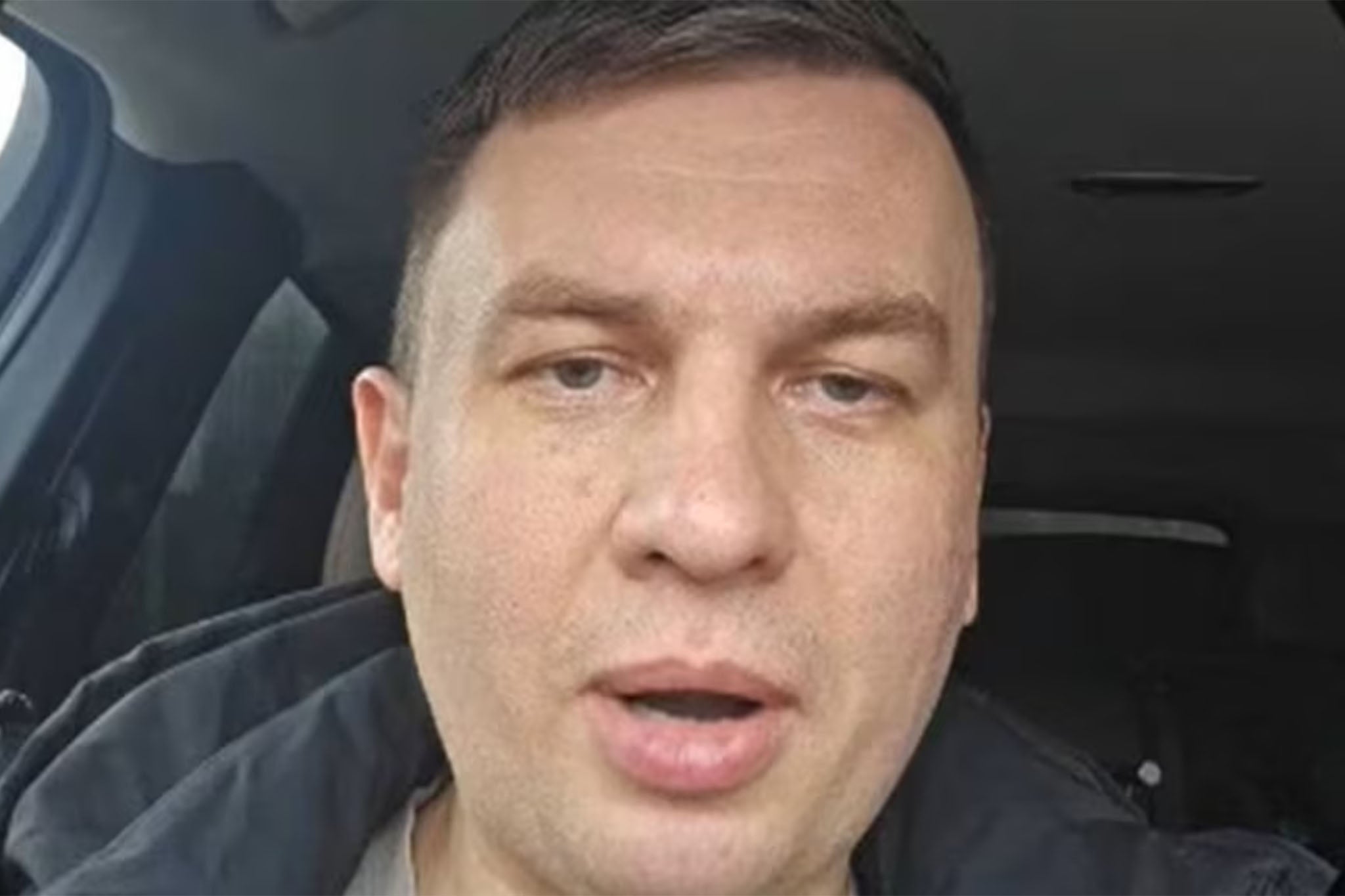
A pro-Kremlin figure who unexpectedly denounced Russian President Vladimir Putin and the war in Ukraine in a social media post this week that went viral has been placed in a psychiatric facility, Russian media reported on Thursday.
Ilya Remeslo made a career denouncing Putin’s critics until he became one himself, posting a manifesto late on Tuesday to his 90,000 followers on Telegram entitled: “Five reasons why I stopped supporting Vladimir Putin.”
He said Putin had prosecuted a “failing war” in Ukraine that had killed millions and torpedoed Russia’s economy to the detriment of its citizens’ well-being.
“Vladimir Putin is not a legitimate president. Vladimir Putin must resign and be brought to trial as a war criminal and a thief,” Remeslo wrote in his post.
He went on to tell The Guardian on Wednesday: “Vladimir Putin should resign and be put on trial as a war criminal. His personalised, corrupt system is doomed to collapse, as we’re seeing now with the war in Ukraine and elsewhere.”
On Thursday, St Petersburg’s Fontanka newspaper reported Remeslo had been hospitalised in the city’s Psychiatric Hospital No. 3. It said the hospital’s information desk confirmed a patient with Remeslo’s name and surname was available to receive packages.
Ilya Remeslo (Social media)
Reuters was unable to immediately confirm Remeslo was in the facility. Fontanka did not specify the grounds on which he may have been admitted.
Meanwhile on Thursday, The Kremlin said that talks between Washington, Moscow and Kyiv on ending the war in Ukraine were on “situational pause” following the start of the Iran war.
U.S. President Donald Trump vowed to end the Ukraine war on his return to the White House but has said efforts to resolve the conflict have been one of his biggest disappointments.
The Izvestia newspaper said in a front-page story that the Kremlin had confirmed a pause in talks on Ukraine and that war in the Middle East could push Kyiv towards compromise.
“This is a situational pause, for obvious reasons,” Kremlin spokesman Dmitry Peskov told reporters when asked about the Izvestia report.
Spy ops on Netflix Pope shot in the 1980s vatican as tax have banco ambroisano Bulgaria Turkey Pope visits shooter in prison, prisoner visits burial site of pope in Rome. Can you give us a synopsis of this and add above and anymore elevant details.
Thought for 27s
Yes, this refers to Spy Ops (Netflix docuseries, Season 1, Episode 4: “The Plot to Kill the Pope,” released September 8, 2023, ~51 minutes). netflix.com +1 It matches your description perfectly: the 1981 Vatican shooting of Pope John Paul II by Turkish gunman Mehmet Ali Ağca, conspiracy ties involving Turkey/Bulgaria (and possible KGB/Soviet angles), links to the Vatican Bank/Banco Ambrosiano scandal in some theories, the Pope personally visiting Ağca in prison to forgive him, and Ağca later visiting the Pope’s tomb in Rome.
Quick Synopsis
The episode is a documentary-style deep dive built around rare, direct interviews and testimony from Ağca himself (now in his 60s). It recreates the dramatic May 13, 1981, assassination attempt in St. Peter’s Square during a public audience. Pope John Paul II (Karol Wojtyła, the first Polish pope) is riding in an open vehicle greeting crowds when Ağca fires multiple shots at close range. Two bullets hit the Pope (in the abdomen and hand), nearly killing him; chaos erupts, Ağca is tackled and arrested immediately.
fugitives.com Ağca recounts his life: born into a poor Turkish peasant family, he had a criminal past (including murdering a Turkish journalist), escaped prison with help from the ultra-nationalist Grey Wolves group, and had previously threatened the Pope in a letter. In the episode he repeatedly insists he acted mostly alone as a “lone wolf” seeking attention or fame, denies deep organizational ties, and notes his story changed over 100 times in court (making him seem unreliable). But evidence like a third bullet (suggesting an accomplice) and photos showing another suspicious person fuel doubt.
fugitives.com The bulk explores unresolved Cold War-era conspiracy theories:
Turkey/Grey Wolves: Ağca’s links to the far-right nationalist group with anti-Christian ideology.
Bulgaria & KGB/Soviets: Ağca later blamed Bulgarian secret services (who allegedly approached him); theories tie it to the atheistic USSR fearing the Polish Pope’s support for the Solidarity movement (which helped undermine communism in Poland). Bulgarian agents were even arrested and tried, but the case fell apart for lack of proof. A 2006 Italian parliamentary probe later concluded Soviet leaders were “beyond reasonable doubt” behind it. fugitives.com +1
Vatican Bank/Banco Ambrosiano angle (matching your “banco ambroisano”): One theory explored is that the attempt aimed to silence or intimidate the Pope over the Vatican Bank (IOR) scandal. The bank was entangled in massive money-laundering, mafia ties, and huge losses from Banco Ambrosiano’s 1982 collapse (involving “God’s Banker” Roberto Calvi’s suspicious death).Spies/bugs were reportedly in the papal residence; the idea was that exposing corruption could damage the Church, so insiders or linked parties wanted him scared or gone. The episode notes this remains unproven, like the others. fugitives.com
No theory is conclusively proven— the episode leaves it as one of espionage’s greatest mysteries, with an accomplice likely involved but the true mastermind still hidden behind a “thick curtain of silence.” Key Matching & Additional Relevant Details You Mentioned/Related
Pope visits shooter in prison: In 1983, John Paul II personally went to Rebibbia prison in Rome, sat with Ağca, forgave him, and gave him a rosary. Ağca says it deeply moved him and contributed to his later “reformation.” Iconic photos show their private, intense conversation. instagram.com
Prisoner visits burial site of pope in Rome: Released after decades (extradited to Turkey, served more time), Ağca in December 2014 (on the anniversary of the forgiveness meeting) surprised everyone by visiting St. Peter’s Basilica. He laid white roses on John Paul II’s tomb (the Pope had died in 2005 and was later canonized). He tipped off media beforehand; it was brief and emotional. bbc.com +1
ncregister.comExtra context: Ağca was sentenced to life in Italy (later reduced/pardoned partly at the Pope’s request), then served time in Turkey. He’s out now, has given contradictory interviews, and even teased future revelations or projects (including a Netflix series idea, ironically). The event is often seen as a pivotal Cold War moment highlighting religion vs. communism.
The series Spy Ops overall features real spies recounting ops; this episode stands out for Ağca’s on-camera presence and the lingering “who ordered it?” question. If you want episode timestamps, full transcript links, or more on any theory (e.g., full Banco Ambrosiano scandal ties), let me know! It’s a gripping watch that blends personal confession with geopolitical intrigue.

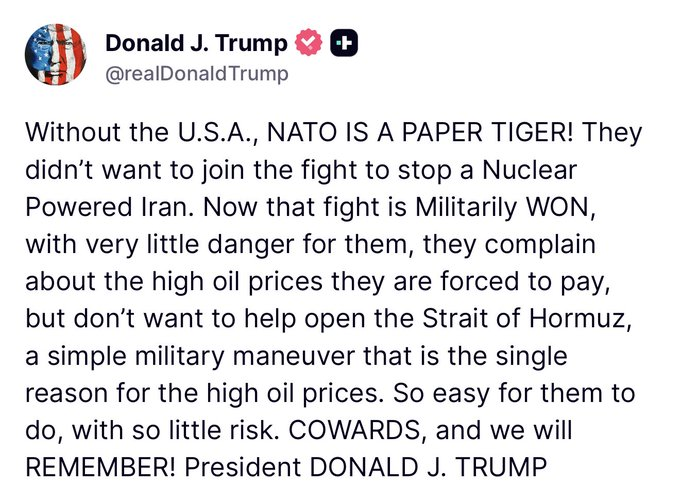
 Photo illustration: Allie Carl/Axios. Photo: Kevin Dietsch/Getty Images & PhotoQuest via Getty Images