

Trust in traditional media has fallen to a historic low. At the same time, 𝕏 continues to reach record levels of usage. 𝕏 is now the #1 News App in over 150 countries worldwide.
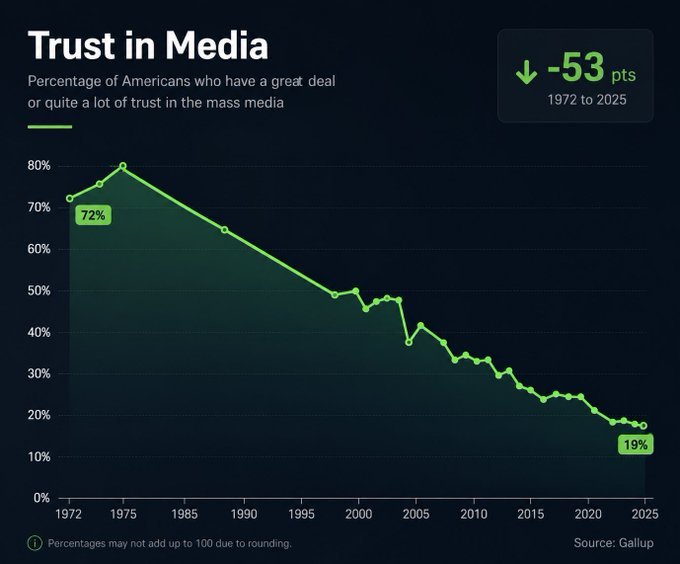
Trust in traditional media has fallen to a historic low. At the same time, 𝕏 continues to reach record levels of usage. 𝕏 is now the #1 News App in over 150 countries worldwide.
| Union Station gets $466M glow-up |
 A National Guard member watches travelers at Union Station in Washington last year. Photo: Andrew Harnik/Getty Images A National Guard member watches travelers at Union Station in Washington last year. Photo: Andrew Harnik/Getty ImagesThe Trump administration is spending nearly half a billion dollars to upgrade Washington’s Union Station, Axios’ Cuneyt Dil reports. The project could become one of President Trump’s most consequential efforts amid a broader push to beautify D.C. in his preferred fashion, given the train hall’s role as the city’s front door. Trump is pushing a cornucopia of other projects around the nation’s capital — the White House ballroom, the “Triumphal Arch,” repainting the Reflecting Pool, etc. — as the city prepares for a busy summer of events tied to America’s 250th birthday, the World Cup, IndyCar and more. The Union Station plan includes overall cleanliness and security improvements, plus: Upgrading the Amtrak lounge, passenger waiting area and “ticketing experience. “Repairing an aging roof, parking garage and other interior zones. Touching up the “passenger concourse and customer experience” with upgrades like play areas and nursing pods. Transportation Secretary Sean Duffy told reporters yesterday that the “special project” aims to make Union Station a “world-class transit hub” (More details).  Transportation Secretary Sean Duffy helps students board Amtrak’s “Freedom 250” train at Union Station on May 7. Photo: Heather Diehl/Getty Images It’s unclear how the new Union Station grant meshes with a proposed multibillion-dollar modernization and expansion project.The DOT yesterday criticized the Biden administration’s proposed expansion plan, calling it a “boondoggle” and “far-fetched.” Doug Carr, a key official who helped build New York’s Moynihan Train Hall, still advocates for the broader effort.Carr said in a statement: “This new fundingenables us to invest in the critical ongoing near-term improvements that enhance the existing station experience for millions of travelers, while simultaneously laying the foundation for the future Station Expansion Project.”Go deeper … Get Axios D.C. Transportation Secretary Sean Duffy helps students board Amtrak’s “Freedom 250” train at Union Station on May 7. Photo: Heather Diehl/Getty Images It’s unclear how the new Union Station grant meshes with a proposed multibillion-dollar modernization and expansion project.The DOT yesterday criticized the Biden administration’s proposed expansion plan, calling it a “boondoggle” and “far-fetched.” Doug Carr, a key official who helped build New York’s Moynihan Train Hall, still advocates for the broader effort.Carr said in a statement: “This new fundingenables us to invest in the critical ongoing near-term improvements that enhance the existing station experience for millions of travelers, while simultaneously laying the foundation for the future Station Expansion Project.”Go deeper … Get Axios D.C. |
The psychological reason complete freedom is a creative dead end
May 23, 2026
General Magic invented the cloud, emojis, and virtual keyboards, then collapsed under the weight of its own freedom. Pixar, built on the opposite philosophy, used popsicle sticks Velcroed to a wall to channel its animators’ creativity into masterpieces. The difference? Constraints.
In this interview, David Epstein walks through decades of research exploring why constraints, not freedom, are the engine behind creativity, focus, and breakthrough.
About the speaker: David Epstein is the author of the #1 New York Times bestseller Range: Why Generalists Triumph in a Specialized World, The Sports Gene, and his new book Inside the Box: How Constraints Make Us Better.
He was the host of Slate’s popular How To! podcast and a science and investigative reporter at ProPublica. Prior, he was a senior writer at Sports Illustrated, where he co-authored the story that revealed Yankees’ third baseman Alex Rodriguez had used steroids. His writing has been honored by many organizations, from the National Academies of Sciences, Engineering, and Medicine to the Society of Professional Journalists and the National Center on Disability and Journalism, and has been included in the Best American Science and Nature Writing anthology.
00:00:18 Chapter 1: General Magic vs. Pixar: Why constraints are necessary.
00:08:02 The concept of “subtractive neglect bias”
00:11:12 Constraints as a creative superpower
00:16:08 Chapter 2: The dangers of too much freedom
00:18:15 Too much freedom and modern anxiety
00:22:05 The maximizing trap
00:25:03 Chapter 3: How to fix bottlenecks
00:28:13 Applying the bottleneck to real work
00:34:22 Chapter 4: Regaining our focus in an attention economy
00:35:28 Self-interruption & reclaiming focus
00:37:07 Discipline and ritual as creative liberation
00:41:37 Chapter 5: The myth of the lone genius
00:43:42 Three case studies: Mendeleev, Einstein, Darwin
00:51:34 The power of problem setters
Prefer to listen to our interviews on Spotify? Explore our episodes here:https://open.spotify.com/embed/episode/5eaiY35efVJiiM2lEWvh4p
Below is a transcript of the first five minutes of this video interview. This is a true verbatim transcript that captures the conversation exactly as it happened. If you’d like to read the full transcript while following along with the video, click here.
·
Iqbal Masih was sold into bonded labor at the age of 4. He was forced to weave carpets 12 hours a day, 7 days a week. At age 10, he escaped helping free 3,000 other children from slavery He became an activist against child labor, but in 1995 he was shot and killed. He was 12

| AI turns energy into America’s hottest business |
 Illustration: Sarah Grillo/Axios. Stock: Getty Images Illustration: Sarah Grillo/Axios. Stock: Getty ImagesThe AI boom is pushing companies across the economy — from tech giants to automakers — deep into the energy business, Axios national energy correspondent Amy Harder writes. Why it matters: The scramble for electricity has become the gold rush beneath the AI boom, creating enormous value and enormous risk if demand falls short. Electricity — long treated as a cheap, abundant commodity — is suddenly emerging as one of the most valuable strategic assets in business. “Everyone to some extent is either dependent on energy as a core input or they see energy as a huge opportunity,” said Brian Janous, who was Microsoft’s first energy hire 15 years ago and is now co-founder of data center developer Cloverleaf Infrastructure. The latest: Ford this month began its expansion into energy storage for data centers and other large power users. It launched a new subsidiary called Ford Energy in response to what it calls “the massive demand for domestic energy storage. “Follow the money: Investors are rewarding companies pivoting to — or doubling down on — the power behind the AI boom: Ford’s stock price rose to its highest level in three years after it announced its $2 billion energy business. Bloom Energy, long seen as a niche energy player whose tech can deliver on-site power fast, saw its stock price skyrocket more than 1,200% over the past year. Fervo Energy, a geothermal startup once viewed as speculative climate tech, surged after going public earlier this month as Wall Street hunts for new electricity sources to feed data centers. GE Vernova booked $2.4 billion in electrical equipment ordersfor data centers in the first quarter alone, more than it booked all of last year. Its stock is up about 60% this year. Reality check: Beneath the surging stock prices, trouble is mounting. Opposition to data centers is intensifying, and some of the biggest projects may never come to fruition.”A lot of people are going to lose a lot of money in this space,” Janous said — not because of a lack of demand, but because so many mega projects are chasing that demand. The bottom line: For decades, energy was an input. In the AI era, it’s becoming the product.Share this story. |
Explore Harvard Law News

How AI could challenge assumptions about proof and truth in criminal law
Apr 15, 2026
By Rachel Reed
Early in 2020, a cell phone captured the fatal attack of a jogger named Ahmaud Arbery by three white men in Georgia. That video was critical evidence in the criminal cases against the assailants, who were convicted of murder, and helped fuel a nationwide wave of Black Lives Matter protests that year.
Just six years later, the landscape for recorded media looks slightly different, as artificial intelligence tools have become ubiquitous, and AI-generated text, audio, and video have flooded the internet. Can we still believe the things we see, hear, and read? And how could our newfound doubt affect our ability to seek justice under the law?
Duncan Levin is a white-collar defense attorney and former federal prosecutor with the U.S. Department of Justice, and lecturer on law who in the winter term taught Cash, Crime, and the Constitution: The Legal Frontiers of Asset Forfeiture and Money Laundering at Harvard Law School. He argues that as AI-generated media blurs reality, the technology has the potential to “destabilize” some aspects of the criminal system.
“I think AI may change not only what people think about evidence, but what they think evidence is,” says Levin.
Levin argues that as people become more skeptical of long-accepted types of evidence, prosecutors, defense attorneys, and judges will have to radically rethink their approach. But while he believes that this adjustment might be painful in the short-term, over the long haul, it could “force the system to become more sophisticated.”
In an interview with Harvard Law Today, Levin shared his views on how artificial intelligence could impact the criminal trial — and why, all told, AI could serve as a “healthy pressure, even if it is an uncomfortable one.”

HLT: In your experience as a prosecutor and defense attorney, what unique problems might AI pose in criminal cases as opposed to civil litigation?
Levin: Most of the conversation about AI in law has centered on civil practice, and understandably so. Civil litigation is where questions of efficiency, cost, scale, and automation are most visible. And of course, the courts have been dealing with the problem of lawyers citing to “hallucinated” cases. But criminal law presents a different problem altogether because criminal trials are not just about resolving disputes efficiently. They are about the state’s attempt to take liberty from an individual, and they are structured around a constitutional burden of proof designed to minimize the risk of factual error.
That is why AI poses a more profound challenge in criminal cases than in civil ones. In a civil case, if the authenticity of a document or recording is disputed, that may affect weight, credibility, or liability. In a criminal case, the same uncertainty can operate at a deeper level, because the government is required to prove guilt beyond a reasonable doubt. The possibility that an exhibit may be synthetic, manipulated, or otherwise unreliable is not just another evidentiary skirmish. It can go directly to whether the prosecution has met the burden that due process demands.
There is also a structural difference in the function of evidence. Criminal cases often depend on a relatively narrow set of key exhibits — a recording, a video, a sequence of text messages, a social media post, a geolocation trail. Those exhibits are often presented to juries not as peripheral details but as anchors of narrative truth. AI threatens to destabilize that. It introduces the possibility that what appears to be the most concrete evidence in the case may in fact be the least secure.
And that challenge cuts in both directions. As a former prosecutor, I can see how AI may make it harder for the government to secure convictions in cases that rely heavily on digital proof. As a defense lawyer, I can also see the danger that once skepticism becomes generalized, defendants may have a harder time persuading juries with authentic exculpatory evidence. So, the issue is not simply that AI helps one side or the other. It puts pressure on the truth-finding function of the criminal trial itself.
HLT: What kinds of evidence currently admissible in criminal trials might be at risk of being created or manipulated by AI?
Levin: The obvious answer is audio and video, because those are the forms of evidence people most readily associate with deepfakes. If a jury hears what sounds like the defendant’s voice, or sees what appears to be a defendant on video, that evidence can be enormously powerful. But the real problem is broader than the familiar deepfake example.
Modern criminal prosecutions rely heavily on digital artifacts of all kinds: photographs, surveillance footage, text messages, emails, direct messages, social media posts, screenshots, online account records, and digitally generated timelines of location or activity. Each of those forms of evidence carries with it an implied claim of authenticity. It says, in effect, this happened, this was said, this account was used, this image reflects reality. AI makes those implied claims easier to counterfeit and harder for laypeople to assess.
What concerns me especially is that the danger is not limited to wholesale fabrication. AI may also be used to alter, enhance, splice, recontextualize, or simulate evidence in subtler ways. A manipulated image need not be entirely fabricated to mislead. A voice recording need not be entirely synthetic to create a false impression. A sequence of messages can be selectively generated or altered in ways that preserve surface plausibility while changing substantive meaning. In other words, the challenge is not just false evidence; it is persuasive false evidence.
There is also what I think of as the atmospheric effect of AI. Even where the evidence is genuine, jurors may know enough about digital manipulation to wonder whether it is not. So, AI changes not only the risk profile of false exhibits entering the courtroom. It changes the epistemic status of real exhibits as well. Evidence that once seemed solid may now seem contingent. That is a profound development in a system that has long relied on jurors’ common-sense confidence in what they can see and hear.
“The danger is not limited to wholesale fabrication. AI may also be used to alter, enhance, splice, recontextualize, or simulate evidence in subtler ways. … the challenge is not just false evidence; it is persuasive false evidence.”
HLT: What are the traditional methods of authentication and reliability for evidence in a criminal case, and how does AI challenge those longstanding doctrines?
Levin: Traditionally, authentication has been understood as a threshold requirement, not an ultimate one. Under the rules of evidence, the proponent need only offer sufficient evidence for a reasonable juror to conclude that an exhibit is what it is claimed to be. That burden has never been especially onerous. A witness with knowledge may identify a photograph. Someone familiar with a speaker’s voice may identify an audio recording. A chain of custody may support the admission of physical or digital evidence. Distinctive characteristics, surrounding circumstances, and metadata may all contribute to the foundation.
That framework reflects an important doctrinal assumption: Authentication is a gatekeeping inquiry, and the adversarial process can do the rest. Courts have long assumed that the principal risks involve ordinary tampering, misidentification, or incomplete handling. Those are serious issues, of course, but they are still issues within a world where the underlying exhibit is presumptively tethered to some real event or communication.
AI complicates that premise because it attacks the distinction between authenticity and plausibility. A piece of evidence may now look authentic, sound authentic, and fit coherently into surrounding facts, while still being entirely or materially synthetic. That matters because many of the doctrines we use to authenticate evidence are not really designed to test whether the artifact itself was born of reality. They are designed to test whether there is enough circumstantial basis for a jury to consider it.
HLT: Could you give us an example?
Levin: Take voice identification. The classic question is: Do you recognize the speaker’s voice? A witness may answer that question honestly and persuasively. But that only establishes familiarity with the voiceprint; it does not resolve whether the recording is a genuine capture of an actual conversation rather than an artificial simulation. The doctrine assumes that voice recognition is doing more work than it may in fact be capable of doing in an age of generative audio.
The same is true more broadly. Distinctive characteristics may no longer be very distinctive. Metadata may be vulnerable to manipulation or may require expert interpretation. Chain of custody remains important, but chain of custody alone may not answer whether a digital artifact was altered before it entered the chain. So, the legal system may increasingly find that doctrines built to address tampering are inadequate for a world of synthetic creation.
That is why I think this is a doctrinal problem, not just a technological one. AI exposes that the law of authentication rests on assumptions about the nature of evidence that may no longer hold.
“Many of the doctrines we use to authenticate evidence are not really designed to test whether the artifact itself was born of reality.”
HLT: Most of us have heard of the requirement that a jury find a defendant guilty “beyond a reasonable doubt.” What does that mean? Could the possibility of fabricated digital evidence affect the meaning of proof beyond a reasonable doubt?
Levin: “Beyond a reasonable doubt” is the law’s way of expressing a moral and constitutional judgment that when the state seeks to deprive someone of liberty, ordinary confidence is not enough. The standard does not require certainty in an absolute sense, and it does not mean beyond all possible doubt. But it does reflect a deliberate choice to tolerate some risk that guilty people will go free in order to reduce the risk that innocent people will be wrongly convicted.
That principle assumes, however, that jurors are evaluating evidence in a world where the central questions are credibility, consistency, perception, memory, and corroboration. In other words, the standard developed in a setting where doubt typically attaches to witnesses or interpretations of facts. AI introduces a different layer of doubt. It raises the possibility that the exhibit itself — the recording, the image, the post, the message — may not be what anyone says it is.
That distinction matters. A juror may conclude that a witness is sincere and still have reasonable doubt because the underlying exhibit seems potentially synthetic. So, AI may affect the operation of the reasonable-doubt standard not by changing its formal definition, but by changing the kinds of uncertainty that jurors bring to their deliberations. The question becomes not just “Do I believe this witness?” but “Do I believe the ontology of this evidence at all?” That is a more foundational inquiry.
In that sense, AI may sharpen the reasonable-doubt standard by making visible something that was once implicit: proof is not simply about persuasion, but about epistemic confidence in the reality of the proof itself. If jurors begin to feel that digital evidence carries an irreducible possibility of artificiality, that may alter the practical meaning of the government’s burden even without any doctrinal change in the jury instructions.
The larger point is that reasonable doubt is not just a verbal formula. It is a mechanism for allocating the risk of uncertainty in criminal adjudication. AI may dramatically increase one category of uncertainty — uncertainty about authenticity — and if that happens, the burden of proof will feel heavier in practice, because jurors will be less willing to treat digital exhibits as fixed points of reference. That is why AI has the potential to reshape not merely evidence law, but the lived meaning of the constitutional standard itself.
HLT: What new burdens, if any, should be placed on parties to verify that evidence is not AI-manipulated? Who should bear that burden?
Levin: In criminal cases, the answer has to begin with first principles. The government bears the burden of proof. It is the government that seeks conviction. So, if digital evidence is central to the prosecution’s case, the prosecution should bear the primary burden of establishing authenticity with greater rigor than courts have often demanded in the past.
I do not mean that every case should require a parade of experts or a mini-trial on digital forensics. The law has to remain workable. But I do think courts will need to move away from the instinct that a thin foundation is always enough, and that any deeper concerns go only to weight. In some cases, especially those turning on audio, video, or disputed digital communications, authenticity may require more than witness familiarity or a simple chain of custody. It may require forensic examination, clearer provenance, stronger metadata analysis, or expert testimony sufficient to assure the court that the exhibit has not been materially altered or synthetically generated.
“AI introduces a different layer of doubt. It raises the possibility that the exhibit itself — the recording, the image, the post, the message — may not be what anyone says it is.”
At the same time, I would not frame this only as a burden on prosecutors. If a defendant seeks to introduce affirmative digital evidence, courts may also require a stronger showing of authenticity. But the asymmetry still matters. A defendant does not carry the burden of proving innocence. So, while both sides may need to satisfy more robust evidentiary standards, the constitutional burden should remain where it belongs: on the state when it seeks to imprison.
Over time, I suspect the law will move toward a combination of doctrinal and technological solutions. On the doctrinal side, courts may become more exacting under existing authentication rules. On the technological side, provenance tools, cryptographic signatures, or secure capture systems may emerge as more reliable ways of showing authenticity at the point of creation. But until those systems are more widespread, judges will have to decide whether traditional foundations remain adequate in a world where fabrication is easier, cheaper, and harder to detect.
So, the real burden is not just evidentiary. It is institutional. Courts will need to decide how much uncertainty the criminal process can tolerate before the risk of error becomes unacceptable.
HLT: In your view, how might AI influence the way people think about evidence and the criminal justice system in general?
Levin: I think AI may change not only what people think about evidence, but what they think evidence is. For a long time, visual and digital evidence carried an aura of objectivity. People might dispute what a witness remembered or why a witness was lying, but a video, a recording, or a contemporaneous text exchange often felt like a harder kind of proof. That intuition was always somewhat overstated, but it was real and legally important. AI weakens it.
Once the public internalizes that highly realistic digital evidence can be fabricated, the entire evidentiary environment changes. People may become more skeptical, more cautious, and in some settings more cynical. That skepticism has some virtue. Criminal law should not be built on naïve faith in official narratives or in the infallibility of seemingly objective evidence. But skepticism can also become corrosive if it dissolves confidence indiscriminately.
That is the larger institutional concern. The justice system depends on public confidence not only that trials are fair, but that they are capable of reaching truth through lawful procedures. If jurors begin from the premise that any recording may be fake, any image may be manufactured, and any digital communication may be spoofed, then the criminal trial risks becoming less an exercise in fact-finding than an exercise in generalized epistemic anxiety. That is not healthy for either side.
At the same time, this moment may force the system to become more sophisticated. Judges, lawyers, jurors, and investigators may all need to become more literate about the creation, preservation, and forensic evaluation of digital evidence. Courts may have to speak more candidly about what they do and do not know. In that sense, AI may force a deeper legal honesty. It may make explicit that evidentiary trust has always rested on a combination of doctrine, technology, and social confidence.
So, I think the long-term influence of AI will be double-edged. It may deepen mistrust in the short term, but it may also push the criminal legal system toward a more rigorous and transparent account of what it means to prove something. And in a system built around the idea that liberty should not be taken without very high confidence, that is ultimately a healthy pressure, even if it is an uncomfortable one.
Want to stay up to date with Harvard Law Today? Sign up for our weekly newsletter.
| Nvidia’s new frontier |
 Nvidia CEO Jensen Huang. Photo: Patrick T. Fallon/AFP via Getty Images Nvidia CEO Jensen Huang. Photo: Patrick T. Fallon/AFP via Getty ImagesThe company best known for powering the AI boom is coming for the PC: Next week, Nvidia is expected to debut the first Windows computers that use its chips as the main processor, sources confirm to Axios’ Ina Fried. Why it matters: Microsoft’s first AI PC push stumbled. But Nvidia’s arrival gives it a second chance, this time with the world’s hottest chipmaker attached. Nvidia and Microsoft will unveil their joint work and the first computers running the chips at two key industry conferences — the Computex trade show in Taiwan and Microsoft’s Build developer conference in San Francisco. Nvidia-powered PCs are expected from both Microsoft’s homegrown Surface brand and other computer makers, including Dell, sources confirmed. Microsoft is also expected to debut software that makes it easier for people to have AI agents do work locally on their Windows computer.Share this story. |

By
Senior Editor-at-Large
May 30, 2026, 3:00 AM ET
Add us on
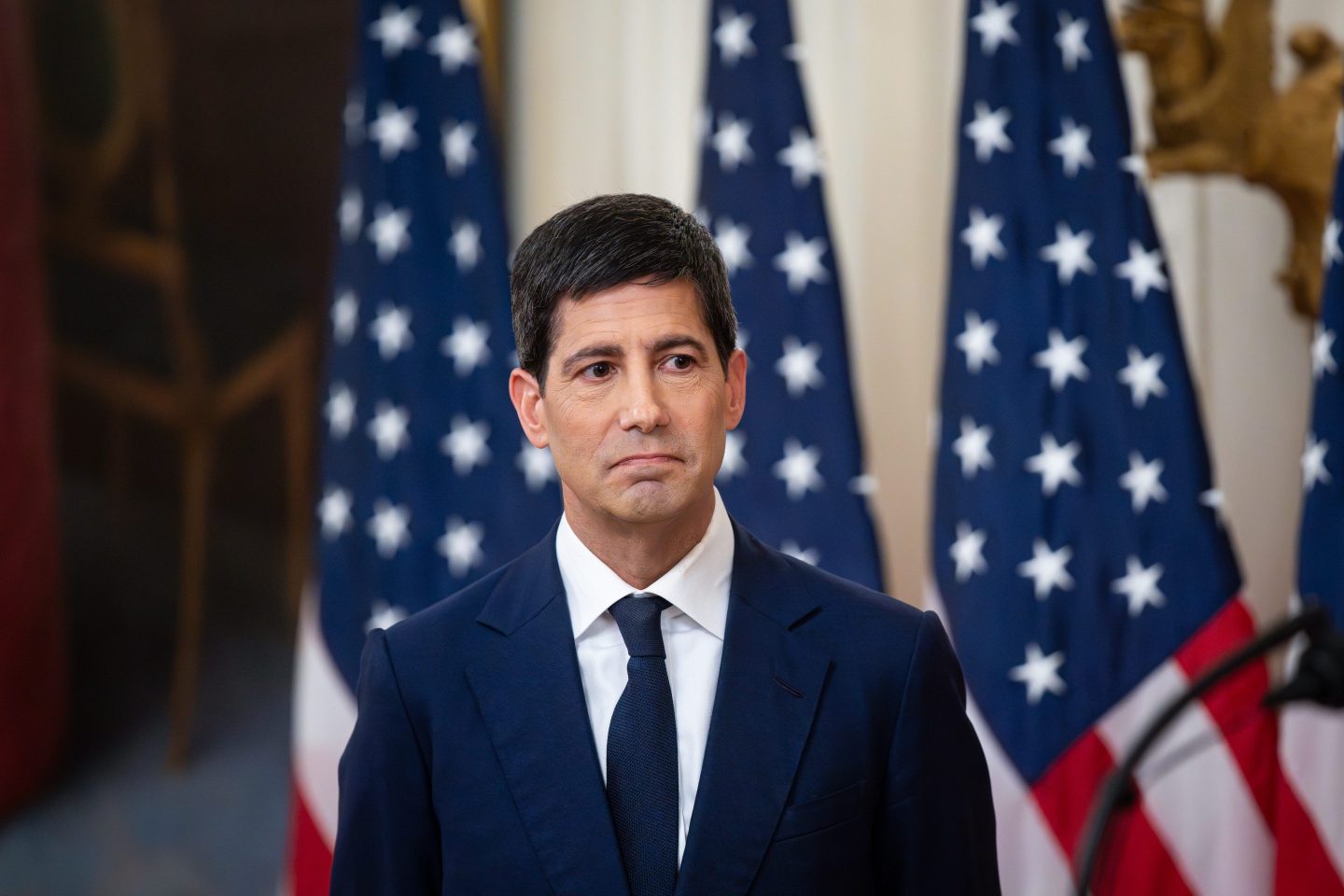
Kevin Warsh has some levers to pull—but there’s little he can do about runaway government spending.Al Drago—Bloomberg/Getty Images
In the days before the Memorial Day weekend, rates on 30 year Treasury bonds hit their highest level in 19 years at 5.2%, and the benchmark 10-year reached 4.7%, the top reading since mid-2007. If those kinds of yields take hold, the scenario for federal interest expense posited in the CBO’s “Budget and Economic Outlook: 2026 to 2036,” released in February, descends from dire to near-disastrous. Takeaway: America’s track to fiscal safety has lost all margin for error, and nothing demonstrates that better than the long-term impact of loftier than expected rates. America’s got so little room to maneuver that even yields that modestly exceed the CBO’s “baseline,” as the numbers compound in the years ahead, deliver a huge extra blow by crowding out big chunks of revenue that would otherwise go towards funding such essentials as Defense, Social Security and Medicare.
Qualcomm’s AI takeover | Titans and Disruptors
The CBO forecasts that yields on the 30 and 10-year Treasuries will respectively average about 4.65% and 4.15% through FY 2036. That’s roughly 55 basis points lower than the multi-year summit briefly notched in late May. Doesn’t sound like much of a difference, right? And if the interest expense on our gigantic and ballooning national debt of $39 trillion weren’t already running at nearly $1 trillion a year, bigger than Medicare spending and equaling two-thirds of Social Security outlays, the half-point upward shift would likely prove manageable.
But a recent report from the non-partisan Committee for a Responsible Federal Budget quantifies the deep damage even a continuation at the recent peaks would inflict. By 2036, interest expense would jump from absorbing 14% of all revenues to devouring 30%, five points more than under the CBO’s forecast. At $2.5 trillion, 2.5x today’s number, the carrying costs would become the second largest budget category, beating Medicare by one-third. Interest cost per household would soar from $7,900 last year to $17,000 a decade hence.
Much of today’s extreme vulnerability to even slightly higher rates arises from the need to both refinance existing debt, and shoulder trillions more in newly-issued bonds to cover deficits, at much higher cost. All told, the federal government will need to borrow almost $10 trillion in the next 12 months, equivalent to one-third our total debt. That amount consists of around $7.5 trillion to repay the Treasuries coming due, and $2 trillion for plugging the shortfall between revenues and spending. A major reason the U.S. accumulated so much debt in the first place was the lure of ultra-bargain yields orchestrated by the Fed’s easy money policy during and following the COVID crisis. In 2021 through early 2022, Treasury Bills, instruments that mature within a year, offered around a minuscule 0.2%. Today, that cost’s 18 times fatter at 3.7%.
Rates have also climbed for the Treasury Notes running 5 to 30 years that account for over half of all federal debt outstanding. Because we could borrow so cheaply for so long, the average rate on the Notes stands at just 3.23%. But the U.S. is refinancing the bonds that roll off for a lot more, 5.2% on the 30 year as of just before Memorial Day, and 4.7% on the 10-year.
In fact, the borrowing blowout that got the U.S. in so much trouble resembles the rush into “teaser” home loans in the 2007 runup to the housing meltdown; folks fell for temporary, super-low “teasers” rates that when they reset higher, saddled the borrowers with monthly payments they couldn’t afford. A similar dynamic’s at play as the U.S. refinances low-yielding Treasuries issued when it looked like a deal to finance huge government spending—at today’s much higher rates.
As of May 26, news that the Iran War may end soon pushed yields for the 30 and 10 year down slightly, so that they’re now sitting around 35 basis points above the CBO forecast. Still, the threat they’ll bounce back to the half-point-plus margin that’s so scary raises a stern warning for the new Fed chief Kevin Warsh. It’s encouraging that Warsh publicly favors tightening monetary policy by lowering the immense holdings of Treasuries on Fed’s balance sheet, a policy that involves unloading a big portion of its portfolio to the public. That gambit transforms trillions that would otherwise be spent into savings.
The Fed balance sheet shrink would also shrink what’s causing the problem: Extremely high “aggregate demand” across the economy that sends too many dollars chasing a volume of goods that’s growing far more slowly. (Noted economist Will Luther described this phenomenon in my recent story.) Warsh can also raise the Fed Funds rate, or even announce he has no plans for a reduction, to cool the still relatively-plentiful credit that’s fueling big spending by consumers and of course, humongous outlays for AI data centers. But the primary reason aggregate demand’s way too high is excessive levels of government spending that if left unchecked, could lead to even higher rates than the peak numbers that just unleashed such a jolt. Warsh can help by lifting the cost of credit to throttle both consumer and corporate spending, and sell bonds the Fed’s holding to target the latter. But he can’t control the big one, the runaway federal budget.
That responsibility falls on the President and on Congress. As the CRFB states in their analysis on the impact of rising yields, “The best way to accomplish these goals is through deficit reduction, which can help the Federal Reserve lower rates by reducing near-term inflationary pressures, put downward pressure on long-term rates by reducing economic crowd-out [that diverts money needed for budget must-pays to interest], and reduce the debt burden on which the government must pay interest.” The CRFB adds that yields that hang in the pre-Memorial Day range or push higher threaten to “spark a fiscal crisis.”
Nothing better illustrates that AMERICA IS BROKE than how an increase in yields that wouldn’t seem to matter much in most times could spell a cataclysm now that our fiscal state’s so fragile. Neither party wants to talk about how broke we really are, or do much to address the problem. Unfortunately, it may take an outbreak of unaffordable interest rates to force our lawmakers into facing the peril of their own making.
Paid Content
From S&P Global
Sir Niall Ferguson in recent communications has referenced this Scottish law
The “Ferguson Limit”: This is the tipping point where interest payments exceed defense spending, leading to reduced resources for national security. [1]

