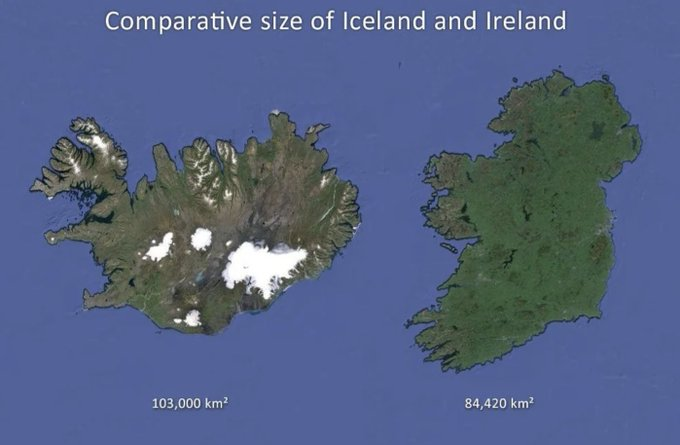
Handre: “Two small island economies blew up in 2008. Iceland and Ireland. Their names differ by one letter, and their handling of the crisis differed by everything that matters. Iceland’s three big banks, Kaupthing, Landsbanki, and Glitnir, had grown assets to roughly ten times the country’s GDP by 2008…”

Handre

@Handre

·

Two small island economies blew up in 2008. Iceland and Ireland. Their names differ by one letter, and their handling of the crisis differed by everything that matters. Iceland’s three big banks, Kaupthing, Landsbanki, and Glitnir, had grown assets to roughly ten times the country’s GDP by 2008. Pure credit-fueled madness.

When the music stopped, the Icelandic government did the unthinkable: it let them fail. Bondholders ate the losses.

The state refused to socialize private bank debt onto 320,000 citizens who never signed up for it.

Capital controls went up, the króna collapsed, and the politicians actually prosecuted bankers. Twenty-six of them went to prison. Sigurður Einarsson and Hreiðar Már Sigurðsson, the men who ran Kaupthing, served real sentences.

Ireland took the opposite road.

In September 2008, the Irish government issued a blanket guarantee covering the liabilities of its major banks, including Anglo Irish Bank, a property-lending casino that should have been allowed to die in peace.

The taxpayer absorbed the bill. By the time the rescue ended, Ireland had poured around 64 billion euros into its banks, roughly 40 percent of GDP.

The state took on private gambling debts, then went to the Troika in 2010 hat in hand for an 85 billion euro bailout, and accepted years of austerity to pay for losses it had no business owning.

Both economies recovered. Both eventually grew again.

The difference is who paid and who learned. Iceland made creditors and reckless bankers bear the consequences of their own decisions, which is the entire point of capitalism: profit and loss, not profit and bailout.

Ireland protected the people who made the bad bets and handed the invoice to schoolteachers and shopkeepers.

You will hear economists call Ireland’s GDP rebound a triumph (much of that “growth” is multinational accounting fiction, Leprechaun economics, but that’s another lesson).

What they skip is the moral architecture. When you guarantee bank liabilities, you abolish the discipline that makes markets work. You tell every banker in the country that downside is optional. Iceland jailed its bankers. Ireland reimbursed theirs.

Posted in Uncategorized | Tagged , , , , | Leave a comment

Dr Mads Gilbert: a video worth engaging with. Gaza average age is 35 down from 75

https://twitter.com/xIsraelExposedx/status/2067714834775376382/video/1

Posted in Uncategorized | Leave a comment

Big Think: Forget Stoicism. Skepticism is the ancient philosophy we need today.

Forwarded this email? Subscribe here for more Forget Stoicism. Skepticism is the ancient philosophy we need today.

Skepticism used to be an integral part of any liberal arts education. Here’s why we need to bring it back. Big Think Jun 19 READ IN APP A stone sculpture of two male heads positioned back-to-back, each facing opposite directions, against a plain background.Credit: Public Domain / Wikimedia Commons / Sarah Soryalby Tim Brinkhof

If you haven’t read Marcus Aurelius’ Meditations, you’ve certainly heard of them — if not in school, then on Instagram, TikTok, or a podcast. Composed by the second-century Roman emperor in his tent on nights between long marches and bloody battles, they’re one of the foundational texts of Stoicism, an ancient philosophy that first emerged around 300 B.C., and which has recently found an unlikely second life on social media.

Stoicism’s modern-day resurgence has been traced back to viral marketing executive turned self-help author Ryan Holiday’s 2014 book The Obstacle Is the Way: The Timeless Art of Turning Trials into Triumph, which introduced snippets of Meditations to professional athletes and Silicon Valley elite. Other books from Holiday — including The Daily Stoic, which spawned a popular newsletter of the same name — followed suit, as did numerous copycats. Finding audiences outside college campuses, new editions of Seneca’s Letters from a Stoic and Epictetus’ Discourses also became bestsellers.Massimo Pigliucci, a professor of philosophy at the City University of New York, isn’t surprised at Stoicism’s newfound popularity. A lot of Stoic ideas and ideals — including resilience in the face of seemingly unbearable hardship — emerged during times which, like our own, were marked by “chaos, turmoil, and major political and social changes.” When the world appears to fall apart, Stoicism promises a way to prevent yourself from falling apart with it.

But Pigliucci also has a bone to pick with Stoicism, both the philosophy itself and its internet-age bastardization. That’s why, in his latest book, How to be a (Happy) Skeptic: The Power of Doubt in a Meaningful Life, he points readers to another ancient school of thought, one related to (yet not nearly as fashionable as) Stoicism, and which may be uniquely suited to deal with the problems we face today, both individually and as a society. Learning from Socrates Skeptic philosophy can be divided into two schools: Pyrrhonism and Academic Skepticism. The latter — and, to Pigliucci, preferable — school flourished between 266 and 90 B.C., when members of Plato’s Academy in Athens (hence the name) returned to the first principles of Plato’s mentor, Socrates. Where other philosophers formulated answers, Socrates — famous for professing that “The only thing I know is that I know nothing” — mostly stuck to asking questions, aiming for the truth by way of interrogating the beliefs of others. “The founder of Academic Skepticism, Arcesilaus, was even more radical, saying he didn’t even know for certain that he didn’t know anything,” Pigliucci tells Big Think. Almost sold out.Become a member and to get the limited-edition print issue.Join Now

Today, cultivating a skeptical attitude may help you navigate an online media ecosystem filled with conspiratorial thinking, ideologically motivated reasoning, and AI-generated deepfakes. Skepticism may also help you spot disingenuous politicians, self-help gurus, or anyone else who presents falsehoods or half-truths as the full truth to further their own interests.

Skepticism can also protect you from yourself. Being proven wrong about something can be a humiliating ordeal that eats away at our sense of self-worth. To avoid facing this discomfort, some double down on their false beliefs — a potentially dangerous thing to do if those beliefs are connected to a conspiracy theory or extremist ideology. Not so with Skepticism. “As a Skeptic, I can admit my mistakes without being ashamed of it,” Pigliucci says, “because it’s built into the philosophy that my personal identity doesn’t depend on assuming one thing or another.

Skeptics recognize that the world is a complicated place and that we cannot know everything at any particular point in time. If new information or a better argument presents itself, then changing your mind is the rational, ethical thing to do.”Research suggests that the skeptical example set by Socrates can fight back against polarization by allowing us to speak across political divides. As Pigliucci explains, “Socrates never tells you, ‘Do this.’ Instead, he asks, ‘What do you think you should do?’ And then he explores the question with you.

Plato’s Socratic dialogues take place in a state of aporia, Greek for ‘suspension of judgment,’ and are less adversarial than debates. When you debate somebody, like you would in a court of law, or a presidential debate, you’re not searching for the truth — you think you already know the truth, and are trying to convince others.”

In dialogue, one interlocutor can bring to light the contradictory beliefs held by another, drawing attention to what psychologists call cognitive dissonance. A key problem with the Socratic method, Pigliucci admits, is that it “doesn’t really scale up.” Though widely used in private education, with small classes, “you can’t do it with hundreds of people, let alone millions. Otherwise, it’s not a conversation anymore.” At the very least, if you cannot participate in one yourself, you can still read one of Plato’s originals.

Ideally, a 21st-century Plato would arise to write new dialogues on contemporary talking points like abortion, immigration, gun control, or climate policy.

Having a “good demon”At a glance, Academic Skepticism more or less resembles the word’s contemporary definition, with its emphasis on scrutiny and suspicion. But originally, scrutiny and suspicion were just one side of the coin. That’s because the question “How do you know things?” wasn’t an end in itself, but a starting-off point from which to approach another, even more important conundrum: “How do you live a meaningful life?”

Today, skepticism is often conflated with nihilism and cynicism — with an unwillingness to believe in, and therefore attribute meaning to, anything whatsoever. But the ancient Skeptics were anything but indifferent or affectless. They didn’t argue that just because we cannot know anything for certain, we also shouldn’t commit ourselves to doing anything. Rather, they argued that decisions and judgments should be made with varying degrees of certainty and uncertainty in mind.

Like other ancient philosophies, the Skeptics believed that everything had a telos,or purpose. The telos of an acorn is to grow into an oak tree, while the telos of a clock is to tell time. The telos of a human being is not as obvious. To the Epicureans, concerned with pleasure and moderation, it was aponia and ataraxia: the absence of physical and mental suffering.

For Stoics and Skeptics, it was eudaimonia, a word that literally translates to “having a good demon” (think an inner demon or conscience), and which essentially means to flourish by living in accordance with human nature.

Help shape Big Think’s Fall 2026 print issue by sharing your thoughts on generative AI.Start Survey

Socrates believed humans were defined by their ability to reason, and hence declared the “unexamined life is not worth living.” Cicero, who studied Plato’s Academy during the twilight years of its Skeptic phase, used a broader definition. Assuming (with a degree of uncertainty in mind) that humans are fundamentally social creatures, the Roman statesman posited that living according to nature meant using our ability to reason to live in harmony with one another. His most famous text, a treatise titled De Officiis (“On Duties”), suggested that eudaimonia lay not in private contemplation but in public engagement, and that to flourish individually was to contribute to the flourishing of the community and vice versa.

“What kind of life do you want to live? And why?” Pigliucci reflects. “We don’t ask ourselves these questions often anymore, especially the second one. A lot of us jump right into the fray, and might spend years, perhaps a whole lifetime, pursuing things that — in the end — were not actually worth pursuing, and thereby wasting the only opportunity they have.”

Questioning truth to power

There’s more to Stoicism than influencers and pop philosophers would have you believe. Far from a philosophy of and for traditional masculinity, the Stoics were among the few of their day to acknowledge that women possessed the same capacity for virtue and wisdom as men. Nor should it be treated as a shortcut to worldly success. “The Stoics were very clear that wealth and fame are relevant only if you acquire them in a virtuous way, without cheating or exploitation,” Pigliucci says, “and only if you then use that wealth and fame to help others.”Still, one key criticism of Stoicism is its potential to encourage the acceptance of needless suffering. The school’s insistence on quietly bearing your suffering and not worrying about what you can’t control risks engendering passivity in the face of injustices you might otherwise work to rectify.

Skepticism may be a more pragmatic and surprisingly inspiring alternative in times of crisis and upheaval. After all, how do we know for certain what is and isn’t in one’s power to change? And why would the ability to distinguish between the two help you live a better, more rewarding life? It may be certainty — not doubt — that more often holds us back.

Anecdotally, the difference between Stoicism and Skepticism is perhaps best illustrated through the fates of Seneca and Socrates. Both were killed, and in more or less the same way: by being forced to commit suicide by authorities they’d run afoul of. But where Seneca died having educated the cruel and paranoid emperor Nero, whose unstable reign plunged the Roman Empire into a civil war, Socrates died as he had lived, speaking truth to power. Or, more accurately, questioning truth to power.Become a Big Think MemberMini Philosophy | Starts With A Bang | Big Think Books | Big Think Business
Posted in Uncategorized | Tagged , , , , | Leave a comment

Explosive Media: Football. Yes, the World Cup and President Donald Trump video … worth watching this and others; it is more of a propaganda war

https://twitter.com/ExplosiveMediaa/status/2067352709104079333/video/1

Posted in Uncategorized | Leave a comment

Christiane Amanpour: “The US has basically achieved nothing, and we are in fact worse off than we were before because of Iran’s basic control over the Strait of Hormuz.” Former US Ambassador to Israel and Egypt, Daniel Kurtzer tells me “unless there’s some magic that’s going to happen in the next 60 ….

https://twitter.com/amanpour/status/2067956808065413486/video/1

Posted in Uncategorized | Leave a comment

A real estate project in Albania has throngs of protesters taking to the streets. The company behind it belongs to Jared Kushner, Trump’s son-in-law. He’s building a luxury resort in a nature reserve. Government some say are criminal and oligarchic. See this week’s OCCRP on this site

Albania: Trump family construction project draws ire

Anna Tillack 4 hours ago

A real estate project in Albania has throngs of protesters taking to the streets. The company behind it belongs to Jared Kushner, Trump’s son-in-law. He’s building a luxury resort in a nature reserve.

Thousands are protesting in Albania against a controversial luxury development at the protected Vjosa-Narta Lagoon. Environmental activists accuse Prime Minister Edi Rama of selling off natural assets to investors linked to the Trump family, including Jared Kushner. Plans for a marina and resorts threaten flamingo habitats, sparking clashes between protesters and police. Despite protests and corruption probes, the government insists the multi-billion project will go ahead.

Posted in Uncategorized | Leave a comment

Mother Jones newsroom : Trump DOJ Outlines Dubious Path to Force People Into Psychiatric Institutions

This week only, every donation is doubled!

Halfway through our Summer Membership Drive, we’re still well behind where we need to be. But there’s good news: This week, every donation will be doubled up, to $50,000. That means you can have twice the impact for crucial investigative reporting that holds the powerful to account. We need you right now. Fund more fearless journalism today.

$200,000

Donate

MoJo Wire

Quick hits from the Mother Jones newsroom

14 hours ago

Trump DOJ Outlines Dubious Path to Force People Into Psychiatric Institutions

“This administration is trying to take away one of the most fundamental rights that people with disabilities have fought for.”

https://f8ee8a23877c868706b80e748f59df2d.safeframe.googlesyndication.com/safeframe/1-0-45/html/container.html

Advertise with Mother Jones

Donald Trump gesturing with his hands while sitting down on a chair.

Advocates are concerned that the memo presages a White House effort to ramp up institutionalization.

Aaron Schwartz/CNP/Zuma

Get your news from a source that’s not owned and controlled by oligarchs. Sign up for the free Mother Jones Daily.

On Thursday, the Department of Justice quietly released a memo pertaining to the landmark 1999 disability civil rights case Olmstead v. L.C., which curtailed states’ power to institutionalize people diagnosed with mental illnesses, and related federal civil rights laws. That precedent, the Trump administration memo argues—in conjunction with federal civil rights and disability rights statutes—increases homelessness, a claim that likely signals a push to expand institutionalization in restrictive psychiatric facilities.

The administration’s claims, according to University of Michigan law professor Sam Bagenstos, are not rooted in fact.

“It’s just absurd,” says Bagenstos, general counsel for the Department of Health and Human Services and the Office of Management and Budget during the Biden administration, calling the Olmstead decision “one of the most effective tools in combating homelessness” by encouraging states to augment mental health and housing services outside institutions.

More concerning is the fact that the White House instructed the Justice Department to produce the document, which Bagenstos says “suggests we might potentially be seeing an executive order” directing DOJ and the Department of Health and Human Services to roll back rules meant to avoid institutionalization.

“This administration is trying to take away one of the most fundamental rights that people with disabilities have fought for,” said George Washington University law professor Alison Barkoff.

In December, for instance, the Department of Justice reached an agreement with South Carolina to expand supportive services for people with psychiatric disabilities to reduce rates of institutionalization.

Bagenstos describes the White House move as “part of the incredibly punitive approach toward homelessness and mental illness that Trump has taken from the beginning of his administration,” including a July executive order that called for unhoused people with mental health conditions to be forced into long-term care settings in contravention of Olmstead and disability civil rights laws.

“Their interpretation is completely inconsistent with virtually all courts,” says Barkoff, a DOJ special counsel on Olmstead enforcement during the Obama administration.

Barkoff and Bagenstos are both concerned that the memo presages a White House effort to ramp up institutionalization—one that could, ironically, also increase homelessness—by chipping at the Olmstead legal framework. The White House did not immediately respond to a request for comment on its plans for Olmstead enforcement, or lack thereof.

Don’t just click away.

We need your help. We’re halfway through our Summer Membership Drive, and only $65,000 toward our $200,000 goal. But there’s good news: This week only, every donation will be doubled, up to $50,000, thanks to a generous reader.

That’s twice the impact for intrepid reporting that peels back the layers to publish the truth—and the context you need to break it all down. It’s twice the fuel for investigations on voting rights and justice, critical in this midterm election year. And it’s twice the power for exposing the chaos and corruption of a White House trying to control the narrative.

This is a pivotal moment in our nation, with democracy on the line, and we can only do this work because readers like you step up. Every donation, of any amount, makes a difference here. And every donation will be doubled.

We cannot do this work without you. Join the fight. Double your donation to defend democracy.

Posted in Uncategorized | Tagged , , , , | Leave a comment

Axios: Trump’s all powerful “Great Man” theory

Trump’s all-powerful “Great Man” theory
 
Axios’ Marc Caputo interviews President Trump at the White House yesterday. Image: “The Axios Show”

President Trump declared on “The Axios Show” yesterday that he’s discovered “no limits” to his power since going to war with Iran.

A new book reveals he’s been entertaining an even grander idea: that he may be the most powerful man in history, Axios’ Zachary Basu and Marc Caputo report.

Why it matters: Trump is no longer merely testing the limits of the presidency. He’s describing power in world-historical terms — placing himself in the lineage of conquerors, dictators and strongmen who bent nations to their will.

In a wide-ranging, 45-minute interview yesterday with Axios’ Marc Caputo, Trump repeatedly measured power by submission: G7 leaders believed him when he joked “I’m the boss,” he said, while Israel has “a lot of respect for me” and will “do as I say.”

👀 Zoom in: In “Regime Change,” the forthcoming book by Maggie Haberman and Jonathan Swan, Trump proudly shows off a document arguing he’s more powerful than Attila the Hun, Genghis Khan, Napoleon, Stalin, Mao and Hitler.

Trump “began reading from it,” the authors write, “reciting the names of some of history’s most powerful figures” and explaining how each “fell short of his own power as U.S. president.”

“They didn’t have airplanes, right? You couldn’t travel around,” Trump said of Alexander the Great, the Caesars and William the Conqueror. “Napoleon,” he added “with relish,” according to the authors.

Haberman and Swan write that the revealing part was “the evident pleasure he took in the company of Mao, Hitler, and Stalin” — and “the untroubled ease with which he accepted a place among men who had reshaped the world through conquest and fear.”

🌐 Zoom out: Hints of that grandiose theory of power surfaced throughout Trump’s interview with Axios, hours after returning from what he called a “very dominant” G7 summit in France.

Trump named China’s Xi Jinping and India’s Narendra Modi as the world leaders he most admires, praising Xi as “all business” and Modi as “a very tough cookie.”

He declined to identify the leaders he considers the weakest — then pivoted to lamenting Vladimir Putin’s absence from the G7, which was the G8 prior to Russia’s expulsion after its 2014 annexation of Crimea.

Trump lingered on French President Emmanuel Macron’s decision to honor him with a dinner at Versailles, the kind of imperial stage Trump called “my weakness.”

Between the lines: Allies, in Trump’s telling, are only relevant when they recognize who holds the real power.

“If it weren’t for me, Israel would not exist today,” Trump told Axios, adding that his relationship with Prime Minister Benjamin Netanyahu is “good, but we have to keep him a little bit sane.” (Watch a clip about Israel and Netanyahu from the interview.)

Trump struck a similar tone toward Republican hawks furious over his Iran deal: “Some guys that I used to respect, I don’t respect anymore. They’re hardliners,” he said.

Pressed on why the deal falls short of his original demands, a defiant Trump opted for his own reality — insisting the outcome does, in fact, amount to “unconditional surrender” by Iran as well as “regime change.”

📉 Reality check: For all of Trump’s claims of limitless power, he acknowledged one force still constrains him — the economy.
He argued that extending the war to satisfy hawks could have triggered a “worldwide depression.” He pointed to falling oil prices and a surging stock market as proof he made the right decision to back a deal that could end the Iran war.

“I have one primary wish as president … I never want to be the late, great Herbert Hoover,” Trump said, referring to the 31st president, who’s forever associated with the Great Depression.

The bottom line: Trump posted the “Great Men” document on Truth Social yesterday, calling its author a “presidential historian.” Haberman and Swan report the author was actually the longtime caddy and personal confidant to golfer Gary Player.

The document’s conclusion: Trump’s willingness to use his power on a global scale “makes him by far the most powerful person that has EVER walked this planet.”

📱 Watch a clip from the interview.Share this story.
Posted in Uncategorized | Tagged , , , , | Leave a comment

Theme within canisgallicus.com relates to impact of TBI. Below we learn that Dr Irwin Gill has been engaged in media about children and TBI with special attention to the dangers of scooters. Thank you AI 26 seconds … from a clip on the TV this morning, see below:

See new posts

Dr Gill interviewed last night on Prime Time. Children and TBI. Scooters and no helmets. Conclude with numbers admitted to children’s hospital

Thought for 26s

Dr Irwin Gill (Consultant Paediatrician / Neurodisability at Children’s Health Ireland at Temple Street, Fellow of the Faculty of Paediatrics) has been speaking out in recent interviews and a RCPI Faculty of Paediatrics position paper about the sharp rise in serious head injuries among children linked to e-scooters (often without helmets).

rcpi.ie While I didn’t locate an exact “Prime Time” TV episode from the night before your query, the details align closely with his warnings on RTÉ radio/podcasts and related coverage around late 2025 into 2026.Brief Outline of TBI (Traumatic Brain Injury) and Its ImpactTBI is damage to the brain caused by an external force (e.g., a fall, blow, or jolt). In the context of scooters, it usually results from high-speed falls onto hard surfaces, often when unhelmeted. Severity ranges from:

  • Mild (concussion — most common): Brief change in mental state or consciousness.
  • Moderate to severe: Longer loss of consciousness, skull fracture, bleeding/swelling in the brain, or need for surgery/ICU.

Short-term effects can include headache, vomiting, confusion, dizziness, seizures, or coma. Many children require hospital admission, scans, monitoring, or emergency neurosurgery. Long-term impact on children is especially concerning because the brain is still developing. Effects can appear immediately or emerge later (“growing into deficits”) as academic and social demands increase.

Common persistent issues include:

  • Cognitive: Problems with memory, attention, concentration, learning, executive function (planning/impulse control), and slower processing speed. Some children show lasting drops in school performance or need extra support.
  • Physical/motor: Balance/coordination difficulties, weakness, fatigue, chronic headaches, or (in more severe cases) mobility issues. Risk of epilepsy can increase.
  • Emotional/behavioural: Irritability, mood swings, impulsivity, aggression, anxiety, depression, personality changes, or ADHD-like symptoms. Social relationships and self-regulation can be affected.
  • Broader life impact: Poorer educational outcomes, reduced employment prospects, challenges with independence, and higher long-term mental health needs. Even some mild TBIs can lead to subtle but persistent neurocognitive or behavioural problems years later. Severe cases may result in lifelong disabilities (e.g., mobility loss, cognitive impairment). pedneur.com

Recovery varies widely — many children improve significantly with rest, rehabilitation (physio, occupational/speech therapy, neuropsychology support), and time, but outcomes depend on injury severity, age at injury, prompt treatment, and support. Helmets significantly reduce the risk and severity of TBI in wheeled activities like scootering. In the e-scooter cases highlighted by Dr Gill and colleagues, many children experienced new movement problems (~40% of neurosurgical/ICU admissions) and cognitive difficulties (~80%). Some face potentially lifelong consequences, with hospital stays averaging around 19 days — comparable to car-related trauma and much longer than typical bike falls.

childrenshealthireland.ie Numbers Admitted to Children’s Hospital (CHI at Temple Street). Temple Street is Ireland’s national paediatric neurosurgical centre. According to the RCPI Faculty of Paediatrics position paper and related CHI/RSA statements (data up to late 2025):

  • E-scooter accidents have become the leading cause of traumatic brain injury admissions in children at Temple Street, accounting for over 25% of paediatric neurosurgical admissions in the period studied — surpassing falls, bike accidents, sports, and car crashes in this setting.
  • Since e-scooter legislation came into effect (May 2024), 25 children were admitted to CHI at Temple Street with e-scooter-related TBI.
  • In the year prior to the December 2025 reports, more than 20 children sustained serious brain injuries from e-scooter falls.
  • Average hospital stay: ~18.7–19 days.
  • Nearly half required intensive care (ICU) and/or emergency neurosurgery.
  • 95% of these severely injured children were not wearing helmets.
  • Broader trend: E-scooter-related presentations (all injuries, not just TBI) at CHI emergency departments (Temple Street, Crumlin, Tallaght) increased fourfold since 2021 and doubled after legislation; projections for 2025 exceeded 400 such presentations across CHI sites. rcpi.ie

Dr Gill and colleagues strongly urge parents not to buy e-scooters for children (illegal for under-16s on public roads in Ireland, including as passengers) and emphasise that helmets help but do not eliminate the risk — many injuries occurred at speeds above the legal limit or in other high-risk scenarios.These are serious, potentially life-changing injuries. Awareness, enforcement of age rules, helmet use, and supervision are key prevention steps. If you or someone you know has been affected, contact Children’s Health Ireland, Headway, or Acquired Brain Injury Ireland for support resources.

3 web pages

Posted in Uncategorized | Leave a comment

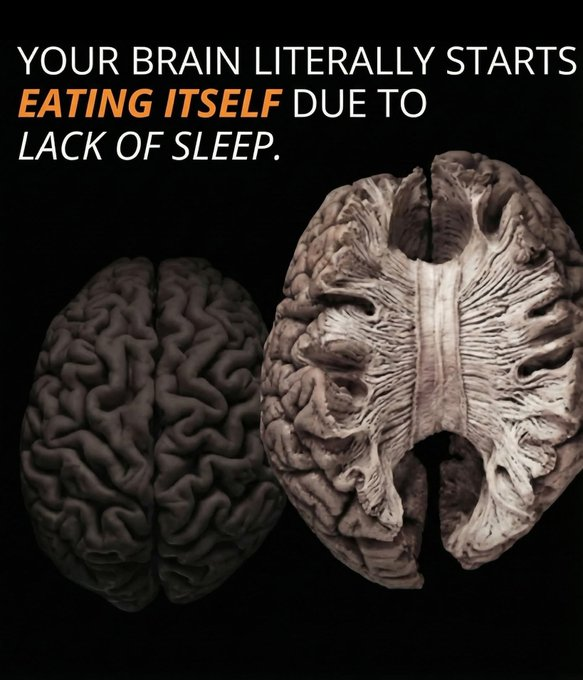
Shining Science: New research warns that missing sleep forces your brain to “eat itself” by activating over-aggressive immune cells.

New research warns that missing sleep forces your brain to “eat itself” by activating over-aggressive immune cells.

Chronic sleep deprivation does more than just leave you feeling groggy; it fundamentally alters the landscape of your brain’s immune system. Recent studies highlight that when we skip rest, specialized glial cells—specifically astrocytes and microglia—shift into overdrive. While astrocytes usually perform the vital task of clearing away neural debris and unwanted synapses, prolonged wakefulness causes them to become hyperactive. This leads to a destructive process where they begin to dissolve healthy synaptic connections, essentially pruning the brain’s circuitry in ways that can cause lasting neurological harm.

The implications of this “self-eating” phenomenon extend far beyond temporary brain fog. Excessive activation of microglia is a known precursor to neurodegenerative conditions, including Alzheimer’s disease. Beyond structural damage, chronic sleep loss cripples the brain’s ability to consolidate memories, regulate emotions, and maintain hormonal balance.

Prioritizing rest is no longer just about productivity; it is a critical defense mechanism against the long-term cognitive decline and neurological disorders associated with an overstimulated immune response in the brain.

Posted in Uncategorized | Leave a comment