A special series from The State of Us podcast. Sir Jeffrey Donaldson has pleaded not guilty to all 18 charges he faces, including one count of rape. His wife, Lady Eleanor Donaldson, faces a trial of the facts on related charges of aiding and abetting, which she has denied. The jury retires to consider its verdict on a combined 23 charges. Warning: Contains distressing content.
A special series from The State of Us podcast. Sir Jeffrey Donaldson has pleaded not guilty to all 18 charges he faces, including one count of rape. His wife, Lady Eleanor Donaldson, faces a trial of the facts on related charges of aiding and abetting, which she has denied. The jury retires to consider its verdict on a combined 23 charges. Warning: Contains distressing content.
A special series from The State of Us podcast. Sir Jeffrey Donaldson has pleaded not guilty to all 18 charges he faces, including one count of rape. His wife, Lady Eleanor Donaldson, faces a trial of the facts on related charges of aiding and abetting, which she has denied. The jury retires to consider its verdict on a combined 23 charges. Warning: Contains distressing content. For more on this story:
Washington’s decision to restrict access to cutting-edge AI has sparked fears that the technology itself is becoming a geopolitical tool. For Europe, the race is on to decide whether it can build its own alternatives.
As G7 leaders gather in France for the third day of their summit to discuss artificial intelligence, fears of a potential American “kill switch” have rarely felt more real. Access to AI can be restricted overnight, as was made clear when the Trump administration cut off foreign access to Anthropic’s most powerful models. So can Europe afford to rely on technology it does not control? And does it need its own AI, or is that unrealistic? At the G7, leaders meet the CEOs shaping the future of AI — but the bigger question remains unanswered.
Axios’ Marc Caputo interviews President Trump yesterday at the White House. Image: “The Axios Show”Watch the episode.
President Trump said on “The Axios Show” yesterday that he reached the point last week of seeing Anthropic as a national security threat.
But in the conversation with Marc Caputo, Trump signaled relations have eased since, suggesting the White House’s tumultuous relationship with the tech giant is on the mend, Axios’ Maria Curi reports.
Why it matters: National security concerns and personality clashes have left the AI heavyweight at the center of a government crackdown, with the company facing treatment typically reserved for foreign adversaries.
Last week, the administration restricted any country outside of the U.S., and foreign nationals within the U.S., from accessing Anthropic’s most advanced models.
Asked whether he views Anthropic, or CEO Dario Amodei, as a threat to national security, the president replied: “Well, not now, but a week ago, maybe.” He walked away from a meeting on the sidelines of the G7 summit with the view that Amodei was “nice” and “smart.
“Trump added: “He responded to us very quickly because you know it’s a tremendous liability.
“In response, Anthropic told Axios: “We are grateful to the administration for their ongoing partnership in working to get this matter resolved as quickly as possible. We remain committed to working alongside them towards our shared goals of protecting critical infrastructure and making sure the U.S. leads in AI.”
Reality check: Trump didn’t rule out leveraging emergency powers under the Defense Production Act if the AI lab didn’t get in line.Trump said: “I have the power to use a lot of things.”
President Trump sits down with Axios’ Marc Caputo for a wide-ranging conversation about power, war and America’s role in the world. In this episode of The Axios Show, Trump discusses what he has learned about wielding power, why he says there are “no limits” to presidential power, and how he views the leaders shaping global politics, including China’s Xi Jinping and India’s Narendra Modi. The conversation centers on Iran, where Trump defends the military campaign, the deal that followed and his decision to stop short of further escalation. He also discusses the Strait of Hormuz, Israel and Benjamin Netanyahu, Cuba, Venezuela, artificial intelligence, Anthropic, China’s AI race and how he thinks about maintaining power in the final stretch of his presidency. This episode has been edited for brevity.
Watch the extended interview here: https://www.axios.com/2026/06/19/axio… Timestamps: 0:00 – Welcome to The Axios Show 0:11 – The one big thing: power 1:37 – “I’m the boss” and the G7 3:36 – What Trump sees in world leaders 4:05 – Trump on Xi Jinping and China 6:11 – Venezuela, military power and oil 7:19 – Trump on Modi, Pakistan and global leadership 9:08 – Macron, the G7 and Trump’s “weakness” 11:18 – Trump on Iran and the limits of power 12:09 – Was the Iran deal “unconditional surrender”? 13:39 – Trump defends the Iran campaign 15:27 – The Strait of Hormuz and the risk to oil 17:44 – Secret ship movements out of the Gulf 19:05 – Cuba, Venezuela and the Western Hemisphere 22:29 – Trump on American influence in the hemisphere 23:35 – Iran, nuclear weapons and Israel 25:59 – Trump on Netanyahu and Lebanon 26:59 – Trump on artificial intelligence as a weapon 27:45 – Anthropic and national security 28:37 – Could Trump shut down an AI company? 28:45 – Trump on beating China in AI 29:45 – The Defense Production Act and AI regulation 30:35 – Trump on maintaining power 31:39 – Trump on fixing the White House 34:04 – Closing
Data: OpenRouter. (Includes the top 50 models.) Chart: Erin Davis/Axios VisualsThis intelligence for AMers is adapted from a special takeover issue of Jim VandeHei’s new weekly newsletter for CEOs:
Cheap, powerful, mostly Chinese open-source AI models are seeping into American companies, often unnoticed.
Why it matters: Unlike closed models such as Anthropic’s Claude or OpenAI’s ChatGPT, open-source AI is free to download, cheaper to run, and dominated by China.
Even the richest software company on Earth can’t hold the line on closed American-only models:
Axios’ Ina Fried scooped this week that Microsoft is considering using the Chinese AI model DeepSeek as a cheaper option to powerCopilot Cowork, the company’s agentic assistant and the most compute-hungry part of Microsoft 365.
So the open-source question is shifting from if to how.
The big picture: The debate over closed vs. open models is also a U.S. vs. China battle. Dominating open-source AI is China’s national strategy.
“Open-source models are dominated by the Chinese — they’re like nine months behind the state of the art,” a top tech exec tells Mike. “And they’re significantly cheaper to run. If you had to buy the frontier models from the top labs, a lot of people would be priced out. We’re talking about a 10x, sometimes a 100x, price difference.
“The issue is more urgent than ever, as companies debate heavy reliance on America’s dominant and expensive closed models: Claude, ChatGPT and Google’s Gemini.
How we got here: “Open source” means the model weights — the actual trained intelligence — are public. Anyone can download, modify and deploy them. The best-performing, most-used ones are Chinese.
The U.S. incentivized its frontier AI labs to optimize for revenue — with their eyes on trillion-dollar IPOs. That pushed them toward subscriptions and closed ecosystems where every use can be metered.
The performance of DeepSeek V4 and other leading Chinese models lags U.S. models. But the gap is closing fast.
Behind the scenes: Some companies are already running Chinese models, unbeknownst to their CEOs, because vendors and engineers chose them on price.
The AI agent platform Lindy switched 100% earlier this month to DeepSeek V4, citing millions in savings and better performance.
The bottom line: Open-source Chinese models are good enough for most work at a fraction of the price. But they come with security risks that many companies aren’t grappling with: Beijing has a potential backdoor into many companies, posing a regulatory threat as U.S.-China competition escalates.If you’re a CEO or on a CEO’s team: Ask to join Jim’s new weekly Axios C-Suite newsletter.
Yes, Peter Thiel is openly gay. The billionaire tech entrepreneur and venture capitalist publicly identifies as a gay man and famously made history as the first speaker to declare from the stage that he was “proud to be gay” at the 2016 Republican National Convention. [1]
Key details about his personal life:
Outing: Thiel came out to friends in 2003, but his sexual orientation became highly publicized when he was outed in 2007 by the website Valleywag.
Marriage: He married his longtime partner, Matt Danzeisen, in a private ceremony in Vienna in 2017.
Family: The couple has two daughters together through surrogacy.
While a prominent figure in the LGBTQ+ community, discussions on platforms like Reddit indicate there is mixed opinion regarding his political alignments, as he has financially supported conservative figures and policies that critics argue undermine LGBTQ+ rights. [1, 2, 3]
For more than 100 years, TIAA has helped millions of Americans — from educators to healthcare workers to public servants — turn their savings into guaranteed income they cannot outlive. Today, the company is expanding beyond its traditional 403(b) roots, pioneering lifetime income solutions inside 401(k) plans and using AI to better protect and serve participants. In this episode, Fortune’s Editor-in-Chief Alyson Shontell sits down with TIAA President and CEO Thasunda Brown Duckett to discuss America’s growing retirement crisis, the importance of lifetime income, and how TIAA is using technology and partnerships to build a more secure future for retirees.
00:00 Intro: The State of Retirement in America 00:45 Why America Faces a Retirement Crisis 05:01 What Lifetime Income Really Means 08:33 The Story That Changed Her Career 12:14 Expanding TIAA Beyond Its Traditional Market 14:13 Taking the CEO Role During COVID 17:37 AI, Leadership, and the Future of Work 23:21 How AI Helped Stop a $3 Million Scam 30:16 From Intern to Fortune 100 CEO 43:01 The Leadership Philosophy That Guides Her Life 49:36 Advice for the Next Generation Subscribe to Fortune’s YouTube: http://www.youtube.com/subscription_c… Subscribe to Fortune: https://fortune.com/subscribe/?utm_so…
Fortune Magazine is a global leader in business journalism with 55 million monthly page views and a readership of nearly 32 million, with major franchises including the Fortune 500 and the Fortune 100 Best Companies to Work For. The new Fortune video channel dives into personal stories from business owners and entrepreneurs becoming successful in business and sharing their tips to help you reach your goals. Website: http://fortune.com/ Facebook: / fortunemagazine Twitter: / fortunemagazine TikTok: / fortune
AI TIAA
AI Overview
TIAA (Teachers Insurance and Annuity Association of America) is a major American financial services organization. Originally founded by Andrew Carnegie, it specializes in providing retirement, investment, and wealth management services for people working in academic, research, medical, cultural, and governmental fields. [1, 2]
Core Details & Offerings:
Mission: Built to help those who serve others (teachers, healthcare workers, and nonprofit employees) achieve a dignified and secure retirement.
Scale:Manages over $1.5 trillion in assets and serves millions of active and retired individuals.
What They Do: Provide retirement plans (like 403(b)s and 401(k)s), life insurance, mutual funds, and annuities.
Global Asset Management: Operates a global investment manager called Nuveen. [1, 2, 3, 4, 5, 6]
Are you currently employed at a university or nonprofit and looking into your employer-sponsored retirement plans, or are you researching wealth management options?
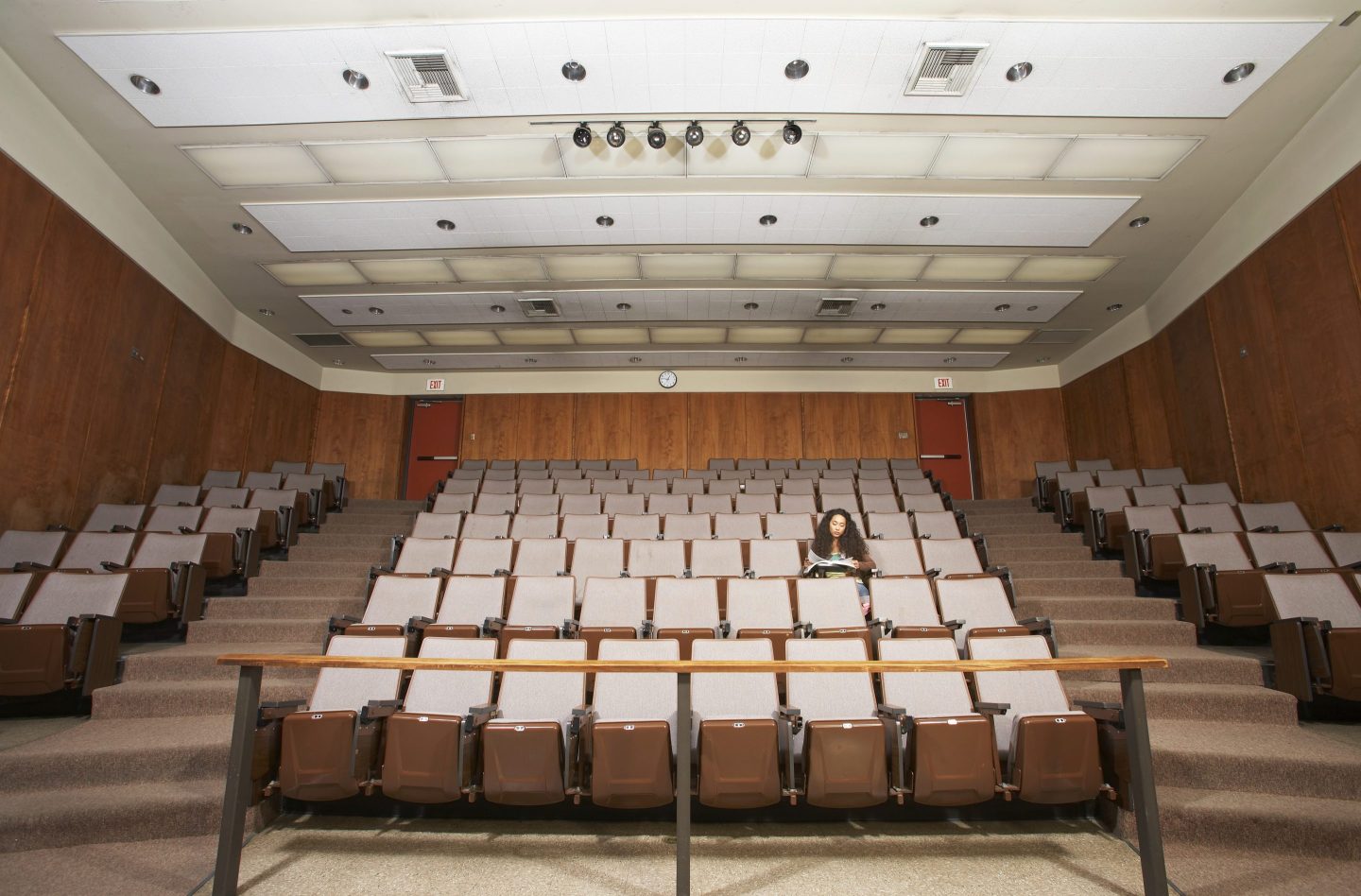
Colleges’ student populations and finances are headed for a cliff.Tom Fowlks via Getty Images
Universities and colleges across the country have been dealing with a ticking time bomb since the Great Recession, and a growing number of them are saying that it’s about to go off, next semester.
Recommended Video
A series of announcements over the past month by the highest offices of U.S. universities read like an obituary to a higher learning model that no longer works for either students or the institutions tasked with teaching. And that obituary has been authored in slow motion by the declining birth rate of the last two decades.
“Enrollment volatility is widespread, unpredictable and the ‘new normal’ for even strong, well-resourced universities,” J. Michael Haynie, Syracuse University’s chancellor, wrote in a note to faculty and staff last week, announcing the school had missed its undergraduate enrollment target for the next fiscal year.
“The fall 2026 enrollment shortfall carries real financial consequences—including a budget deficit, something the University has not experienced in quite some time,” he continued.
Many more schools are being forced into similar write-downs as enrollment plummets. In fall 2025, total post-secondary enrollment in the U.S. rose 1%, down from a 4% increase measured the year before, according to the National Student Clearinghouse Research Center. At private four-year institutions, enrollment last year dipped 1.6%.
Aggregate enrollment data for next year won’t be available for months, but several schools have already missed their enrollment targets for next fall. A demographic clock determining college-aged student supply started ticking 18 years ago in the wake of the Great Recession, when insecure American households decided to put off having children. With the eldest of that cohort now of college age, schools are having to pay for those decisions taken almost two decades ago. As one university president put it recently, it has left higher education at a “crossroads.”
The decline of the liberal arts school
Almost every school is struggling, but the enrollment cliff is an existential challenge for the legions of small private schools spread across the country. While larger institutions are experimenting with different revenue streams or trying to attract new demographics of students, the classic four-year, liberal arts college is at serious risk of extinction due to financial constraints. In New England, the cradle of liberal arts schools, Hampshire College announced in April it would close after the fall semester, explicitly citing enrollment issues.The region has seen 32 four-year colleges close down or merge in the last decade, more than a third shutting down since 2020.
The U.S. currently has around 4,000 colleges, many of which you’ve probably never heard of, according to Sandy Baum, a senior fellow at the Urban Institute who researches higher education financing. The Federal Reserve has found around 60 colleges are closing every year, a rate that has ramped up significantly over the past decade and almost exclusively impacted private institutions with small student bodies. In a worst-case scenario where enrollment drops 15% between 2025 and 2029, the Fed projected annual closures would more than double.
“Forget the elite institutions. That’s not part of it,” Baum told Fortune. “If you’re enrolling 300 students, it’s going to be really tough to make it work, and so some of them will have to go out of business.”
Where have all the kids gone?
Universities—even flagship ones—are already pricing in steep budget cuts for next year in response to shrinking tuition revenue.The University of Vermont is planning a $12 million budget deficit next fiscal year, the school announced last month after reporting a 15% drop in freshman undergraduate enrollment. The University of Wyoming is similarly facing a $15 million shortfall next year, due to shrinking enrollment, inflation and falling investment.
At the University of Oregon, President Karl Scholz announced in a note to staff last month that the institution was enacting $30 million in budget cuts, primarily due to declining out-of-state-enrollment, and warned the school’s deficit could rise to some $65 million in the coming years if current trends hold steady.
“I believe we are now at a crossroads,” Scholz wrote. “These dynamics are not affecting just the University of Oregon: they represent a changing reality across higher education.”
Many schools have pointed to falling out-of-state and international enrollment as a significant financial constraint. Over the past few decades, public flagship universities have invested heavily in attracting more transplants who can be charged higher tuition fees, with the share of non-local students rising an average 55% between 2002 and 2022, according to research from the Brookings Institution.
But that model has started to show signs of weakening. Out-of-state domestic enrollment at large flagship universities has held steady, but international freshmen have become a rare breed. Undergraduate international enrollment grew 3.2% last fall, according to the National Student Clearinghouse data, but that was less than half recorded in 2024, while graduate international enrollment declined nearly 6%. Those trends persisted into last spring, when foreign student enrollment at U.S. universities fell 20% year-on-year, according to a report published last month by NAFSA, an education non-profit.
The Trump administration’s hardline approach to foreign-born students is partly to blame, as the threat of revoked visas has discouraged many potential learners from choosing U.S. colleges. High tuition fees and the overall cost of living has also pushed many U.S.-born young adults to reconsider their option, with a rising share opting for community colleges or trade schools.
But though many university provosts and presidents have pointed to geopolitical and policy factors Baum cautioned against interpreting the enrollment cliff as a cyclical struggle, particularly for smaller schools who are struggling to keep domestic enrollment numbers up anyway.
“There’s a decline in the number of high school graduates in this country,” she said. “This is not a surprise. We’ve seen this coming for a long time, but we’re now sort of getting to the point where it’s actually happening.”
Researchers have been predicting a demographic cliff for college-aged Americans ever since families started having fewer babies two decades ago, around the time of the Great Recession.
With the oldest in that cohort now turning 18, universities are starting to feel the sting of household choices made years ago. Undergraduate enrollment already dipped 15% between 2010 and 2021, according to the National Center for Education Statistics, and could spiral further still. A 17% decline in birth rates after 2007 translates to 576,000 fewer college-aged Americans between 2025 and 2029, according to research from RC Strategy, an advisory firm. That’s almost four times more than the entire student body enrolled last year at Arizona State University, the country’s largest education institution by headcount.
Trouble for the little guys
Highly prestigious schools, including the Ivies or public systems with large endowments like the University of California, might be insulated from the demographic crisis, Baum said. Demand for spots in these institutions is likely to stay high, and schools will keep having their picks of students.
The outlook isn’t as rosy elsewhere. Flagship state schools and large private institutions like Syracuse, highly regarded but a step below the elite level, are likely to face much greater competition for students in the years ahead. Last year, Syracuse was one of several schools to offer last-minute scholarships to students who had yet to commit in a bid to boost enrollment.
Some institutions, like the University of Arizona, are intentionally lowering class sizes to improve academic performance and graduation rates, while reducing scholarship expenses and national recruitment burdens. Others, in a bid to stay solvent, are advertising tweaked curricula to older adults, a growing market of prospective learners looking to acquire new skills or change careers. A survey published earlier this month by the Council for Adult and Experiential Learning found 41.7 million Americans between the ages of 25 and 64 intend to enroll in some type of higher education within the next two years
But while larger institutions or even smaller, specialized ones might creatively patch over their financial woes, a greater reckoning is likely coming for small private schools peppered across the country. Dealing with high competition for enrollment and unable to amass the same financial resources as larger universities to pivot towards different audiences, many of these schools will have no option but to shut down.
“Most institutions don’t have significant endowments, but there are thousands of institutions—most of them you may never have heard of—that are tuition-dependent,” Baum said. “When they don’t have enough students, they’re in financial trouble.”
Subscribe to Fortune Gulf Brief. Every Tuesday, this new newsletter delivers clear-eyed, authoritative intelligence on the deals, decisions, policies, and power shifts shaping one of the world’s most consequential regions, written for the people who need to act on it. Sign up here.
“I allow myself to hope that the world will emerge from its present troubles, that it will one day learn to give the direction of its affairs, not to cruel swindlers and scoundrels, but to men possessed of wisdom and courage. I see before me a shining vision: a world where none are hungry, where few are ill, where work is pleasant and not excessive, where kindly feeling is common, and where minds released from fear create delight for eye, ear and heart. Do not say this is impossible. It is not impossible. I do not say it can be done tomorrow, but I do say that it could be done within a thousand years, if only men would bend their minds to the achievement of the kind of happiness that should be distinctive of man.” — Bertrand Russell, Human Society in Ethics and Politics

 Axios’ Marc Caputo interviews President Trump yesterday at the White House. Image: “The Axios Show”
 But in the conversation with Marc Caputo, Trump signaled relations have eased since, suggesting the White House’s tumultuous relationship with the tech giant is on the mend, Axios’ Maria Curi reports.
 Asked whether he views Anthropic, or CEO Dario Amodei, as a threat to national security, the president replied: “Well, not now, but a week ago, maybe.” He walked away from a meeting on the sidelines of the G7 summit with the view that Amodei was “nice” and “smart.
 Data:
Data:  If you’re a CEO or on a CEO’s team:


 / fortunemagazine
  / fortunemagazine
  / fortune