Can’t-miss innovations from the bleeding edge of science and tech Email address Sign Up
Award winning economist and Brown University professor Roberto Serrano says he has detected what appears to be the largest AI cheating scandal in Ivy League history.
As Spanish newspaper El País reports, Serrano noticed red flags as soon as he looked at the scores of a March midterm exam for one of the classes he teaches, an advanced undergrad course in mathematical economics.
In other words, it’s not a stretch to assume students gave in to the temptation to ask an AI chatbot for answers, particularly in the confines of their own homes without a teaching assistant looking over their shoulder. In Serrano’s testing, that appeared to be the case.
“Some answers contained unusual passages that coincided with results obtained after running the questions through ChatGPT,” Serrano told El País.
Perhaps most tellingly, the average score of an in-person final, which accounted for half of the final grade of the class, was an abysmal 48 out of 100. Of the 27 students who didn’t even bother to show up for the test, 22 had scored a 100 during the midterm exam, providing plenty of credence to Serrano’s theory.
“The empirical evidence of fraud is overwhelming,” he told the paper.
The incident highlights just how pervasive the use of AI has become in the classroom. Even students at highly reputable Ivy League schools are resorting to the tools to cheaply score high grades — even when doing so directly contradicts an honor code they all swore to uphold.
Compounding the concerning development, literacy and numeracy rates have taken a major hit over the last couple of years. College professors warn that we’re hitting a crisis point as incoming students barely have a middle-school level understanding of math and other subjects.
Some professors are lamenting that they’ve quickly become “plagiarism cops,” whose main job it is to root out AI-facilitated cheating instead of actually teaching. It’s a cat-and-mouse game greatly complicated by rapidly improving tech that’s making cheating harder to spot.
It shouldn’t come as a surprise that Serrano has decided to stop giving take-home exams altogether.
A similar story is playing out at other Ivy League schools. As The Atlantic reported last month, Princeton recently stopped a 133-year-old “Honor Code” tradition involving professors leaving the room when students, who sign a pledge not to cheat, take their final exams.
Thanks to the dramatic uptick of AI use and academic dishonesty in the classroom, Princeton did away with the tradition altogether.
“There’s an air of people cheating on take-homes and people just using ChatGPT,” Princeton senior and former chair of the Honor Committee Nadia Makuc told The Atlantic. “As long as people think there is more cheating, it encourages more cheating.”
Beyond the loss of integrity, AI cheating is eroding the trust between students and educators, while the latter worry about the deteriorating value of a college degree.
“If we no longer defend truth and decency and honesty, then what kind of credibility are we going to have as academics?” Serrano told El País.
I’m a senior editor at Futurism, where I edit and write about NASA and the private space sector, as well as topics ranging from SETI and artificial intelligence to tech and medical policy.
Summary: Creatine is globally recognized as a staple gym supplement sold by the tub to build lean muscle and boost athletic performance. However, because the human brain runs on the exact same cellular bioenergetics as skeletal muscle, neuroscientists have increasingly wondered if the compound’s energy-boosting properties can operate above the neck to treat mood disorders.
A pioneering systematic review investigated this quiet possibility, executing a rigorous clinical audit of existing data to ask a fundamental question: Can creatine serve as an effective therapeutic intervention for depression?
Key Facts
The Neuroenergetic Hypothesis: The brain is a metabolically demanding organ, consuming a massive share of the body’s energy relative to its size. Mood disorders are frequently linked to altered creatine metabolism and impaired cellular energy production, making the restoration of adenosine triphosphate (ATP) via creatine a highly logical therapeutic target.
The Success Signals: Two trials drawn from a study of women with major depressive disorder showed that adding 5 g of creatine daily to the antidepressant escitalopram produced a massive therapeutic drop in symptoms compared to a placebo, achieving an impressive Cohen’s d effect size of 1.13. Another trial saw a steep decrease in symptoms when pairing creatine with cognitive behavioral therapy (CBT).https://ce91e8e1b6c288738c30476f79591da8.safeframe.googlesyndication.com/safeframe/1-0-45/html/container.html
The Null Findings: Conversely, three trials reported zero clinical benefit. Creatine failed to alleviate symptoms in patients who were already treatment-resistant to standard medications, generated no statistical difference in adolescent girls, and showed no effect in individuals experiencing depressive episodes linked to bipolar disorder.
The Bipolar Mania Warning:Crucially, two patients with bipolar disorder who received creatine developed hypomania or mania during the trial. This safety signal serves as a sobering medical reminder that shifting cellular energy pathways can induce volatile adverse events depending on a patient’s underlying psychiatric architecture.
The Sex Dependency Clue: Preclinical animal research indicates that creatine alters depression-like behavior differently in male and female rodents. This biological divergence may explain why the human trials that enrolled exclusively female cohorts yielded the most significant clinical success.
Safety & Gastrointestinal Profile: Outside of the critical mania risk isolated in the bipolar cohort, creatine maintained an exceptionally high safety profile across the trials, with adverse events strictly limited to mild gastrointestinal discomfort.
Source: Genomic Press
Walk into any gym supplement aisle and creatine is there, sold by the tub to people chasing bigger muscles. It is one of the most studied compounds in sports science. What far fewer people know is that the brain runs on much the same chemistry the muscles do, and that the energy creatine helps supply may matter just as much above the neck as below it.
A new systematic review, published today in Brain Medicine, takes that quiet possibility seriously and asks a hard question. Can creatine help treat depression?
A new study unmasks a stark split decision regarding creatine’s efficacy as an antidepressant tool, demonstrating robust therapeutic acceleration in adult female cohorts alongside dangerous mania induction risks within bipolar populations. Credit: Neuroscience News
The team behind the review, led by Bassam Jeryous Fares of the University of Ottawa, did not run a new trial. They gathered the ones that already existed. After screening the literature, they settled on six published reports describing five randomized controlled trials, the kind of study in which neither patient nor doctor knows who received the real compound and who received a placebo.
Those trials had been conducted across five countries, in South Korea, the United States, Brazil, Israel, and India, and together they enrolled 238 participants at baseline, 126 on creatine and 112 on placebo. The average age was 36 years. Most participants were women. Two of the trials enrolled women only.
Four of the trials studied major depressive disorder. One studied people with bipolar disorder who were living through a depressive episode. Because the studies differed so widely in design, the authors did not pool the numbers into a single statistic. They summarized them in narrative instead, letting each trial speak for itself.
A Split Decision
Here is where the story refuses to resolve cleanly. Two of the five trials, both drawn from the same study of women with major depressive disorder, found real benefit. When five grams of creatine per day was added to the antidepressant escitalopram, depressive symptoms fell further than they did on placebo after eight weeks. The effect was large by the usual statistical yardsticks, with a Cohen’s d of 1.13 on the Hamilton Depression Rating Scale, and more women reached remission. A separate trial paired creatine with cognitive behavioral therapy and saw a steeper drop in symptoms on a standard questionnaire than therapy plus placebo produced.
Then the picture darkens. The remaining three trials found nothing. One saw no effect of creatine, at five or ten grams daily, in people who had already failed to respond to medication. Another, testing several doses in adolescent girls, found no difference from placebo.
The last looked at people with bipolar disorder in a depressive episode and again found no treatment benefit. Worse, two of those bipolar patients taking creatine developed hypomania or mania, a sober reminder that the same compound can behave very differently depending on the diagnosis.
Why Creatine Might Matter for the Brain
The logic behind the experiments is not far fetched. The brain is an expensive organ, burning energy at a rate out of all proportion to its size, and creatine helps cells rebuild adenosine triphosphate, the molecule that pays for that work. Studies of people with mood disorders have found altered creatine metabolism in the brain, and impaired energy production has been proposed as one root of depression.
Creatine may also nudge the pathways that govern dopamine and serotonin, the neurotransmitters that most antidepressants target. The authors are careful here.They note that the link between brain creatine and mood remains correlational, not proven cause and effect, and that the biology of depression has many moving parts.
“The signal is interesting, but it is not a verdict,” said Bassam Jeryous Fares, first author of the review and a student in the Faculty of Medicine at the University of Ottawa. “Two trials pointed one way and three pointed another. That is not the kind of evidence on which you change clinical practice. It is the kind that tells you the question is worth further exploration.”
Nicholas Fabiano, corresponding author and a psychiatry resident at the University of Ottawa, framed the work as a starting point rather than a conclusion. “Creatine appears to be a safe intervention. The adverse events we found were limited to mild gastrointestinal discomfort. We cannot yet reliably say that creatine helps with depressive symptoms or if the findings are generalizable to everyone.”
What Comes Next
The review does not pretend to settle the matter. The authors flag the obvious limitations. The trials were small. The sexes were unbalanced, with two studies enrolling only women. The quality varied, with two trials judged at low risk of bias and three carrying some concern, arising mostly from how patients were assigned and how missing data were handled. The findings, the authors stress, are not yet generalizable.
What they call for is more rigorous work. Larger trials. Longer ones, running past the eight week mark. Studies that test creatine alongside exercise, and studies that explore higher doses, while keeping in mind that more is not always better. There is even a tantalizing clue from animal research, where creatine altered depression like behavior differently in male and female rodents, which may help explain why the human trials with more women showed more promise. For now, creatine remains a promising lead rather than a proven remedy. The molecule that builds muscle has earned a closer look from the people who study the mind.
Key Questions Answered:
Q: What is the biological connection between a muscle-building supplement like creatine and a mental health condition like depression?
A:Even though we associate creatine with weightlifters, your brain is actually a massive energy hog, burning a wildly disproportionate amount of the body’s fuel to keep your thoughts, neurons, and synapses firing. Cells pay for this intense workload using a molecular currency called adenosine triphosphate (ATP). Creatine acts like a rapid-charging battery station, helping brain cells rebuild spent ATP on the fly. Because modern neuro-imaging frequently discovers broken energy production and altered creatine metabolism inside the brains of depressed patients, scientists hypothesized that supplementing with creatine could essentially “jump-start” the brain’s struggling power plants.
Q: Why did some clinical trials show that creatine worked wonders while others showed it completely failed?
A:This “split decision” is exactly why depression is so notoriously difficult to treat—it isn’t a single, uniform disease. The systematic review showed that creatine worked exceptionally well when paired with standard antidepressants in adult women, yet flopped in treatment-resistant patients and adolescent girls. This suggests that creatine’s success depends heavily on variables like a patient’s hormonal profile, biological sex, and age. Furthermore, animal research has confirmed that creatine shifts depressive behaviors differently in male versus female brains, meaning the high concentration of women in the successful trials likely tipped the scales toward a positive result.
Q: If creatine is a natural, over-the-counter supplement, is there any harm in a depressed person trying it?
A:While creatine is incredibly safe for the general public, typically causing nothing more than mild stomach discomfort, this review uncovered a critical, urgent safety warning for individuals with bipolar disorder. Two patients in the bipolar group who took creatine were rapidly pushed out of their depression and directly into states of hypomania or full clinical mania. Because creatine alters the brain’s baseline energy dynamics and can nudge neurotransmitters like dopamine and serotonin, it can behave like a wild card. No one dealing with a diagnosed mood disorder should ever self-prescribe creatine without direct, close supervision from their psychiatrist or healthcare team.
Editorial Notes:
This article was edited by a Neuroscience News editor.
Journal paper reviewed in full.
Additional context added by our staff.
About this depression research news
Author: Ma-Li Wong Source: Genomic Press Contact: Ma-Li Wong – Genomic Press Image: The image is credited to Neuroscience News
Despite this, many still prioritise to sell new garments and place responsibility on consumers through care labels and instructions to ensure extend use and minimise clothing waste. Our research shows that although some retailers offer care products and repair services, these options are often hidden and secondary in retail stores. This is a missed opportunity. We also found that consumers want practical support to maintain and repair clothing in ways that extend lifespans and reduce environmental consequences.
Extending lifespan is not only about buying secondhand or reselling; how clothes are washed, repaired, stored and worn also matters. This means that even without retail support, there are steps you can take today.
Here are five ways to extend the life of your clothes through everyday care:
Our mission is to share knowledge and inform decisions.
About us
1. Rethink your washing habits
While care labels contain information on what washing machine and tumble dryer programmes are suitable for garments, using these machines less often helps to preserve the textiles. Instead of machine laundry, try to air and re-wear items.
When it comes to denim or clothes from a charity shop, leaving them in the freezer for a couple of days can help to refresh the garment. For small stains, spot cleaning by hand is another option.
2. Know which materials you’re wearing
Garments and textiles are complex: fibres, structure, colour and design all change how clothes get used and looked after. Learning more about textiles can enable you to treat your garments better and make smarter purchases.
Products such as brushes, lint rollers and sweater combs can refresh your garments with minimal effort. However, results depend on the material. For instance, de-pilling is more successful on 100% wool garments than on synthetic blends.
Denim doesn’t need to be washed as often as you might think. nblx/Shutterstock
Stain removal depends on what the textile can handle, what various cleaning products do, and the type of stain. You can find information online in many languages.
As a result, downsizing and decluttering are popular. However, viewing your wardrobe less critically can help you rediscover forgotten favourites and unlock the potential of the garments you already own. Holding on to clothes not currently in use can be a smart choice. Future changes in fashion, your body or your taste can make you regret discarding old favourites. Assessing what you wear, what you never wear, and why can also help you avoid new purchases and make more successful ones.
Slow fashion content creators share tips on social media like “define your style in three adjectives” pinpointing the attributes you should look for in garments and outfits, or colour analysis that helps identify the tones and colours that suit you best. These methods can be useful to identify and recognise the clothes that bring real joy.
Learning to enjoy sewing repairs is a brilliant way to make your clothes last longer. Artem Stepanov/Shutterstock
4. Learn to repair and upcycle
You might know how to close a hole or replace a button, but how about darning socks, repairing knitted sweaters or hemming trousers? In our research, we found that even if consumers care about their clothes and want to extend their life, lack of repair skills can be a hindrance.However, the growing popularity of public repair workshops provide an opportunity to exchange repair skills and connect with a like-minded local community. Look for repair cafes via your local library, for example.
5. Choose retailers that prioritise aftercare
Fashion brands need to normalise extended use, and present garments as repair and care-worthy.
A few retailers have started to recognise the need to help consumers enjoy their clothes for longer and offer genuine after care. Look for brands and retailers that offer repair services, accessible original parts, patches and even repurposing and tailoring. This could encourage brands to provide more than just environmental messages on care labels or low-quality repair kits for hard-to-repair products.
The goal is to normalise caring for old products and make aftercare a core part of the retail industry, not an optional extra.
Published: November 24, 2009Last Updated: May 27, 2025
At midnight on July 1, 1997, Hong Kong reverts to Chinese rule in a ceremony attended by British Prime Minister Tony Blair, Prince Charles of Wales, Chinese President Jiang Zemin and U.S. Secretary of State Madeleine Albright. A few thousand Hong Kongers protested the turnover, which was otherwise celebratory and peaceful.
In 1839, Britain invaded China to crush opposition to its interference in the country’s economic, social, and political affairs.One of Britain’s first acts of the war was to occupy Hong Kong, a sparsely inhabited island off the coast of southeast China. In 1841, China ceded the island to the British with the signing of the Convention of Chuenpi, and in 1842 the Treaty of Nanking was signed, formally ending the First Opium War.
Opium in China
The widespread use of opium in China yielded high profits for British exporters while crippling the Chinese economy.
Britain’s new colony flourished as an East-West trading center and as the commercial gateway and distribution center for southern China. In 1898, Britain was granted an additional 99 years of rule over Hong Kong under the Second Convention of Peking. In September 1984, after years of negotiations, the British and the Chinese signed a formal agreement approving the 1997 turnover of the island in exchange for a Chinese pledge to preserve Hong Kong’s capitalist system.On July 1, 1997, Hong Kong was peaceably handed over to China in a ceremony attended by numerous Chinese, British, and international dignitaries. The chief executive under the new Hong Kong government, Tung Chee Hwa, formulated a policy based on the concept of “one country, two systems,” thus preserving Hong Kong’s role as a principal capitalist center in Asia.
In 2019, massive pro-democracy protests broke out in Hong Kong over growing oppression from mainland China. Scores of people in academia, media, as well as pro-democracy activists were arrested amid crackdowns.
A massive analysis of Swedish population records reveals that people with higher cognitive abilities are more likely to vote, donate to charity, and buy eco-friendly vehicles, suggesting general intelligence directly influences actions that benefit…
===================================
Intelligence found to predict prosocial behaviors like voting and charitable giving in massive study
A massive new study indicates that people with higher cognitive abilities are more likely to engage in behaviors that benefit society. The research links higher intelligence scores to higher rates of voting, charitable giving, and purchasing environmentally friendly vehicles. The findings offer a rare real-world look at how general mental capacity relates to cooperative actions. The study was published in the journal The Economic Journal.
Human beings are exceptionally cooperative animals. We routinely share resources with strangers and contribute to public goods. A public good is a shared resource that benefits everyone, even those who do not help pay for or maintain it. Finding a rational explanation for human cooperation has long puzzled evolutionary biologists.
Some prior academic theories suggested that generous actions might just be optimization errors. Under this idea, people act generously because they miscalculate the personal costs of their actions. Other theorists proposed that higher intelligence gives people a better capacity for ethical reasoning.A well-developed brain might allow a person to better understand the perspectives of other people.
If the ethical reasoning theory holds true, a higher cognitive capacity would naturally lead to stronger altruistic principles. People would want to act in ways that match their inner moral compass. Going against those principles could create mental discomfort. This psychological discomfort is known as cognitive dissonance.
Mikael Elinder and Oscar Erixson, economists at Uppsala University in Sweden, wanted to investigate whether intelligence directly predicts prosocial behavior. Prosocial behavior encompasses any action intended to help other people or society as a whole. Past research on this topic often relied on self-reported surveys or small laboratory games. Free daily newsletter
These traditional research methods have known limitations. People sometimes exaggerate their good deeds in surveys to look better in the eyes of researchers. In laboratory settings, the artificial nature of a game might not reflect how a person acts with their own money. To avoid these issues, the economists turned toward objective national government records.
The researchers analyzed a massive sample of 1.2 million individuals using Swedish administrative registers. Most of the subjects were men born between 1951 and 1979. These men underwent mandatory psychological and cognitive testing during military enlistment in their late teens. The researchers also looked at a large sample of about 3,000 women who voluntarily enlisted.
The military cognitive tests measured logical, verbal, spatial, and technical abilities. These scores are highly predictive of an individual’s intellectual capability throughout adulthood. The economists then linked these historical test scores to three objective measures of adult behavior. Validated government databases tracked the subjects decades after their original enlistment.
The researchers defined charitable giving using national tax agency records. During the specific study period, the Swedish government offered tax reductions for donations to approved humanitarian charities. The tax agency automatically recorded any gifts over a certain monetary threshold. This automatic recording eliminated the need for donors to actively file complex tax paperwork.
To track civic engagement, the researchers looked at validated voter turnout records from a European Parliament election. Voting takes time and effort, but an individual vote rarely decides an election. Political scientists often view modern voting as a civic duty that strengthens democratic institutions. Finally, the researchers checked national vehicle registries to see who owned cars powered by alternative fuels like electricity or ethanol.
The researchers found a strong positive association between cognitive test scores and all three behaviors. For men, a one standard deviation increase in cognitive ability was linked to a 40 percent increase in the likelihood of making a charitable donation. The same increase in cognitive ability was associated with a 31 percent higher chance of voting. It was also linked to a 14 percent higher chance of owning an eco-friendly car.
The female enlistees showed very similar patterns. Higher test scores predicted a robust swell in charitable giving and voting. The only difference was that the female data yielded results for eco-friendly car ownership that were not statistically significant.
The researchers found that scores on the logical and verbal portions of the military tests were the strongest predictors of generous behavior. Psychologists consider these specific sections to be the best proxies for general intelligence. General intelligence represents the overarching ability to reason, solve problems, and adapt to new situations.
Finding a statistical link between intellect and good deeds does not establish a direct cause. Intelligent individuals often grow up in wealthier households or better neighborhoods. These environments could independently foster prosocial habits. Parents might pass down an expectation of charity, or orderly neighborhoods might simply provide better conditions for a developing brain.
To account for these overlapping background factors, the researchers isolated a large group of 5,786 pairs of male twins within their data. Twins generally share the same upbringing, schools, and genetic background. Comparing one twin to another allows researchers to filter out the influence of shared family environments.
When the researchers compared twins, the mathematical estimates dropped but remained positive. A twin who scored higher on the cognitive tests was consistently more likely to vote and donate to charity than his brother. The relationship with owning an eco-friendly car also remained positive, though the difference between the siblings was not statistically significant.
This specific comparison suggests that unmeasured childhood environments explain about half of the initial association. Even so, subtracting those background influences left a robust mathematical relationship intact. The researchers interpret this as evidence of a genuine, direct link between intelligence and cooperative actions.
Elinder and Erixson also investigated whether other adult life outcomes explained the connection. They adjusted their statistical models for income, education level, marital status, and municipality of residence. Higher education partially explained why smarter people acted more generously. Schools often teach civic duties and explicitly expose students to broader societal issues.
Surprisingly, a person’s adult income did not explain the relationship. One might normally assume that smarter people earn more money, making it easier for them to afford charitable gifts or expensive vehicle purchases. The data did not support this specific idea. The link between intelligence and prosocial acts stood strong regardless of an individual’s personal wealth.
To verify their administrative findings, the economists also studied a smaller subset of enlistees who answered modern surveys. They found that individuals with higher cognitive scores explicitly described themselves as more altruistic. Altruism is the unselfish desire to help others without expecting a reward.
The researchers note a few caveats regarding their conclusions. The study primarily focused on monetary donations, voting, and car purchases. These distinct actions do not encompass every type of goodwill. Less intelligent individuals might simply express cooperative tendencies in other unmeasured ways, such as local community volunteering or manually helping neighbors.
Future research should explore exactly how related mental traits like empathy interact with general intellect. Understanding these mental mechanisms could help policymakers design better public awareness campaigns. If cognitive capacity dictates how people approach public dilemmas like climate change, governments might have to tailor interventions to different segments of the population. Environmental campaigns might eventually need to lean on simple behavioral incentives rather than relying solely on abstract moral arguments.
Photo illustration: Sarah Grillo/Axios. Photo: Anna Moneymaker/Getty Images
Tensions over pesticide use erupted in a heated Oval Office meeting last week, Axios’ Alex Isenstadt scoops.
The confrontation exposed a sharp fault line in Trump’s coalition: the push by RFK’s MAHA movement to reduce conventional pesticides vs. farming interests determined to preserve them.
The long-running fight came to a head during a tense Oval Office meeting last Thursday.
Trump, HHS Secretary RFK Jr., Agriculture Secretary Brooke Rollins and American Farm Bureau Federation President Zippy Duvall met to discuss a pesticide-focused executive order.
Kennedy’s team was already on edge over a Supreme Court ruling earlier that day that handed the pesticide industry a major legal win.
Kennedy told Trump that his order to cut pesticides in the food supply and study their effects would help offset it, according to three people familiar with the meeting.
Duvall, whose organization represents more than 5 million farming and ranching members, was adamant that Trump not sign the order — warning that doing so could cost him the support of farming interests.
Jonathan Lundgren, a South Dakota farmer and former USDA official who attended the meeting, tells Axios that Duvall’s decision to forcefully confront Trump was “shocking,” and that the president appeared concerned and “wanted to understand why Zippy was so worried.”
Trump had been expected to sign the order that afternoon. Suddenly, that wasn’t so certain. What followed was a clash between Kennedy’s team and Duvall, according to three people familiar with the fight.
The most heated exchange took place between Duvall and Kennedy deputy Calley Means, who told Duvall that it was clear that he hadn’t read Trump’s order.
Trump eventually signed the order. Duvall then said he’d support it.
Mike Tomko, an American Farm Bureau Federation spokesman, disputed the idea that Duvall was against exploring pesticide alternatives. Tomko said Duvall’s concerns centered on the “insinuation that our food supply is not safe.”
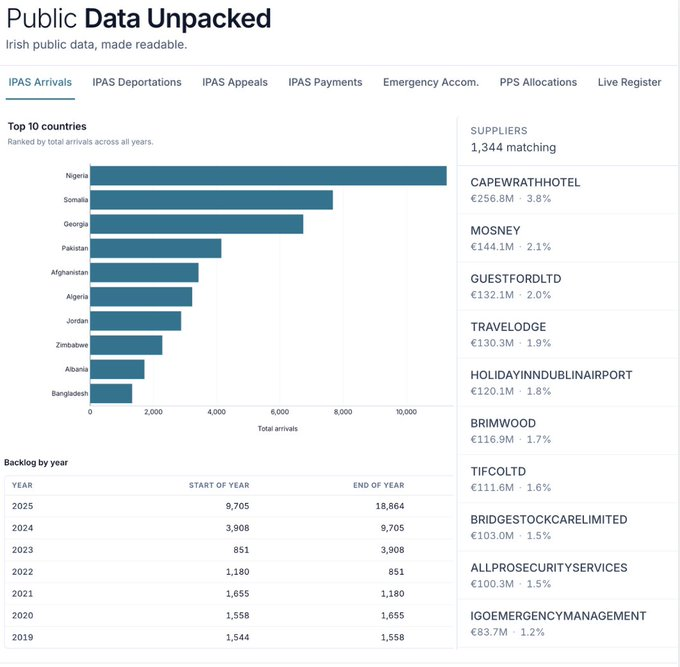
New Website Just Dropped. This one tracks Ireland’s asylum and immigration statistics using interactive dashboards. From IPAS spending to deportations, arrivals, PPS numbers. Using the data, we can see: 1) Arrivals from Somalia are up 90% in 2026 2) Backlog of asylum appeals is up 383% since 2023 3) Almost €300m has been paid to owners of CityWest. It was developed by a friend. I’m also working with other devs who want to make public data more open. We are all volunteers who care about Ireland. We receive €0 from Coimisiún na Meán Isn’t it amazing how none of our highly paid media are capable of this type of work? Why is that?
Ireland Minister Helen McEntee’s husband Paul Hickey is a director at AbbVie, makers of Lupron (used for puberty suppression in treating precocious puberty). Amid debates on child safeguarding, gender policies, and pharma ties to governmen, does this warrant more transparency on potential conflicts?
Watched youtube dementia excellent. 30 plus yrs and now in my 60’s I identify with most of the points made relating to signs of dementia and am wondering if there is a similar video by Dr Nakamura on traumatic brain injury
Dr. Nakamura does not currently have a dedicated video on traumatic brain injury (TBI). While his channel primarily focuses on age-related cognitive decline, lifestyle factors, and lowering the risk of dementia, other clinical experts have produced comparable videos exploring how TBIs disrupt neural pathways and impact daily functions. [1]
Understanding the intersection of long-term head trauma and aging is a deeply important topic, especially if you have managed these effects for decades. [1]
Recommended Expert Videos on TBI & the Aging Brain
The Long-Term Neurobiology of Head Injuries: The video The Unseen Impact of TBI on the Brain explains how the brain attempts to compensate for early-life trauma and why structural or psychiatric changes can progress over two or more decades. [1]
Neuroplasticity and Functional Circuitry: For a scientific look at how head trauma breaks and reorganizes neural links, Expert Insights: How Do We Study Traumatic Brain Injuries? breaks down diffuse axonal injuries, circuit disruptions, and how neuroplasticity alters post-injury emotional and cognitive behavior. [1]
Practical Cognitive Compensation: The video Changes in Memory After Traumatic Brain Injury features clinical insights from healthcare professionals at the Texas TBI Model System, offering practical strategies to manage shifts in executive function and memory. [1]
Structural Differences: TBI vs. Dementia
While the overlapping symptoms can make you feel a strong sense of identification with dementia videos, the underlying mechanisms differ:
Traumatic Brain Injury: Primarily stems from physical “circuit breaks” (axonal shearing) and localized tissue damage. The brain uses its redundancy and neuroplasticity to reroute signals around these static injuries. [1]
Progressive Dementia: Caused by active, ongoing cellular changes—such as abnormal protein accumulations—that progressively spread across various cognitive centers. [1]
Many of Dr. Nakamura’s recommended lifestyle modifications—such as metabolic tracking, targeted vascular health, and structured mental engagement—are equally vital for reinforcing a resilient, post-TBI brain as you navigate your 60s. [1, 2]
Are there specific long-term post-TBI challenges you are experiencing right now (like focus, fatigue, or memory shifts)? Sharing this can help me find more targeted neurological resources or professional guides for managing them.
This is for informational purposes only. For medical advice or diagnosis, consult a professional. AI responses may include mistakes. Learn more







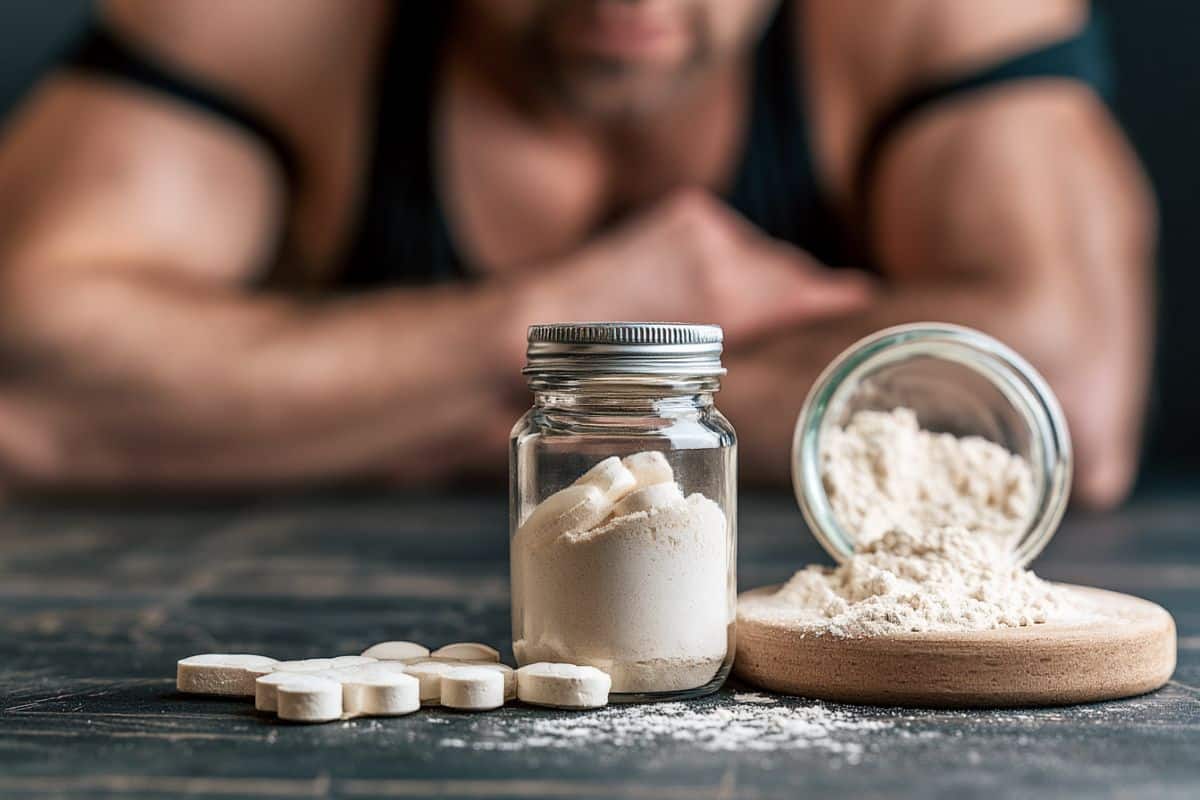


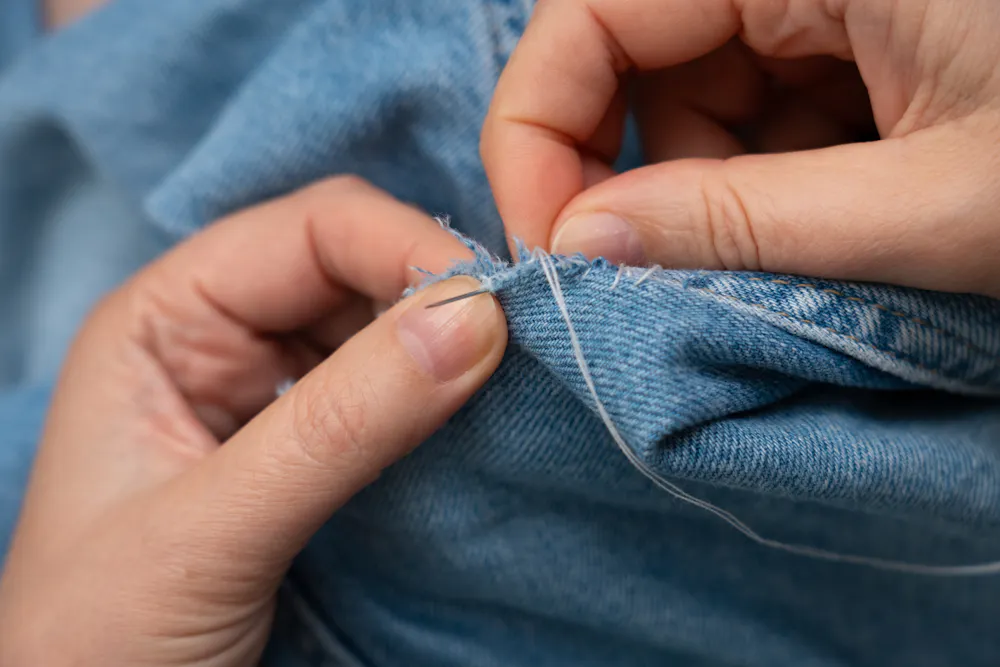


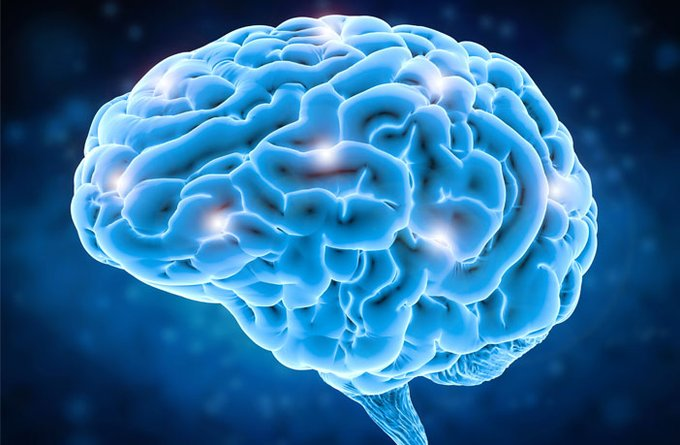
 Photo illustration: Sarah Grillo/Axios. Photo: Anna Moneymaker/Getty Images
 The long-running fight came to a head during a tense Oval Office meeting last Thursday.
 Kennedy’s team was already on edge over a Supreme Court
  Duvall, whose organization represents more than 5 million farming and ranching members, was adamant that Trump not sign the order — warning that doing so could cost him the support of farming interests.
 Trump had been expected to sign the order that afternoon. Suddenly, that wasn’t so certain. What followed was a clash between Kennedy’s team and Duvall, according to three people familiar with the fight.