
Oct 24, 2026
Narcissistic people are often charming at a dinner party and cruel in the car ride home, which tells you they can control it. Clinical psychologist Ramani Durvasula, author of It’s Not You, has studied narcissism since long before it became a buzzword, and she argues that most of what circulates online gets it wrong.
About the speaker: Ramani Durvasula, Ph.D., is a clinical psychologist, professor emerita of psychology at California State University, Los Angeles, and the founder and CEO of LUNA Education, Training and Consulting. She is the New York Times bestselling author of It’s Not You: Identifying and Healing from Narcissistic People and has trained therapists around the world on working with clients experiencing narcissistic abuse.
Get yours before it’s sold out!

Timestamps
00:01:04 Chapter 1: How to identify narcissism
00:05:59 Why narcissism is having its moment
00:26:27 The C-suite traits that help narcissists hide
00:31:41 The 5 types of narcissism
00:53:22 Why codependency is the wrong lens
01:03:19 Chapter 2: Signs you are in a narcissistic relationship
01:08:00 How love bombing works
01:16:43 What gaslighting really is
01:26:05 The self-blame trap
01:29:11 How these relationships affect your body
01:42:53 Chapter 3: How to grieve and recover after a narcissistic relationship
01:47:32 Radical acceptance & naming the grief
02:00:04 Healing without closure
02:05:40 The truth about no contact
02:08:22 Why healing happens in relationship
Prefer to listen to our interviews on Spotify? Explore our episodes here:https://open.spotify.com/embed/show/7KRYoRD1NdF2aoQcBMyPlb
Transcript
Below is a transcript of the first five minutes of this video interview. This is a true verbatim transcript that captures the conversation exactly as it happened. If you’d like to read the full transcript while following along with the video, click here.
I’m Dr. Ramani Durvasula, a clinical psychologist and the author of It’s Not You, identifying and healing from narcissistic people.
Chapter 1: How to identify narcissism
In the early 2000s, I started becoming interested in narcissism, and actually in narcissism itself, while I was a professor at California State University, Los Angeles, and was specifically looking at how narcissistic people made decisions and showed up in relationships. But where it got really interesting for me was when I was in private practice and more and more clients were coming in and describing relationship dynamics and partners and family members who had personalities very consistent with what I was looking at in the lab and studying narcissism. What would happen if you taught folks who are going through these relationships that this is indeed a pattern? It’s just not a difficult relationship. It’s a pattern.
And as I started to do that, for a lot of people, it was a light bulb moment. And what really struck me is that the world of mental health, there was very little literature looking at the impact of personality styles. And I found that with a few tweaks, we really could make leaps and bounds with people who are going through these relationships and really identify it as a real phenomenon that when a person is in any kind of close relationship with a narcissistic person, whether it’s an intimate relationship, a familial relationship, particularly a parent, or even a workplace relationship, very similar things happen to a person in one of those relationships. Ever since, you know, for the past few decades, I’ve been really focused on documenting this and figure out ways that we can work with people who are going through these relationships clinically and help them feel sane and ultimately grow after they’ve left these relationships or even if they stay in them.
I think there’s many good books out there about narcissism and a lot of them are more in the research realm. Once we jump it into the self-help, personal development space, one of the big errors I see is that the assumption is if somebody is in any kind of relationship with a narcissistic person, the only solution is to get out. And that is simply not accessible to the vast majority of people.
Obviously, when we’re taking on this issue of the problem with what we hear, I’m very aware that in some relationships it can be dangerous. And obviously in relationships where there’s acute, imminent danger, violence, we’re now talking about safety plans. We’re really talking about what traditionally has been talked about in the world of domestic violence. But in the vast majority of narcissistic relationships, there’s no physical violence. There’s no imminent threat of danger. What’s happening is Is a person who is in a very, very confusing situation. But when the books are saying, well, if you’re in a relationship with a narcissist, you’ve got to get out. Now people will often double down on what’s happening in the relationship because they’re saying, well, I don’t want to get out. So maybe that’s not really what’s happening, right? It’s a denial of what is happening in the relationship, which is a real risk.
My work from the beginning has almost been agnostic about leaving. If a person has to stay, if a person wants to leave, they can still heal. The guidance is actually pretty similar on recovery and growth and all of that. The difference is, frankly, for the people who decide to leave, they’re going to be dealing with a lot of kerfuffle in the beginning. There’s going to be anger and how dare you and who do you think you are and post-separation abuse. For the people who stay, they’re having to sort of navigate an ongoing stressor. But I do think it’s a mistake. For books that say, well, now that you know you’re in one of these relationships, the next step is to get out. That’s not at all the case. And since the beginning, and I’ve written multiple books on it, my first book on narcissism in relationships was called Should I Stay or Should I Go? I was already setting it out there as this is a choice.
And one of the biggest elements that everyone needs to know about healing, it’s one of the key elements of healing is something we call agency. Agency is just another word for choice. When a person’s in a emotionally abusive relationship, like a narcissistic relationship, choice goes out the window. You don’t feel like you can choose anything. You’re kind of along for this manipulative, abusive ride. But when healing means choice, that means you do have a choice. You might say, I’m not leaving this. I don’t want to live separately from my kids, or I’m part of a big family system, and this isn’t going to work in my culture. It’s knowing that I’m making this choice to not End this relationship or go no contact or cut it off. However, I’m also making the choice to engage with it differently. And that’s really where my work has focused on this concept of choice and that it’s not always about leaving. And in fact, I’d say well over half of cases, it’s not about leaving.
Click here to continue reading the video transcript.
Related Video
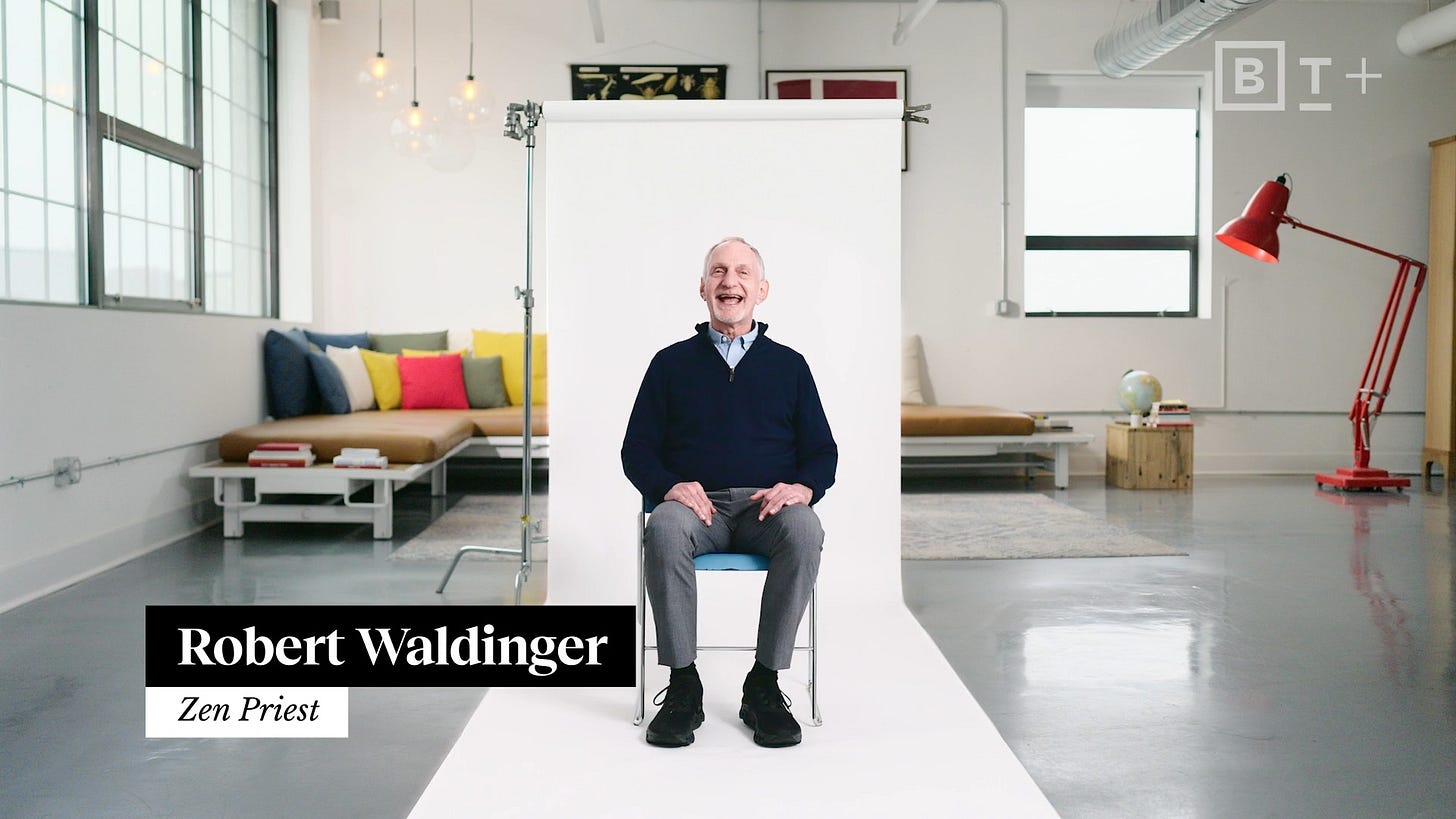
Embrace life’s messiness with 5 Zen lessons in resilience
In a world that constantly pushes for polished perfection, it’s easy to feel overwhelmed by life’s messier moments. But what if you didn’t need to fix or avoid them, and instead learned to approach them with compassion and presence? According to Harvard psychiatrist Robert Waldinger, director of the Harvard Study of Adult Development, Zen priest, and author of The Good Life, it starts with recognizing that everything, including you, is in constant flux.

Mini Philosophy | Starts With A Bang | Big Think Books | Big Think Business
Discussion about this video

The Big Think Interview
Intimate interviews with the world’s biggest thinkers.
Authors
Recent Posts

What is life? The deepest mystery of life’s origin from the universe to consciousness.
3 hrs ago•Big Think

Why the algorithm is sorting you into tribes
Oct 17•Big Think


