
‘If nothing is done, it’s almost inevitable’: Ukraine’s Yuriy Ryzhenkov on why steelmaking is on the brink of collapse as Russian bombing intensifies
By
Executive Editorial Director of Europe and the Middle East
Follow
October 12, 2026, 1:00 AM ET
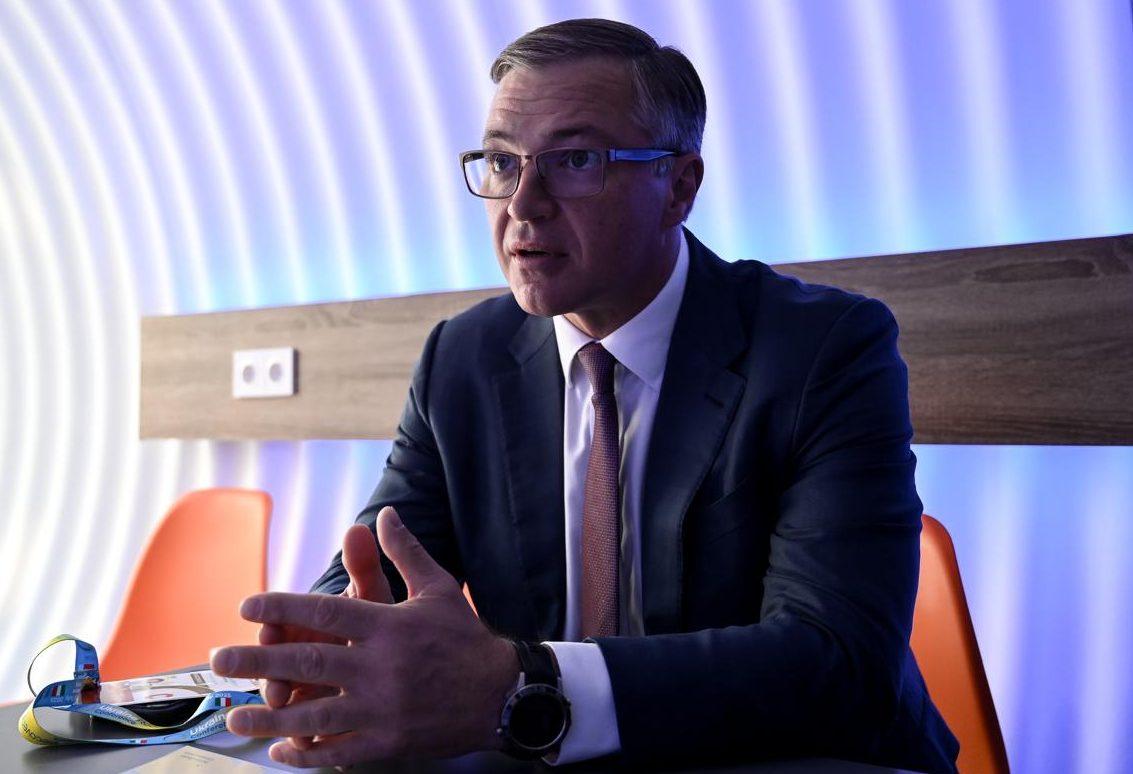
Yuriy Ryzhenkov, CEO of Metinvest, the largest steelmaker in Ukraine.Courtesy of Metinvest
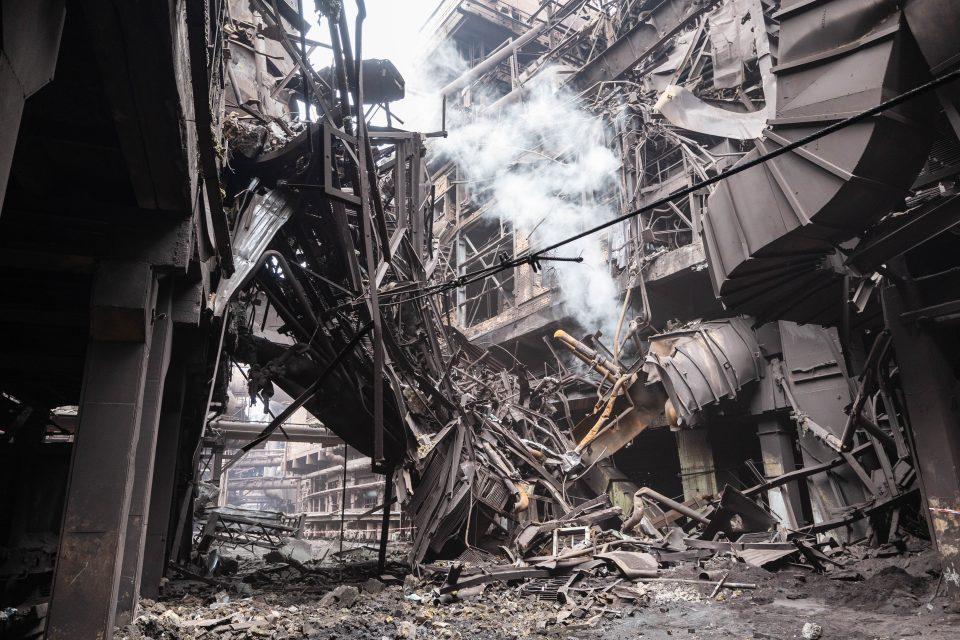
Yuriy Ryzhenkov is that rare individual—a chief executive who has led his firm of 33,700 people during a never-ending war. He is the CEO of the largest steelmaker in Ukraine, Metinvest. More than 8,000 of his employees are fighting Russian forces. Factories are under constant bombardment. Hundreds of Metinvest colleagues have been killed.
Recommended Video
Discover the Fortune 500 Europe 2026 – Insights by Grethe Schepers, Lists Director, Europe.
Amid the flames and destruction, Ryzhenkov says that this period of the war is as tough as anything the company has seen since Russia’s full-scale invasion of Ukraine more than four years ago.
“The blockade of the seaports is more severe now than it was in 2022,” Ryzhenkov, who became CEO in 2013, tells me. “We’ve been hit numerous times. Our facilities have been hit over the last four and a half years, and even though we were restoring them after every hit, you lose. You get weaker with every such attack.
“In wartime you cannot afford to restore to the original state. You do the best you can to continue operating, and that best is never the ideal. Unfortunately, it was one of the most severe campaigns for bombing in August and September this year. We had to stop both of our steel mills.
“We lost 14 people at our steel mills, which was probably the largest loss since 2023 in a single bombing. That’s where we are.”
Now there is another threat to the future of steelmaking in Ukraine, and it doesn’t come from the East, but from the European Union. In July, new tariffs were applied to all EU steel imports in an effort to protect the continent’s industry from cheaper foreign competition. The key steel tariff-rate quota for Ukraine from July 2026 was cut by 60%, and is expected to reduce steel imports from Ukraine to the EU by 1.3 million metric tons per year, according to the GMK Center, a Ukrainian think tank.
“If you compare the quotas that were allocated to Ukraine this year to what was supplied last year, it’s minus 60%, and that’s at the time when the ports were already closed, and we literally have no other alternative,” Ryzhenkov says.
“When the invasion happened, the EU pretty much realized that for Ukraine the only available market is actually the EU with the blockade of ports. They abolished any restrictions for the steel to be supplied there, which was, in my view, the correct answer.
“In wartime you cannot afford to restore to the original state. You do the best you can to continue operating, and that best is never the ideal.”Yuriy Ryzhenkov, CEO of Fortune 500 europe company, Metinvest
“And then suddenly, in the first half of this year, we got these quotas where we were pretty much dumped with all the other countries [outside the EU], and the fact that we had exceptional circumstances in terms of logistics, in terms of energy supply, in terms of personnel availability, they were not taken into account, in my view, at all.

Paid Content
Improve the customer experience with AI-supported conversation
From Gladly
“It was too harsh, given the circumstances.”
Negotiations continue, and the EU has said it is aware that Ukraine is a unique case. But the pincer movement—the armed invasion from the East, and tariffs from the West—is leaving steelmaking in Ukraine in a perilous position. Between 2021 and 2025, steel production in Ukraine fell from 21 million to 7.4 million metric tons; the value of exports fell from $22 billion to $6 billion; and tax revenues dropped from $3.5 billion to $870 million. Russia’s constant attacks on factories, energy supply systems, and the railways means that steel supply to the Ukrainian armed forces is also being degraded.
I ask whether we could be witnessing the end of steelmaking in Ukraine?
“Well, if nothing is done, it’s almost inevitable,” he says. “If Ukraine is not allowed to participate in the European market fully, and at the same time the circumstances preclude any significant investments, then, I mean, everything comes to an end eventually.”
Ryzhenkov comes from a long line of steelmakers. His grandmother was a coal plant chemical engineer closely aligned to steelmaking, and his mother, father, and uncle all work in the sector. That family history does bring with it a high level of determination to continue despite the losses and the constant threats of more attacks.
“To be honest, that’s the only choice we have, right?” he tells me. “Well, not the only choice. I mean, obviously, you can slam the door and walk out, but we have more than 35,000 people working for us with their families. We have 8,500 of our employees in the Ukrainian armed forces, which also rely on us. So, I mean, why would you slam the door if you can still try to do something to carry on? I just don’t find a reason for myself to do that.”
Quick note: As the CFO mandate keeps expanding, Fortune is convening C-Suite Conversations: In Conversation with Finance Leaders on 28 October. CFOs from Loewe, Standard Chartered Bank, and MUFG Americas join Fortune’s Sam Birchall to discuss building the next generation of finance leadership. Register here.
About the Author
By Kamal AhmedExecutive Editorial Director of Europe and the Middle East
Follow
Kamal Ahmed is the executive editorial director of Europe and the Middle East. Kamal is the author of Letter from London, Fortune Europe’s weekly take on global business as seen from London. Previously, he was director of audio at The Telegraph and p


