
1
2
3
One-third of Seattle’s downtown is empty: Here’s how America’s boomtown turned into one of the toughest places to find a job

By
Business Editor
July 27, 2026, 4:00 AM ET
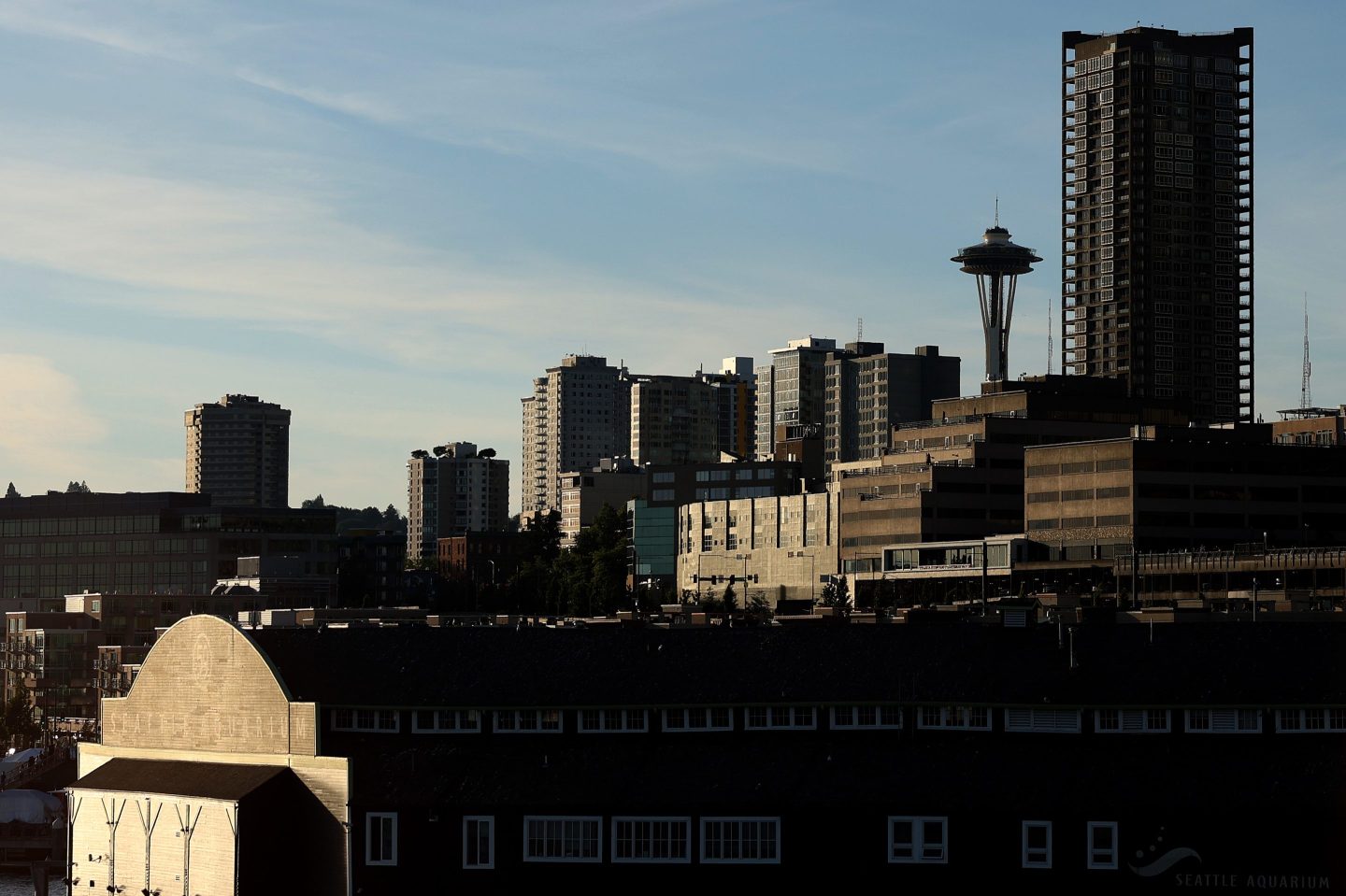
Seattle’s downtown office vacancy rate hit 35.6% in the fourth quarter of 2025, up from 32.3% a year earlier.Emilee Chinn/Getty Images
Add Fortune on Google for similar content.Add us on Google
A decade ago, Seattle was the poster child of American tech prosperity. Amazon and Microsoft had turned a midsize Pacific Northwest city into a magnet for engineers, executives, and capital, adding roughly 40,000 jobs per year at the peak of the boom, according to the Puget Sound Regional Council.
Recommended Video
Greenhouse CEO gets 1,000s of job applications for roles now
Today, more than one-third of downtown Seattle’s office space sits empty, its job postings have collapsed faster than almost any other U.S. metro, and even Starbucks—the coffee giant founded in the city in 1971—is shifting jobs south to Nashville, as it commits to a $100 million, 2,000-person new footprint in Music City. The story of Seattle’s reversal unfolds in three overlapping arcs: an office market in free fall, a labor market that has gone from boom to bust, and a policy environment that has made survival harder for the small businesses left behind.
Arc one: the zombie towers
Seattle’s downtown office vacancy rate hit 35.6% in the fourth quarter of 2025, up from 32.3% a year earlier, according to Cushman & Wakefield data. That marks a stunning reversal from the pre-pandemic era: As recently as early 2025, the central business district’s availability rate—offices with departures pending—and vacancy rate were already hitting all-time highs based on CoStar data stretching back to 1982.
Some brokers put the number even higher, with Colliers reporting vacancy touching 39.1% in late 2024 as remote work, tech layoffs, and cautious leasing decisions compounded. Office building values in the district have plunged sharply as a result, with landlords struggling to fill space abandoned by major tenants.
Arc two: the labor market reversal
The office crisis is inseparable from a broader collapse in hiring. Seattle metro job postings fell 35% between February 2020 and October 2025, the second-steepest drop of any major U.S. metro after San Francisco’s 37% decline, according to Axios’s analysis of Indeed data.
Tech firms in the area have announced tens of thousands of job reductions since 2023, primarily driven by Microsoft, Amazon, and Blue Origin. The region posted a net loss of 13,000 jobs in 2025—its first annual decline since the pandemic and a stark reversal from the 40,000-job annual gains of the boom years.
Arc three: the policy squeeze
Into this contraction came a wage floor with no exceptions. Seattle’s minimum wage, $20.76 an hour and applied uniformly to all employers regardless of size since January 2025, has intensified pressure on small businesses trying to survive the downtown exodus.
A peer-reviewed study published in Labour Economics found the wage ordinance’s announcement effect actually deterred new business formation within Seattle’s borders while generating positive “spillover” openings in neighboring suburbs, suggesting firms redirected growth rather than uniformly closing shop. Earlier University of Washington research similarly found the wage hikes reduced low-wage workers’ hours by about 9% even as hourly pay rose roughly 3%, per Ballotpedia’s fact-check compilation.
What makes Seattle’s situation distinct from other regional slowdowns is how tightly these three arcs lock together. CoStar estimates Seattle won’t fully break out of the vacancy cycle before 2027—a timeline that assumes the feedback loop stops tightening, which so far it hasn’t.
For this story, Fortune journalists used generative AI as a research tool. An editor verified the accuracy of the information before publishing.
The Fortune 500 Innovation Forum will convene Fortune 500 executives, U.S. policy officials, top founders, and thought leaders to help define what’s next for the American economy, Nov. 16-17 in Detroit. Apply here.
About the Author
By Nick LichtenbergBusiness Editor
Nick Lichtenberg is business editor and was for

 canisgallicus