
If you’re surprised by how well the stock market is doing, so is Jamie Dimon—he says there’s a ‘little tsunami’ heading for the economy

By
Senior Reporter, Economics and Markets
June 21, 2026, 8:30 AM ET
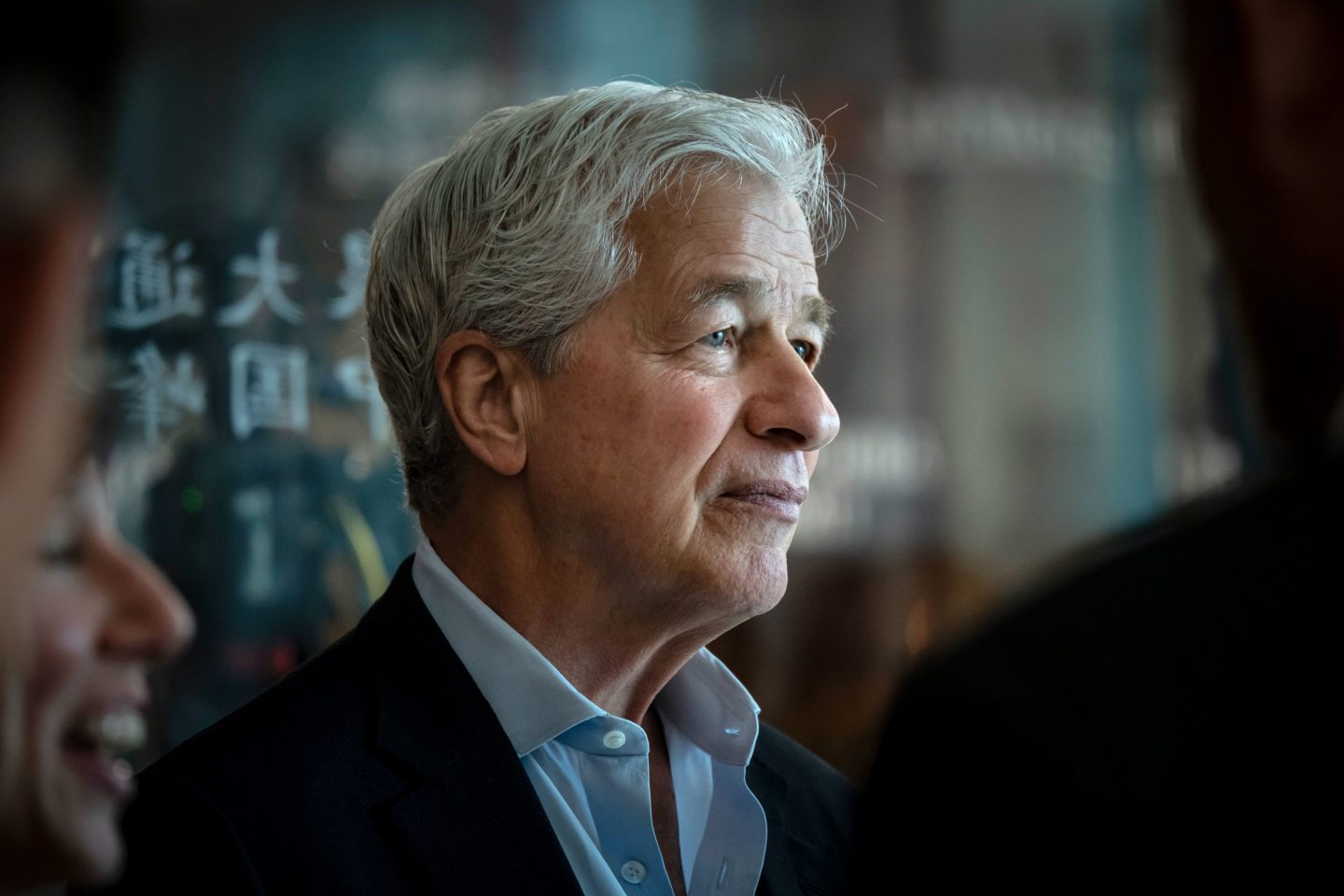
Jamie Dimon, chief executive officer of JPMorgan Chase & Co., during a Bloomberg Television interview on the sidelines of the JPMorgan China Summit in Shanghai, China, on Thursday, May 21, 2026. Qilai Shen/Bloomberg – Getty Images
Markets across the world have had plenty to worry about in the past decade. A global pandemic, a major war between Ukraine and Russia in Europe, steady inflation across major economies, including the U.S., rising tensions between China and the U.S., and, most recently, a conflict in the Middle East.
And yet the S&P 500 is up nearly 80% over the past five years, the Nasdaq up more than 86%. Even with the global oil supply shock in over the past three-plus months, Wall Street has remained bullish—thanks, in large part, to the promise of artificial intelligence.
If investors are surprised by seeing their portfolios continue to tick up in the face of such headwinds, so is JPMorgan Chase CEO Jamie Dimon.
The Wall Street veteran admitted he’s a little taken aback by the market’s apparent complacency at present. Speaking in a discussion held by the Council on Foreign Relations, Dimon said: “I am surprised because I think that you have Ukraine, Iran, oil, Russia, and our relationship with China. That stuff is really important for the free world, but it’s not necessarily the economy today.”
While consumers and analysts may be focused on the short term, Dimon said he was concerned about the shifting “tectonic plates” shaping the economy’s trajectory over the much longer term.
“I am quite worried about it,” the banker added. “They may determine the economy, but it may be a year from now, a few years from now, or maybe it will all be reserved somehow. But I’m quite concerned about it, so put me in the more cautious category about how that plays out.”
To be in a category among the more skeptical on Wall Street is nothing out of the ordinary for Dimon. The JPMorgan chairman wrote in 2024 that he ran America’s largest bank with a military leadership tactic in mind: the “OODA loop.”
The acronym stands for observe, orient, decide, act—with Dimon adding: “One cannot overemphasize the importance of observation and a full assessment—the failure to do so leads to some of the greatest mistakes, not only in war but also in business and government.”
How long does the cycle last?
There are a handful of tailwinds supporting market optimism at present, despite the broad-based global issues that have dampened Dimon’s spirits. He acknowledged that confidence can be derived from AI capex, which is booming to the tune of $700 billion this year and is expected to continue, from unemployment holding steady at 4.3%, and from GDP expanding at approximately 2%.
Consumers have also been given a boost by the One Big Beautiful Bill Act. While research suggests much of that relief has been offset by fuel price rises resulting from the Middle East conflict, it is nevertheless a stimulus injection that helped the economy.
Paid Content
Wesco’s digital bet is paying off in the AI era
From Wesco
But all cycles must come to an end, which Dimon is well aware of. While he said these factors aren’t necessarily “bad” right now, he added: “You don’t know what they’re going to do a year from now, or two years from now. We’re in a bull market. It’s like a little tsunami. When that kind of thing happens, it’s very hard to stop.”
Subscribe to Fortune Gulf Brief. Every Tuesday, this new newsletter delivers clear-eyed, authoritative intelligence on the deals, decisions, policies, and power shifts shaping one of the world’s most consequential regions, written for the people who need to act on it. Sign up here.
About the Author
By Eleanor PringleSenior Reporter, Economics and Markets
Eleanor Pringle is an award-winning senior reporter at Fortune covering news, the economy, and personal finance. Eleanor previously worked as a business correspondent and news editor in regional news in the U.K. She completed her journalism training with the Press Association after earning a degree from the University of East Anglia.


