
A promising first for researchers probing mental illness
Sy Boles
Harvard Staff Writer
June 10, 2026 4 min read
Anxiety finding a highlight as brain stimulation trial raises new hopes for precision care
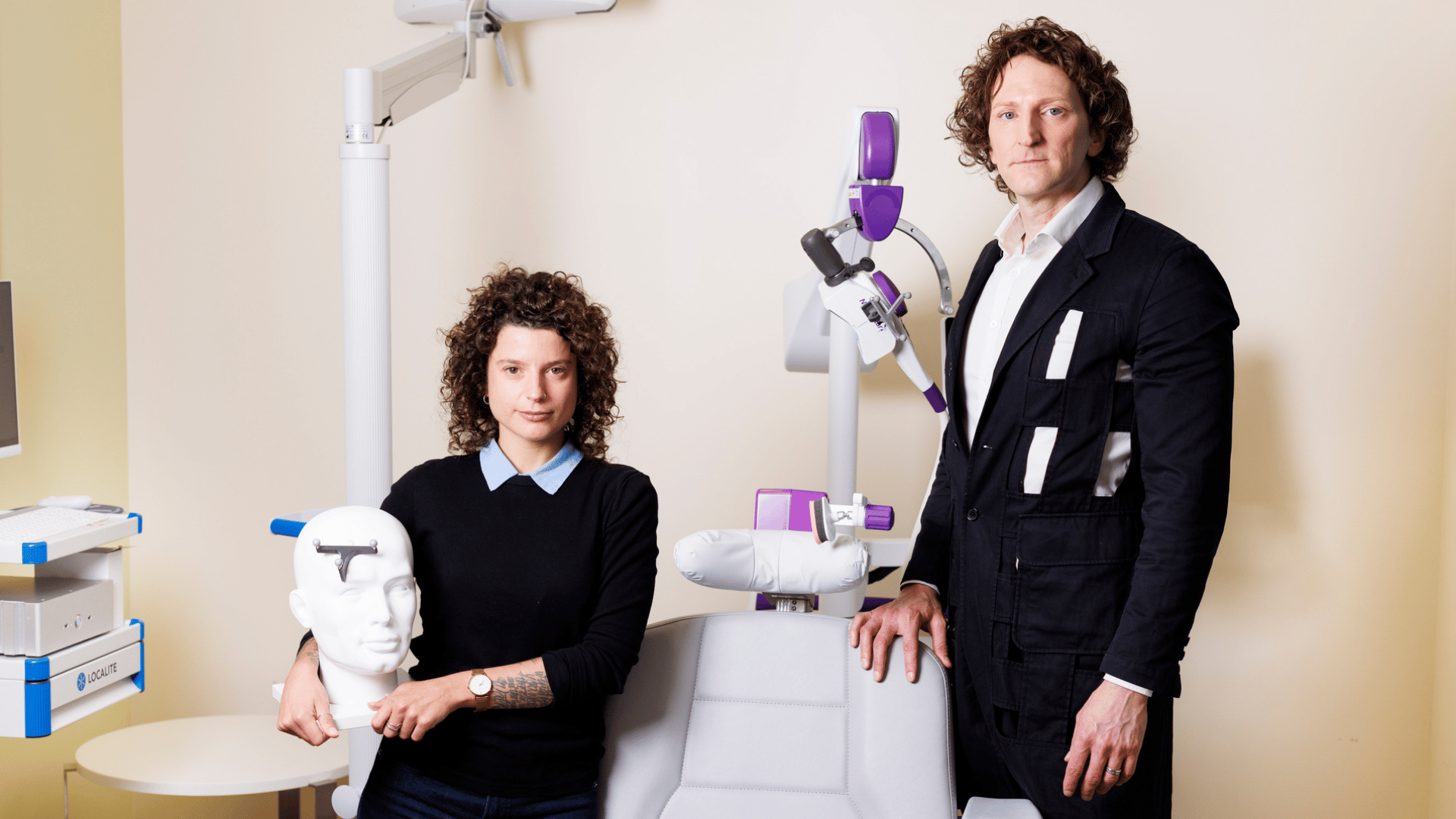
Psychiatrists have long treated depression using transcranial magnetic stimulation — noninvasive magnetic pulses that stimulate neurons.
Now, new research is allowing them to fine-tune their approach, potentially targeting specific symptoms and opening new possibilities for precision care.
In a series of papers, including one in Nature Molecular Psychiatry, researchers stimulated two brain circuits — one widely targeted in TMS therapy, the other far more experimental — in people who had moderate to severe symptoms of both anxiety and depression. Both targets eased depression symptoms, but the novel target also led to significant improvements in symptoms of anxiety, suggesting that the new circuit may be a better treatment target for people with both conditions. It was the first time researchers selectively improved specific anxiety symptoms through targeted TMS.
“This is important for the field because comorbidity is often the rule rather than the exception: Up to half of people who have one psychiatric illness also meet criteria for another,” said Joseph Taylor, lead author on the Molecular Psychiatry paper and a Harvard Medical School assistant professor of psychiatry at Brigham and Women’s Hospital. “That’s why we launched this trial: to take a little bit of a step toward precision medicine — to say, ‘OK, you have two different symptom clusters, we have two different circuits, let’s see if we can change selectively one symptom versus another.’”
TMS is a well-established treatment for major depressive disorder, especially when therapy and medication have failed. But delivery remains imprecise. Clinicians typically target brain regions by measuring the patient’s scalp, leading to incidental variation in where the brain is stimulated.
In previous research, BWH psychiatrists exploited that variation to link brain regions with symptom changes. They found that patients who received stimulation to the more traditional site — the dorsolateral prefrontal cortex — were more likely to see improvements in depressive symptoms: sadness, decreased interest in activities, and suicidality. But those stimulated at the dorsomedial prefrontal cortex, which is not a standard TMS target, were more likely to see improvements in a certain cluster of what they called “anxiosomatic” symptoms: irritability, sexual disinterest, insomnia.
“These two circuits were derived in a data-driver manner, without going in with a predetermined idea of existing, recognized functional circuits in the brain,” explained Samantha Baldi, HMS postdoctoral fellow in psychiatry at Brigham and Women’s, who was not involved in the previous research but contributed to the latest findings.
“Essentially, we found evidence that targeting different circuits may influence different symptoms, but we did not find evidence that larger changes in circuit connectivity led to larger symptom improvements.”Samantha Baldi
The new research shows that the two circuits can be targeted intentionally to drive symptom-specific results — though researchers noted that the findings should be taken cautiously, given the small sample size.
Thirty-six patients who met FDA criteria for TMS treatment for depression and who also reported moderate to severe anxiety were randomized to receive targeting either at the standard stimulation site or the novel one. The patients received 30 daily treatments. As the researchers hypothesized, the relative change in depression versus anxiety was significantly different between the two groups.
The findings are a promising sign that brain circuit imaging can eventually translate to clinical practice, ushering in a more personalized era of psychiatric treatment. But, the researchers said, major questions remain. Chief among them: Why does it work?
“Clinical symptoms did change depending on which circuit was targeted, but those changes were not related to how much the brain circuits themselves changed with treatment,” Baldi said. “Essentially, we found evidence that targeting different circuits may influence different symptoms, but we did not find evidence that larger changes in circuit connectivity led to larger symptom improvements.”
In other words, the treatment worked, but there wasn’t a clear correlation between the symptom improvement and connectivity in the targeted brain circuit.
In the field, Taylor said, that’s not surprising. “We have limited tools to understand how our treatments work, but we are starting to understand how to use our current tools, like functional magnetic resonance imaging, more effectively in terms of treatment planning.”
Still, he said, “Increasingly we’re recognizing brain stimulation as a new area of psychiatry, and the possibilities really are endless.”


