
Search
China dominates the world’s lithium supply. The U.S. just found 328 years’ worth in its own backyard
By
News Fellow
April 30, 2026, 2:24 PM ET
Add us on
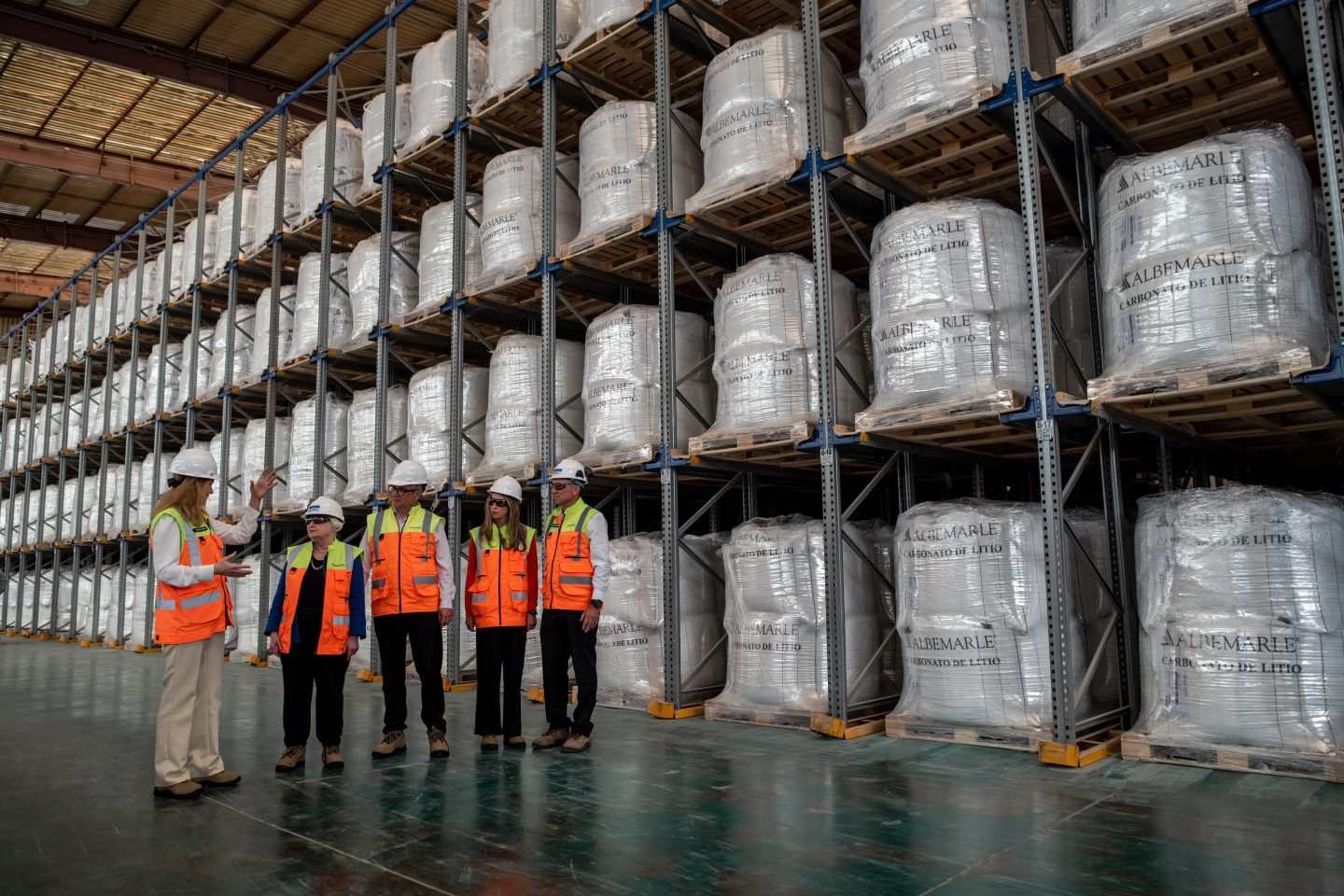
The USGS estimates there’s 2.3 million metric tons of lithium oxide untapped in parts of Appalachia.Cristobal Olivares/Bloomberg via Getty Images
Lithium is everywhere: It’s in the battery powering the device on which you’re reading this article. It powers electric vehicles (EVs). It’s in your headphones, your power tools, and your TV remote. In short, lithium powers modern life.
Recommended Video
The ubiquity of the element is why the United States Geological Survey (USGS) deemed it a critical mineral in November. While the U.S. remains highly reliant on imports of lithium, a new report from the USGS found an estimated 2.3 million metric tons of the lithium oxide in Appalachia, enough to replace 328 years’ worth of U.S. imports at last year’s level.
“This research shows that the Appalachians contain enough lithium to help meet the nation’s growing needs,” USGS director Ned Mamula said in a statement, “a major contribution to U.S. mineral security, at a time when global lithium demand is rising rapidly.”
The discovery comes as the demand for lithium continues to snowball as manufacturers ditch conventional lead-acid or alkaline for lithium-ion batteries. The USGS expects global lithium production capacity to double by 2029 on increasing demand. While the U.S. imports the majority of its lithium carbonate—the compound critical to lithium-ion battery production—primarily from Chile and Argentina, China dominates the supply of finished lithium-ion batteries, powering everything from EVs to phones and laptops. The U.S. imported nearly $85 million worth of lithium-ion batteries from China over the past year, according to the Observatory of Economic Complexity. The import of lithium-ion batteries is particularly costly as both the Trump and Biden administrations have levied tariffs on Chinese imports of the product.
The scale of the lithium found in the U.S.
Out of the 2.3 million metric tons of lithium oxide that USGS estimates may be economically recoverable from Appalachian pegmatites—large-grained rocks similar to granite—about 1.43 million metric tons are estimated to be locked in the southern Appalachians, concentrated in the Carolinas. About another 900,000 metric tons are under the forests of rural western Maine and New Hampshire.
The scale of lithium in the U.S. is massive. USGS estimates it’s enough to power 130 million EVs, or enough for more than one-third of the U.S. population to own one. It’s enough for 3 billion tablets and laptops, 500 billion cell phones, or 1.6 million electric grid batteries.
Lithium is also critical to the AI infrastructure build-out. Lithium-ion batteries last two to three times longer than conventional batteries. They recharge faster than the average battery, making them a preferred choice for data centers. The batteries are a critical backup energy source for data centers during power outages. Hyperscalers are buying into that belief. Last year, Google announced the company had deployed 100 million lithium-ion cells in its data centers.
Where the U.S. stands in lithium production
But the problem is accessing the lithium. The U.S. was the dominant world producer of lithium three decades ago, according to Mamula. While domestic demand for the material is robust, lithium production today pales in comparison to its past production levels. The U.S. hosts just a handful of lithium projects—where the element is processed and refined—concentrated in areas outside of where the 2.3 million metric tons are estimated to be, according to the Federal Reserve Bank of Dallas.
Nevada hosts the most projects, as well as the only operating lithium mine in the country, in Silver Peak, Nev.
The U.S. produced just 610 metric tons of lithium in 2024, according to an estimate from the Energy Institute’s 2024 Statistical Review of World Energy. That’s only 0.3% of all global production.

Paid Content
From tensions to tipping points: The future of work in the AI era
From Deloitte
But the U.S. is investing in lithium extraction. The Department of Energy finalized a $225 million grant for Standard Lithium and Equinor’s South West Arkansas lithium project, which is targeting an initial 22,500 metric tons of annual battery-quality lithium carbonate production. That comes as firms flock to the state to extract the element. A chemical extraction process developed by Standard Lithium is focusing on a region of Arkansas the company estimates to hold about 1.2 million tons of lithium reserves, according to company officials as reported by NewsNation.
Still, the USGS said the recent discovery offers a lifeline to the U.S. to stake a claim amid the skyrocketing global lithium demand. “This research highlights the abundant potential to reclaim our mineral independence,” Mamula said.
The Fortune 500 Innovation Forum will convene Fortune 500 executives, U.S. policy officials, top founders, and thought leaders to help define what’s next for the American economy, Nov. 16-17 in Detroit. Apply here.
About the Author
By Jake AngeloNews Fellow


