
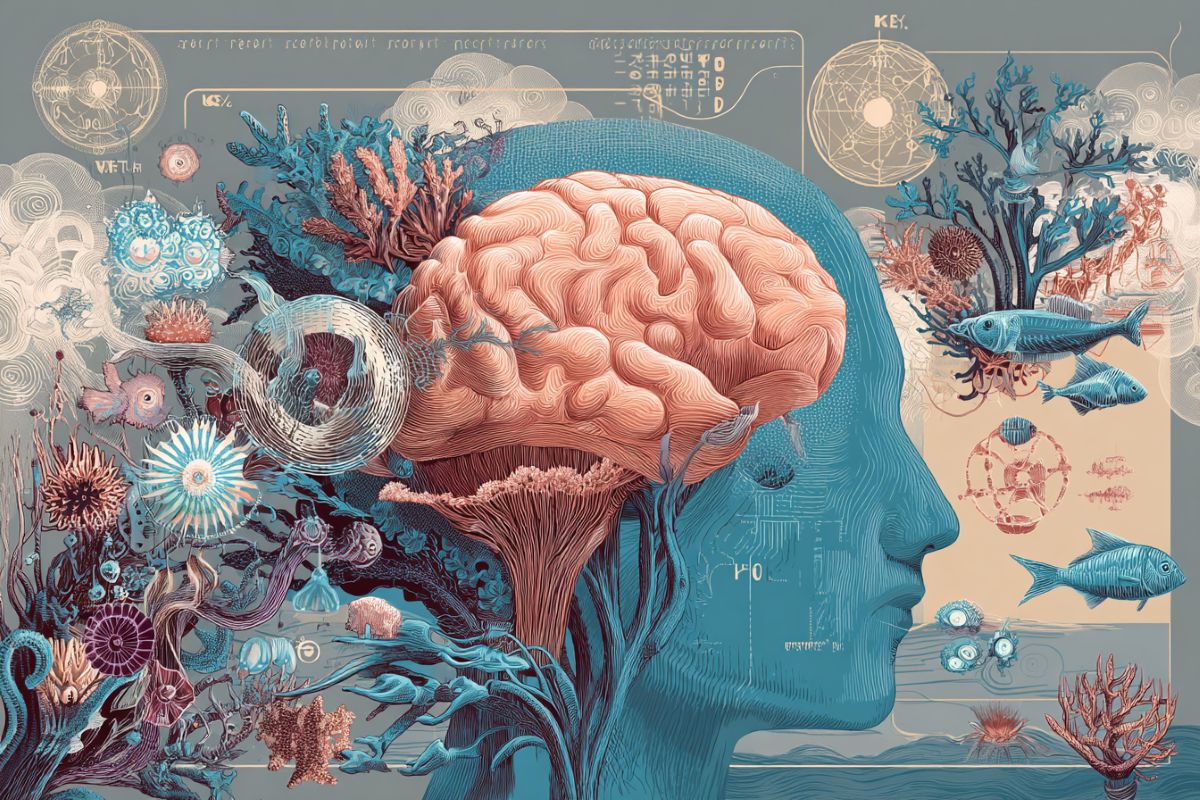
A new study explains that we generate mental images by reactivating the same brain cells we used to see the object in the first place. Credit: Neuroscience News
How the Brain Replays Sight to Create Mental Images
Featured Neuroscience Visual Neuroscience
·April 9, 2026
Summary: Have you ever wondered why a memory can feel as vivid as a photograph? A groundbreaking study has finally cracked the “neural code” behind visual imagination. By recording the electrical activity of individual neurons in patients with implanted electrodes, researchers discovered that imagining an object reactivates the exact same brain cells used to see it in the first place.
This shared biological mechanism explains why our mental theater feels so real and provides a new roadmap for treating disorders like PTSD and OCD, where intrusive, vivid imagery can become a source of distress.
Key Facts
- The Shared Blueprint: The study found that 40% of the neurons activated when looking at a face or object “fired” in the exact same pattern when the participant later imagined that same image from memory.
- The Fusiform Gyrus: Researchers focused on this high-level visual processing area. By using AI to decode the “language” of these neurons, they could predict exactly what a person was imagining based solely on brain activity.
- Generative AI Verification: The team used AI to create entirely new, “never-before-seen” images based on the neural code they discovered, then verified that the brain responded to these AI-generated images as predicted.
- Clinical Potential: Understanding this code is vital for treating conditions marked by “uncontrolled vivid imagery.” By knowing how the brain “re-creates” images, doctors may eventually find ways to dial down the intensity of traumatic flashbacks.
- Cross-Species Confirmation: The work confirms that the neural code for object recognition previously found in primates is also present in humans, serving as the biological basis for our imagination.
Source: Cedas Sinai
Why can images of things we have seen seem so real when we later recall them from memory?
A new study led by Cedars-Sinai Health Sciences University investigators sheds light on the answer.
The study shows that the same brain neurons are activated when we imagine something and when we perceive something. The research, led by Cedars-Sinai, is the first to provide a detailed understanding of the shared mechanism that underlies visual perception and creation of mental images in the human brain.
It was published in the journal Science.
“We generate a mental image of an object that we have seen before by reactivating the brain cells we used to see it in the first place,” said Ueli Rutishauser, PhD, director of the Center for Neural Science and Medicine and professor of Neurosurgery, Neurology and Biomedical Sciences at Cedars-Sinai Health Sciences University, and the study’s joint senior author.
“Our study revealed the code that we use to re-create the images.”
The findings provide a biological basis for visual imagination, a process that is also critical for creative arts.
“Further insight into this neural process has the potential to open pathways toward developing new therapies for post-traumatic stress disorder, obsessive-compulsive disorder, and other mental conditions that involve uncontrolled vivid imagery,” said Adam Mamelak, MD, director of the Functional Neurosurgery Program and professor of Neurosurgery at Cedars-Sinai, and co-author of the study.
To conduct the study, investigators asked 16 adults with epilepsy, who had electrodes temporarily implanted in their brains for diagnosing their seizures, to view a series of images of faces and objects.
After viewing them, a subset of the participants were asked to imagine those same images from memory. Meanwhile, researchers recorded the electrical activity of hundreds of individual neurons in each participant’s brain.
When the patients viewed the images, neurons were activated in their fusiform gyrus, an area of the brain essential for high-level visual processing, particularly for faces. For 80% of the visually responsive neurons recorded in the study, the researchers uncovered the aspects of the images they reacted to, thereby revealing their neural code.
When the patients later imagined the images, about 40% of these neurons reactivated using the same code, thereby recreating the pattern of activity that occurred during the initial viewing of the images.
“Advanced artificial intelligence tools were critical to our investigation at all stages,” said Varun Wadia, PhD, a postdoctoral scientist in Rutishauser’s laboratory and first author of the study.
“We used deep visual neural networks to create numerical descriptions of objects so that we could understand the neurons’ code. We then verified the code by using generative AI to create never-before-seen images and correctly predict the brain’s responses to these images.”
The research builds on the work of Doris Y. Tsao, PhD, of the University of California, Berkeley, who is co-senior author on the study. She identifed the neural code for object recognition in nonhuman primates. The current study reveals that the same neural code is present in humans and that it explains visual imagination.
“These findings support the idea that imagining and seeing share a common neural code and may have important implications for understanding psychiatric disorders marked by disruptions in mental imagery and reality discrimination,” said Hermon Gebrehiwet, DrPH, program officer at the National Institutes of Health.
Still to be determined are what triggers the neural reactivation the investigators found, and how memories lead to reactivation of just the right subset of neurons needed, the investigators said.
Other Cedars-Sinai authors include: C. M. Reed, J. M. Chung, and L. M. Bateman
Funding: The work was supported by the National Institutes of Health’s Brain Research Through Advancing Innovative Neurotechnologies® Initiative, or The BRAIN Initiative® (U01NS117839 to UR), the Howard Hughes Medical Institute (DYT), the Simons Foundation Collaboration on the Global Brain (UR and DYT) and the Chen Center for Systems Neuroscience at Caltech (DYT).
Key Questions Answered:
Q: If my brain uses the same cells to “see” and “imagine,” why don’t I hallucinate 24/7?
A: While the code is the same, the study found that only about 40% of the neurons reactivate during imagination compared to 100% during actual sight. This “lower volume” helps your brain distinguish between the external world (reality) and internal thoughts (imagination). Disorders like schizophrenia may involve a breakdown in this “volume control.”
Q: Can this technology be used to “read minds” or see my dreams?
A: We are getting closer. By using deep visual neural networks, researchers could translate electrical signals back into numerical descriptions of objects. While we can’t record a “movie” of your thoughts yet, we can now identify the specific categories of faces or objects you are visualizing with high accuracy.
Q: Does this explain why some people are more creative than others?
A: It suggests a biological basis for it. People with “hyperphantasia” (extremely vivid mental imagery) likely have a more efficient reactivation process, where a higher percentage of their visual neurons “fire” during imagination, making their internal world feel nearly identical to the physical one.
Editorial Notes:
- This article was edited by a Neuroscience News editor.
- Journal paper reviewed in full.
- Additional context added by our staff.
About this hyperphantasia and visual neuroscience research news
Author: Cara Martinez
Source: Cedars-Sinai Medical Center
Contact: Cara Martinez – Cedars-Sinai Medical Center
Image: The image is credited to Neuroscience News
Original Research: Closed access.
“A shared code for perceiving and imagining objects in human ventral temporal cortex” by V. S. Wadia, C. M. Reed, J. M. Chung, L. M. Bateman, A. N. Mamelak, U. Rutishauser, and D. Y. Tsao. Science
DOI:10.1126/science.adt8343

 canisgallicus