
Imtiaz Mahmood
@ImtiazMadmood
Atheist, freethinker; exposing Islam layer by layer, to let infidels know more about Islam than Muslims allow them to. “Am Yisrael Chai”
It was Christmas Eve, 1969.
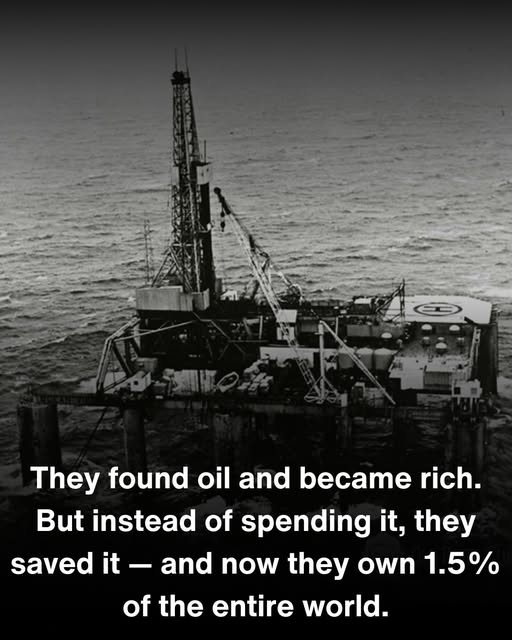
Deep beneath the North Sea, off the coast of Norway, drillers from an American oil company hit something extraordinary. The Ekofisk field — one of the largest offshore oil deposits ever discovered — had just been found. A small, quiet Scandinavian nation of fishermen and farmers was about to become unimaginably wealthy.
What happened next is either the greatest financial decision in history, or the most boring story ever told. Depending on how you look at it.
Because Norway did almost nothing.
At least, that’s how it looked on the surface.
They didn’t throw parties. They didn’t build palaces. They didn’t hand out checks. While oil money began pouring in, Norwegian politicians did something almost no government in history has been able to do: they resisted.
They watched what happened to Nigeria. To Venezuela. To Libya. Countries that struck oil and celebrated — and then, slowly, collapsed. Corruption. Inflation. Inequality. The “resource curse,” economists called it. Easy money that destroys the very fabric of a nation.
Norway decided to build a wall between the oil money and themselves.
In 1990, the Norwegian Parliament passed a law creating the Government Petroleum Fund — what the world now calls the Oil Fund. The rules were almost painfully simple: every krone of oil profit goes into the fund. It gets invested globally. The government can only spend a small percentage of the returns each year. The rest stays. Forever.
The first deposit came in 1996. A modest amount. Almost symbolic.
Then they did something even harder than creating the rule. They kept it.
Year after year, election after election, crisis after crisis — politicians who promised to raid the fund lost. Politicians who protected it won. For three decades, across governments of every political stripe, one principle held: this money belongs to Norwegians who haven’t been born yet.
The fund bought small stakes in thousands of companies around the world. Apple. Microsoft. Amazon. Real estate in Manhattan, London, Paris, Tokyo. It didn’t gamble. It didn’t chase hot trends. It simply bought a piece of the global economy — and waited.
The waiting paid off in ways no one predicted.
Today, Norway’s Oil Fund holds nearly $2 trillion in assets. For a country of just 5.6 million people, that’s roughly $340,000 for every single citizen — man, woman, and child. No checks are written. The money belongs to future generations as much as the present one.
Here’s the part that stops people cold: more than half of that wealth didn’t come from oil at all. It came from investment returns. The fund now earns more from its global portfolio than Norway makes pumping oil out of the ground.
They turned a finite resource into infinite returns.
And here is what Norway quietly did while the world wasn’t watching: they now own approximately 1.5% of every publicly traded company on Earth. Every time a major global business makes a profit — a tiny fraction finds its way back to Norway’s children.
The oil will run out someday. Geologists estimate 30 to 50 years, maybe more. It doesn’t matter. By then, the fund will be so large that its investment returns alone will fund Norwegian healthcare, education, and pensions — perhaps forever.
Norway didn’t discover more oil than anyone else. It wasn’t smarter geology or better technology.
It was one thing: the courage to say no.
No to easy money. No to short-term thinking. No to the politicians who swore they’d only spend it “just this once.” No to a generation that could have lived richer — at the expense of every generation that followed.
Most countries can’t do it. Most people can’t do it. We’re wired for now, not for later.
Norway looked at human nature — greedy, impatient, shortsighted — and built a system specifically designed to defeat it.
In 1969, they found oil.
In 1990, they built the fund.
In 1996, they made the first deposit.
Today, they own a piece of the world.
And the Norwegians who made that decision in 1990? Most of them are gone now. They never saw the trillion-dollar result. They built it for strangers — for grandchildren who wouldn’t be born for decades.
That’s not economics. That’s wisdom.

 canisgallicus