
AI Use at Work Is Causing “Brain Fry,” Researchers Find, Especially Among High Performers
“My thinking wasn’t broken, just noisy — like mental static.”
Published Mar 6, 2026 4:05 PM EST
Sign up to see the future, today
Can’t-miss innovations from the bleeding edge of science and tech Email address Sign Up
It’s looking more and more like using AI to churn out work can take a considerable toll on your mental health, despite the tech’s promises of easing workloads.
The latest research to illustrate this grim trend: a survey of nearly 1,500 full time US workers, which found that an alarming proportion of employees who constantly use AI at work to push their productivity past their normal capacity are becoming fatigued, as the researchers from from Boston Consulting Group and University of California, Riverside described in a new report in Harvard Business Review.
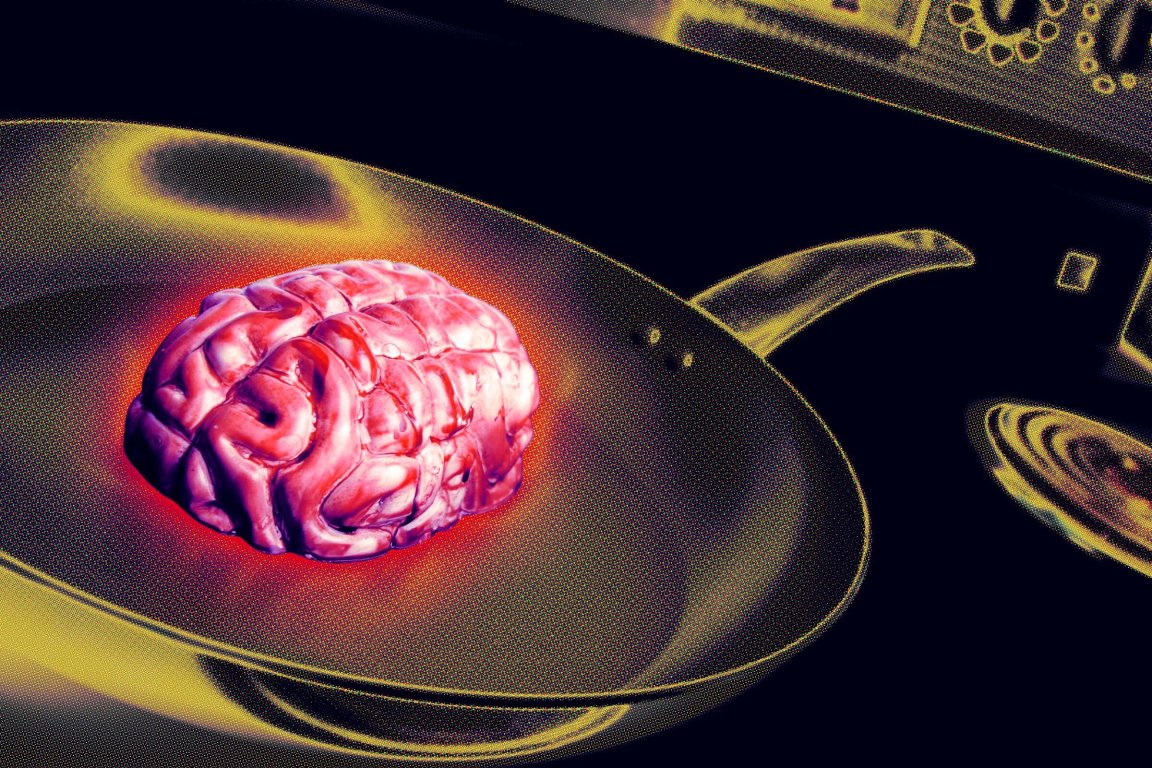
The researchers even gave the phenomenon an evocative name: “AI brain fry.”
“One of the reasons we did this work is because we saw this happening to people who were perceived as really high performers,” Julie Bedard, a partner at BCG and an author of the report, told Axios.
In the study, 14 percent of workers said they had experienced “mental fatigue that results from excessive use of, interaction with, and/or oversight of AI tools beyond one’s cognitive capacity.” The percentage was highest in marketing, software development, HR, finance, and IT roles.
Many employees described brain fry symptoms using similar language. They reported a “buzzing” feeling or a mental “fog.” Other symptoms included headaches and slower decision-making.
AI companies promise that AI can supercharge productivity. Whether or not that’s true, the tech is enabling workers to multitask at a speed and workload well past their regular limit, which seems to be part of the problem regarding its cognitive effects.
The study identified information overload and constant task switching as some of the main drivers of brain fry. In particular, the most draining aspect of using AI to automate work was oversight, or the need to constantly supervise the AI tools, with some overseeing multiple AI agents at the same time. A high degree of oversight predicted 12 percent more mental fatigue for employees, the report found.
“I had one tool helping me weigh technical decisions, another spitting out drafts and summaries, and I kept bouncing between them, double-checking every little thing,” one senior engineering manager described in the HBR report. “But instead of moving faster, my brain just started to feel cluttered. Not physically tired, just… crowded. It was like I had a dozen browser tabs open in my head, all fighting for attention.”
“My thinking wasn’t broken, just noisy — like mental static,” the senior manager continued. “What finally snapped me out of it was realizing I was working harder to manage the tools than to actually solve the problem.”
The work also found a correlation between self-reported AI brain fry and an employee’s intent to quit their company. Intent to leave rose by nearly 10 percent among those who reported AI brain fry.
Brain fry is also bad news for an employer’s all-important bottom line. Workers who experienced brain fry experienced a 33 percent increase in decision fatigue. For multibillion dollar firms, this could translate to millions of dollars of being lost to poor decision-making or paralysis each year.
The findings add to a growing body of research and anecdotal accounts describing the toll of using AI at the workplace. Another report in HBR last month found that AI was actually intensifying work instead of reducing workloads. Amid increasing discussion into the topic, more engineers have come out to criticize AI’s usage in the workplace, with many admitting that their own AI usage was speeding them towards burnout.
More on AI: AI CEOs Worried About Chernobyl-Style Event Where Their Tech Causes a Horrific Catastrophe
Frank Landymore
Contributing Writer
I’m a tech and science correspondent for Futurism, where I’m particularly interested in astrophysics, the business and ethics of artificial intelligence and automation, and the environment.

 canisgallicus