
As SuperAgers age, they make at least twice as many new neurons as their peers
SuperAgers’ hippocampi have a unique environment that supports the birth, survival of new neurons
February 25, 2026 | By Kristin Samuelson
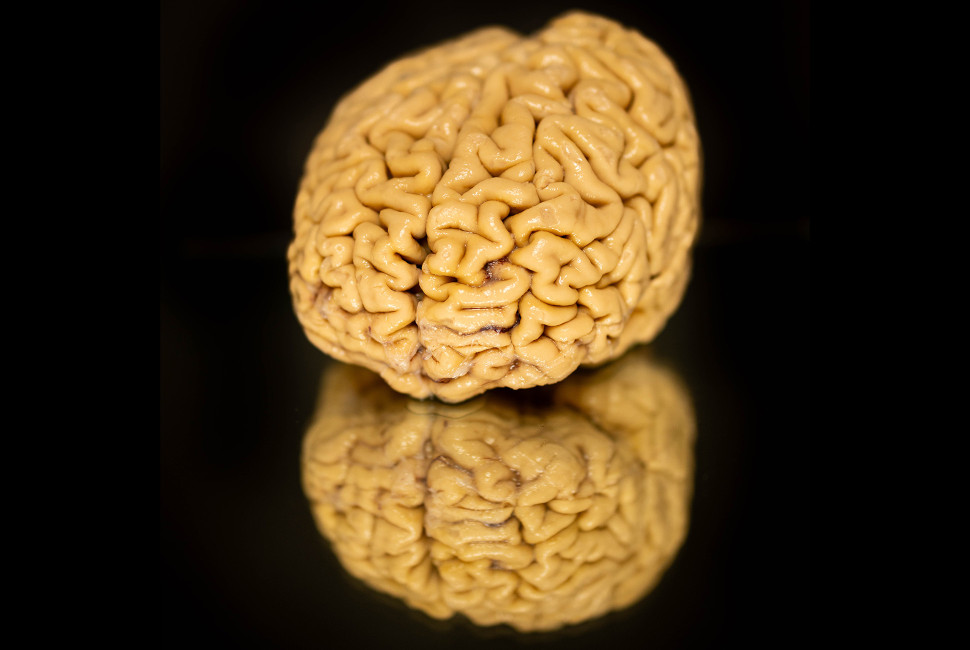
A new study finds that SuperAgers produce between two and two and a half times more new neurons than their healthy peers and peers with Alzheimer’s disease, respectively, which may help explain why their memory stays strong with age. Photo by Shane C…Show More Caption →
SuperAgers don’t just preserve their memory abilities well into their 80s and beyond —their brains continue to generate new neurons in the hippocampus at levels far higher than typical older adults, and even much younger individuals.
That is the groundbreaking finding from a new study led by scientists at University of Illinois Chicago (UIC), who examined, in part, donated brains from the Northwestern University SuperAger Program. SuperAgers are a unique group of adults over age 80 whose performance on tests of episodic memory was equal to or better than that of people in their 50s.
Over the more than 25 years of SuperAger research at Northwestern, scientists have documented biological and behavioral differences in this group, from slower cortical thinning to lifestyle factors such as stronger social engagement. But this is the first study to identify a genetic difference between SuperAgers and typical older adults. The study was published in the journal Nature.
“We’ve always said that SuperAgers show that the aging brain can be biologically active, adaptable, flexible, but we didn’t know why,” said co-author Tamar Gefen, associate professor of psychiatry and behavioral sciences at Northwestern University Feinberg School of Medicine and a neuropsychologist at Northwestern’s Mesulam Institute for Cognitive Neurology and Alzheimer’s Disease. “This is biological proof that their brains are more plastic, and a real discovery that shows that neurogenesis of young neurons in the hippocampus may be a contributing factor.”
Human neurogenesis and why SuperAgers stand out
While scientists have long documented ongoing neurogenesis (the creation of new neurons) in animals such as mice, evidence in humans has been mixed.
This study not only confirms neurogenesis happens in healthy human adults, it found SuperAgers produce between two and two and a half times more new neurons than their healthy peers and peers with Alzheimer’s disease, respectively, which may help explain why their memory stays strong with age. The scientists also discovered a distinct “resilience signature” in SuperAgers’ hippocampi — a unique cellular environment that supports the birth and survival of new neurons.
“This is a big step forward in understanding how the human brain processes cognition, forms memories and ages,” said corresponding author Orly Lazarov, professor in the University of Illinois College of Medicine and director of UIC’s Alzheimer’s Disease and Related Dementia Training Program. “Determining why some brains age more healthily than others can help researchers make therapeutics for healthy aging, cognitive resilience and the prevention of Alzheimer’s disease and related dementia.”
Key cell types linked to cognitive resilience
The study also found changes in two types of brain cells — astrocytes and CA1 neurons — are key drivers of how well cognition and memory hold up as the hippocampus ages.
“What’s emerging from this study is this idea that SuperAgers are, in general, very distinct,” said co-author Changiz Geula, research professor at the Mesulam Institute. “The genetic programs that support brain cell survival and communication stay on in SuperAgers in these cells, but they’re switched off in Alzheimer’s disease.”
The findings suggest that preserving the integrity of the excitatory synapses — the brain’s primary sites of neuronal communication and memory formation — could be a potential target for drug interventions aimed at preventing cognitive decline.
How the study worked:
The scientists examined the hippocampus regions of donated postmortem brains from five groups: healthy young adults; older adults without impaired cognitive functioning; older adults with mild or early dementia; older adults diagnosed with Alzheimer’s disease; and SuperAgers.
Led by UIC scientists, the study examined nearly 356,000 individual cell nuclei from the hippocampus using an advanced single‑cell technique — called multiomic single cell sequencing — that can read both gene activity and the accessibility of DNA. This allowed the team to identify different stages of developing brain cells, including progenitor cells (early descendants of stem cells), immature neurons and mature neurons.
Notes
Other Northwestern authors include Ivan Alejandro Ayala, Dr. Sandra Weintraub and Dr. Marek Marsel Mesulam.
Funding for the study was provided in part by the National Institute on Aging, which is part of the National Institutes of Health.
For Journalists: Get the news release, media contacts and press kit
Editor’s Picks
Northwestern celebrates 22 years as a top Fulbright producer
February 4, 2026
Dream engineering can help solve ‘puzzling’ questions
February 5, 2026
Northwestern’s Community Benefits Agreement helps build a stronger Evanston
January 26, 2026

 canisgallicus