
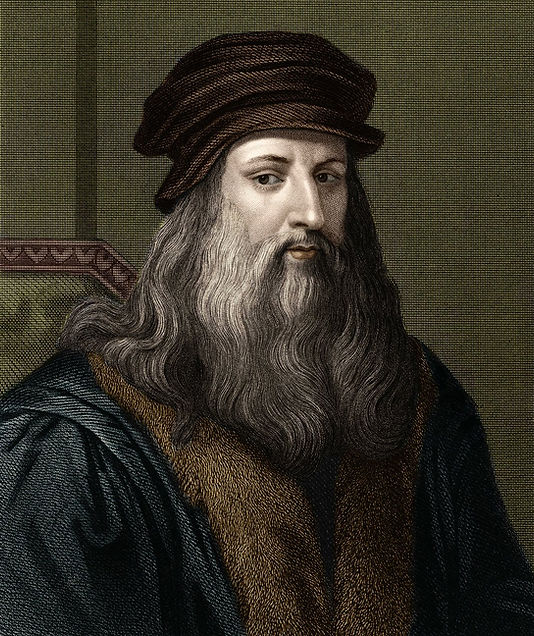
Leonardo da Vinci wasn’t just a painter, he was a walking encyclopedia of genius, born in 1452 as an illegitimate child with little formal education. Yet, this self-taught visionary became the ultimate Renaissance man: artist, inventor, scientist, engineer, and more.
His mind raced so far ahead of his time that many of his ideas feel like sci-fi from the 1400s. His works are difficult to understand not because they’re old but because they’re too advanced.
Take the Mona Lisa. That smile isn’t accidental. Leonardo used sfumato to blend colors so subtly it creates optical illusions. X-rays reveal earlier versions beneath the surface, showing obsessive revision. Her gaze follows you, the landscape blends real geography with imagination art, psychology, and mystery fused into one timeless image.
Then comes “The Last Supper”. He abandoned true fresco for experimental oils, causing it to decay almost instantly, a genius flaw. Perfect perspective pulls everything toward Jesus, while the apostles react with raw human emotion. Hidden symbols, strange details, and revealed underdrawings hint at a mind that never stopped questioning.
Beyond paintings lie his notebooks over 6,000 pages written in mirror script. Inside: flying machines, a proto-helicopter, armored tanks, diving suits, early robots, and a self-supporting bridge later proven workable by MIT. Ideas centuries ahead of technology.
His science was just as radical: anatomical drawings still admired today, ideas about blood circulation before Harvey, fossils explained without biblical floods, moonlight as reflected sunlight, human ape similarities before Darwin, and gravity pulling matter toward Earth before Newton.
Leonardo saw no boundary between art and science. Veins were rivers. Wings were machines. Observation ruled everything. He left much unfinished perfectionism, illness, or a mind always chasing the next question. His scattered notebooks hid his genius for centuries. Leonardo reminds us: true genius isn’t about finishing things. It’s about questioning everything. What’s your favorite Leonardo mystery?


 canisgallicus