
 Menu
Menu Search
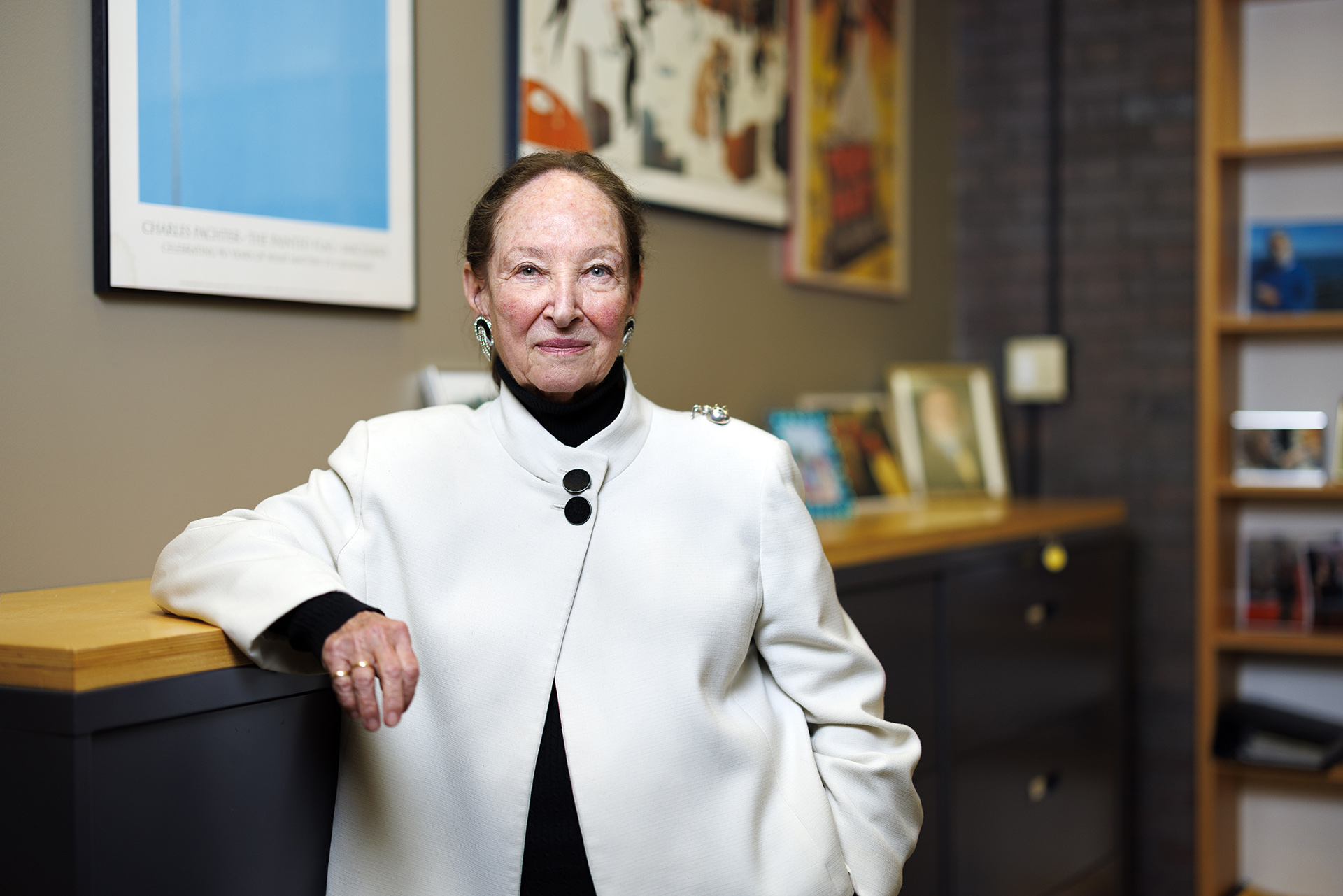
Pursuit of justice borne of personal experience with injustice
Jacob Sweet
Harvard Staff Writer
October 27, 2025 9 min read
Rosalie Abella, the first Jewish woman on Canada’s Supreme Court, was shaped by her parents’ resilience after Holocaust
A series focused on the personal side of Harvard research and teaching.
Rosalie Abella was 4 years old when she learned that her father hadn’t been allowed to practice law in Canada.
“I had no idea what that even meant,” said Abella, the first Jewish woman on the Supreme Court of Canada. “But it galvanized me and committed me to the idea that I would be what he couldn’t be.”
An émigré and child of death camp survivors, Abella faced daunting challenges in becoming one of Canada’s most influential jurists. Now the Samuel and Judith Pisar Visiting Professor of Law at Harvard Law School, she lifted barriers for others through her work in labor and disability rights, constitutional law, and human rights jurisprudence.
Abella’s father, Jacob Silberman, was born in Sienno, Poland, and entered Krakow’s Jagiellonian law school in 1930 as one of the few Jewish students in the program.
By the time he graduated, practicing in his home country was no longer an option. The Nazis had taken over, and he and his wife were sent to concentration camps. They both survived, but Silberman’s parents, three younger brothers, and first-born son — Abella’s brother — were killed.
Abella was born in 1946 in a displaced person’s camp in Stuttgart, Germany. Her father taught himself English and was briefly able to practice law alongside American lawyers, helping to develop a system of legal services for displaced people.
The family got the chance to move to Canada in 1950. Silberman assumed he’d be able to practice there, too. He brought letters of reference from the American judges and lawyers he’d worked with, who wrote glowingly about his abilities.
Their endorsements proved meaningless.
“He came home and said, ‘I can’t do it because I’m not a citizen,’” Abella said. The process to get citizenship would take half a decade, and Silberman had a family to support. He became an insurance agent instead.
In the decades that followed, Abella never heard her parents complain about the injustices they had experienced. Instead, they carried a level of optimism and positivity that was sometimes hard for her to comprehend.
“I don’t think I ever saw them angry about anything that happened to them,” Abella said. “It’s amazing when I think about it. They were so grateful for what they had found in Canada that they didn’t dwell on what they had lost.”
They raised their children to carry themselves as if they could achieve anything with enough hard work and determination.
“It was a rigorously programmed life in terms of the unstated expectation that we would do the best we could possibly do,” Abella said. “I never heard them say, ‘Why can’t you do it as well as so-and-so?’ It was always measuring me against my abilities and stretching them as far as they could go.”
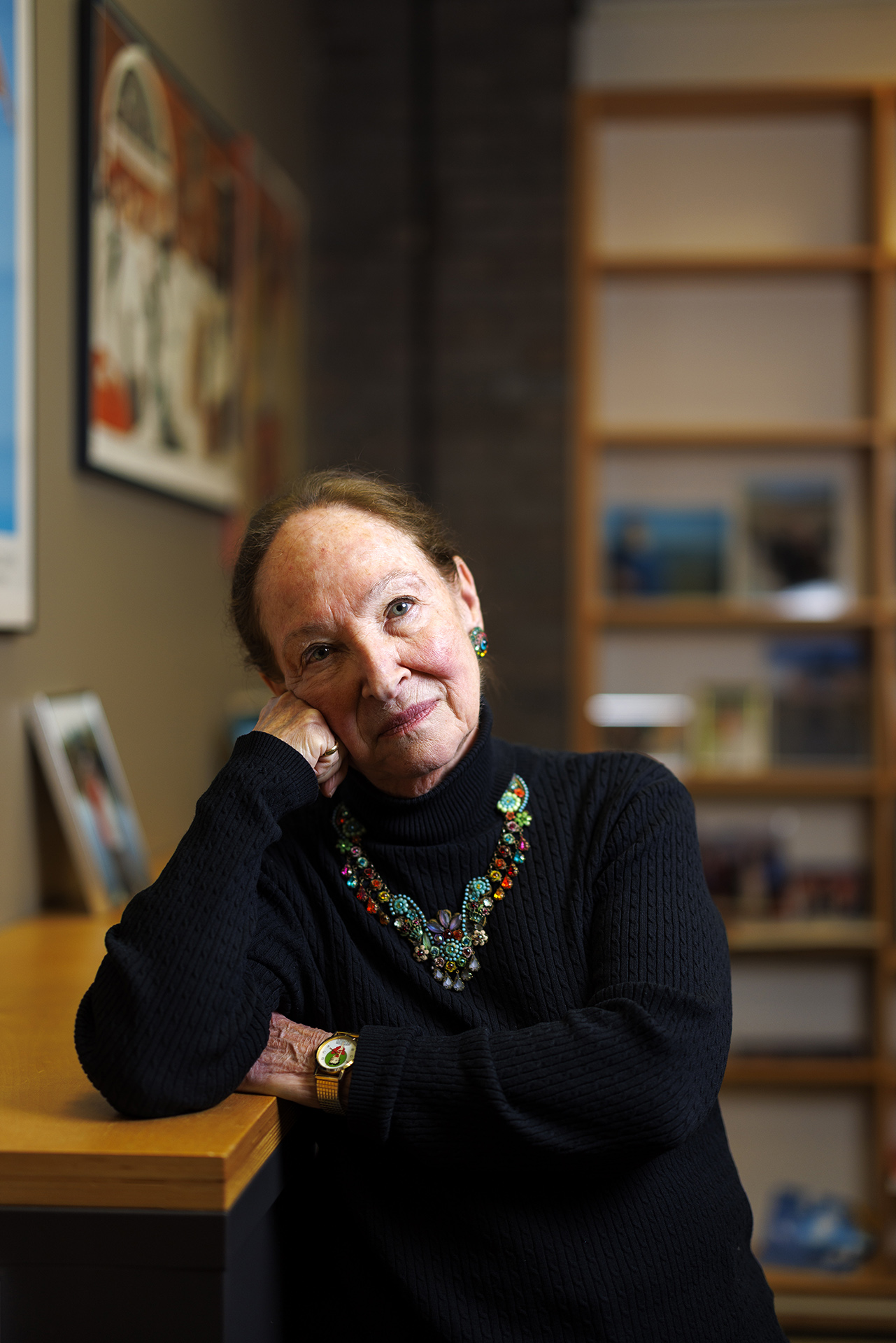
Abella liked working hard and asked for extra homework because her parents taught her that education was important. She saw school as the “last meritocracy,” where nobody could hold you back based on race, color, and religion as long as you put in the work.
By the time she graduated from law school, she’d become aware of the barriers for women in the professional world, but she wasn’t daunted. “It was too late because I was already formed,” she said, “and I was formed as someone who was not afraid.”
Abella saw herself as an outsider. She knew she didn’t dress or think like many of her peers in classes and later in courtrooms, being both Jewish and a woman. But she proceeded with her studies as if the differences wouldn’t matter.
“This was Canada, the land of opportunities,” she said, “and if people were willing to give them to me, I was going to grab them — even if people around me were saying, ‘Wait a minute, that isn’t what women are supposed to do.’”
She fell in love with a history professor — Irving Abella — who, like her parents, also didn’t see any reason why a woman shouldn’t pursue the career she wanted.
“The transfer of confidence from my parents believing in me to a husband who believed in me was total luck — kind of, as Bette Midler would say, ‘the wind beneath my wings.’”
Abella didn’t have any end goal in sight, except to be a lawyer — a good one. She was particularly hungry for chances to learn, willing to bypass higher salary and prestige for a job that would broaden her experience.
After starting her career in private practice, she accepted an appointment — when she was pregnant with her second child at 29 — to the Ontario Family Court, becoming the youngest person and the first pregnant woman ever appointed to the bench in Canada.
There she handled cases involving issues such as child protection and young offender proceedings. At times, she would have to determine whether people could keep their children — as she herself thought of her two young sons at home.
“It taught me what the world was for most people,” Abella said, “and it taught me to be open-minded, not to look at court cases as a judge from the top down, and to actually listen to what they were telling you.”
Abella created a definition of equity in employment that would have far-reaching effects in the Canadian justice system: “Equality means accommodating and acknowledging people’s differences so they can be treated as equals.”
She had another chance to listen as the sole commissioner of the Royal Commission on Equality in Employment. Abella held sessions around the country, talking to women, Indigenous people, people with disabilities, and others from under-represented groups about employment barriers. Then she met with business and labor leaders to figure out practical ways to solve the issues.
Her time on the Family Court, and her own upbringing, guided her.
“I was always interested in other people’s stories because mine is so different from anybody else’s that I knew growing up,” she said. “I heard what it felt like to have a different color, to have a different gender. I learned the tenacity of a barrier when you’re disabled. I heard about racism. I heard about things that I had not personally experienced, and that’s what being a judge is: learning to listen and not hearing your own story, but actually hearing their story. For me, it was about fairness”
In the commission’s final report, Abella created a definition of equity in employment that would have far-reaching effects in the Canadian justice system: “Equality means accommodating and acknowledging people’s differences so they can be treated as equals.”
“I just felt it growing up. I felt how unfair it had been that 6 million people who were Jewish were exterminated because they were Jewish,” she said. Her time on the Family Court and working in private practice informed her thinking about balancing group rights, which was about human rights, and the civil libertarian theory of the individual. “I wasn’t aware of any of that in law school,” she said. “It was only my clients and then the family court that made me understand.”
Five years later, in its first decision on equality rights, the Supreme Court of Canada struck down the citizenship requirement for lawyers using Abella’s definition. Her father, who died a month before she finished law school, wasn’t able to see her complete the circle, but her mother, Fanny, was.
“I felt so grateful for the fact that she was there on their behalf to see what had happened to the career he launched by not being able to be a lawyer in Canada,” Abella said, “a career that she and my husband nurtured and encouraged.”
Abella brought her ideas on equality to the Ontario Court of Appeals, where she began in 1992, and then to the Supreme Court in 2004.
Though she learned to listen differently — to lawyers instead of from clients directly as she had during Family Court — she made decisions with personal ramifications in mind.
“Every case to me was a novel,” Abella said. “It didn’t matter whether it was copyright or tax or equality or freedom of expression. It was always about how the law affected people.”
Taking this approach meant sometimes finding that the opinion she had formed after days studying the case was wrong. “You have to actually hear what parties are arguing and saying,” she said. “And if you can’t do it with an open mind, you shouldn’t be there — because there’s always a chance that you’re wrong.”
Her willingness to go out on a limb to protect or expand rights — and the jurisprudential status quo — often drew criticism. In 2020’s Fraser v. Canada, Abella’s majority opinion found that the Royal Canadian Mounted Police officers’ pension plan discriminated against women who needed to reduce hours to take care of children. Some justices and academics disagreed, calling it judicial overreach.
Abella’s attention to the law’s treatment of minority groups drove many similar decisions. She wrote the first appellate gay rights rulings and paved the way for marriage equality in Canada, protected workers’ bargaining rights, invented employment equity, and advanced fairness for women and minorities in others.
“There were so many things that caused the public to say, ‘Wait a minute, are we ready for this?’” Abella said. “And it was my view that that’s what you have judges for.” If judges couldn’t make decisions that protected the public interest as opposed to public opinion, “then I don’t think we’re doing our job, and we’re mixing up what elected bodies do with what independent bodies, like the judiciary, do.”
She also credits her husband, Irving, who died in 2022, for encouraging her to ignore the controversies and do what she thought was right. He was excited about Abella’s opportunity to teach at Harvard, as were her two adult sons, both lawyers. “It’s great to have professional satisfaction and respect,” Abella said, “but the core is family.”
All the way, she channeled the lessons she learned from her parents. “They were extraordinary people whose core commitment to integrity was unwavering,” Abella said. “It was important to them that whatever I do, I do with dignity and respect.”
In taking up the career her father was denied, Abella built a legacy all her own.

 canisgallicus