
Select:

Silicon ValleyYoutubeGoogleLatest News
Memory is not exclusive to the brain: Non-neural cells also remember
For the first time, a new study has observed the complex spacing effect in modified kidney cells
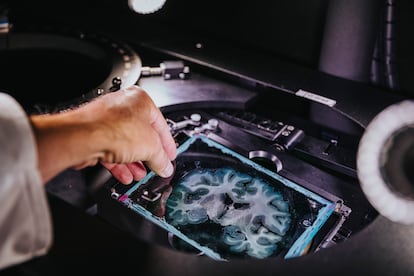
Memory is what makes us human. While other animals also have the ability to learn and remember, we often assume that their experiences lack the emotional and intellectual depth of something like Marcel Proust’s famous madeleine. At its core, however, this mental experience is simply the translation of molecular processes and cellular mechanics in neurons. Scientists are now uncovering that the basic mechanisms of memory also function in other types of cells. A kidney cell might not recall “Hotel California” as The Eagles sang it, but its learning processes could provide valuable insights into how memory works, why it deteriorates, and how we might prevent such decline.
Over 2,300 years ago, Plato and Aristotle likened memory to engravings on a wax tablet. For centuries, great thinkers struggled to understand how we are able to learn and remember. It wasn’t until the 19th century that German psychologist Hermann Ebbinghaus began to outline the processes of memory through experimental methods. In 1904, German zoologist Richard Semon defined the engram as the physical substrate of memory, a neuronal structure. However, it wasn’t until the latter half of the 20th century that modern biological techniques allowed scientists to begin unraveling the molecular mechanisms that house our memories.
One of the memory phenomena Ebbinghaus described in 1885 is known as the spacing effect: we retain information better if we study multiple times over a longer period than if we cram all at once in a short span, even when the total amount of study is the same. It’s the classic difference between regular study habits and cramming before an exam. Despite our attempts to convince ourselves that cramming works better, the spacing effect has been consistently validated through research.
The kidney learns
It’s not just humans that exhibit this phenomenon. Studies have confirmed the spacing effect in animal models with simpler nervous systems, such as sea slugs, which are commonly used in memory research, and even in cultured neurons. In these experiments, researchers apply stimulation pulses to neurons and observe the response, specifically the activation of a gene that produces a protein called CREB, which then activates other genes involved in memory formation. With the same total amount of stimulation, neurons respond more effectively — they “learn” better — when the pulses are spaced out over time rather than delivered all at once.
However, as neuroscientist Nikolay Kukushkin of New York University points out: “No one has ever seen this effect of spaced memory outside the nervous system.” Since all cells in the body share the same complete genome, including the CREB gene, and this protein is also present in tissues with different functions, Kukushkin and his team decided to investigate whether non-neural cells might respond in the same way — in other words, whether they also “learn” better when exposed to stimuli at intervals rather than in a single burst.
To test this, they used modified kidney cells, where the activation of CREB by chemical stimuli resulted in a visible and measurable output: the production of a glowing protein derived from fireflies. In this way, Kukushkin and his team discovered that kidney cells also adhere to the spacing effect rule. Specifically, four three-minute pulses of stimulation, spaced 10 minutes apart, generated more light 24 hours later than a single 12-minute pulse. According to Kukushkin, “The difference between the two patterns is detected in a similar way to how neurons do it.” He believes that “non-neural cells are much smarter than we think,” and this ability to learn better by spacing out stimuli “could be a fundamental property of all cells.”
Cells that learn
The study by Kukushkin and his team, published in Nature Communications, marks the first time a complex memory phenomenon thought to be exclusive to the nervous system has been observed in non-neuronal cells. However, it builds on a growing body of research showing that individual cells, whether in unicellular organisms or as part of a multicellular organism, are not passive to prior experiences; rather, they learn from them. As a result, their future responses to specific stimuli differ from their initial reactions.
Another recent study, conducted by researchers at Harvard University and the Center for Genomic Regulation (CRG) in Barcelona, used computer simulation models to uncover how individual cells store memories of past experiences to exhibit habituation behaviors, such as becoming accustomed to a noise or smell. Rosa Martínez-Corral, the lead researcher at CRG, suggests that “this could represent a form of memory at the cellular level, enabling cells to both react immediately and influence future responses.”
Since our own memories are also rooted in molecular and cellular processes, these findings are considered important for advancing our understanding of how memory functions. According to Kukushkin, they “could lead to better ways to enhance learning and treat memory problems.”
Furthermore, these discoveries could help overcome resistance to medical treatments: cancer cells, for example, can learn to tolerate chemotherapy, and the immune system can become used to the presence of malignant cells and stop responding to them. Memory extends beyond the brain, and research in simpler systems, Martínez concludes, “can be useful to address many other fundamental questions.”
Sign up for our weekly newsletter to get more English-language news coverage from EL PAÍS USA Edition

 canisgallicus