
Steve Ramirez, neuroscientist: ‘We have been able to restore memories that were thought to be lost’
The researcher is a pioneer in techniques for manipulating mice brains to change how they recall past events
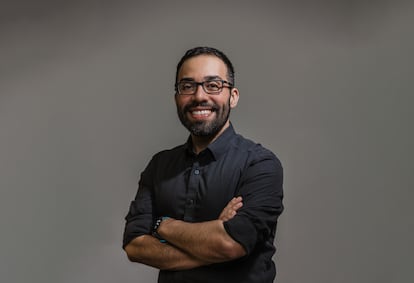

Memory is a gift that comes with a whip. It allows us to relive the past, and our identity is built upon this capacity, but it can also bind us to traumatic memories that can haunt our lives. Without memory, moreover, it’s impossible to imagine things we haven’t yet experienced. “Memory and imagination are two sides of the same coin,” says Steve Ramirez, 37, a researcher at Boston University. “We know this because if we put you in an MRI [magnetic resonance imaging] machine and you recall something from your childhood, we see a pattern of activity, and if we ask you to imagine a future scenario — going home tonight and having dinner, for example — the same areas are activated,” he explains.
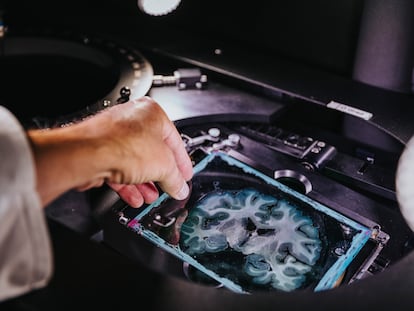
A century ago, it was proposed that every experience leaves a measurable physical change in the brain, which was dubbed an engram. These changes occur when we learn something, and accessing these modifications is what we experience as memory. But the definition of the substance that underlies memory was ambiguous. In 2011, while working in Nobel laureate Susumu Tonegawa’s lab at MIT, Ramirez and his colleague Xu Liu managed to reactivate a panic memory in a mouse by manipulating a specific group of neurons in the animal’s hippocampus. First, they labeled the cells that were activated when the rodent received an electric shock in a particular context. Days later, in a completely different environment, they activated the labeled group of neurons using optogenetics, and the mouse froze in fear without any other external stimulus. This proved that they could precisely “switch on” a memory and make the animal experience it.
Ramírez recently published How to Change a Memory, a personal account of his quest to alter the past through memory manipulation. He also warns of the risks of technology capable of modifying our very essence and reminds us that memory is not like a book that always says the same thing; it involves a great deal of reconstruction and changes over time.
Question. The engram is distributed throughout the brain; it seems to sometimes travel from one region to another, involving different connected parts, different connected cells… Is it possible to say: this memory is this synapse or these neurons?
Answer. I think it will be possible, but right now I see it like a Word document: when you use “Save As” and save the most recent version of the document with all the changes. I think memory, when we recall it, is like that: it’s like recording it again with “Save As.”
We can still say there’s an engram for that memory, but we might end up asking questions like: What’s the most recent version of that memory? Are there previous versions because we’ve updated it so many times? Because we use “Save As” every time we recall it.
So yes, I do believe we can have an engram for a memory distributed throughout the brain, but it’s a very flexible phenomenon. It’s not something fixed that physically exists in specific points of the brain and that’s it; it transforms over time.
Q. In the past we tended to imagine memory as something fixed, how has science changed our understanding of memory?
A. One of the surprises of my research is that, although an engram can transform each time we recall it and can move through different areas of the brain, activating only a small part of it is still enough to bring that memory back. That was the big surprise of our early work a decade ago: we didn’t need to find the entire engram distributed in three dimensions throughout the brain to activate it. It was enough to find some of the cells we knew were important for that memory and activate them to reactivate the entire memory.
If I’m walking through Boston and I go into a store, that single smell of a cupcake can bring back a world of memories: eating a cupcake a week ago, or maybe a birthday party. Sensorially, it’s just a smell, but it triggers a whole set of memories.
Q. It also seems that many memories remain in our brain, but we cannot access them. Do we form memories for everything, and only some are accessible? Or do some memories disappear because there is no space?
A. We don’t know the exact answer. My speculation is that the brain stores much more than we think, but it doesn’t need to access everything, only what’s relevant for making decisions. For example, if you’re trying to remember the name of someone you just met, you might not need to recall your entire history of interactions with that person; you just need to remember the name. But if you’re trying to remember everything else, you might be able to do so if you think more deeply or if you find clues in your surroundings.
Sometimes you might be daydreaming, walking, or talking to a friend and suddenly remember something you haven’t recalled in 10 or 20 years. And just a second before, you would have said that memory was lost forever. It’s like thinking a book is no longer in the library, but then it reappears.
This leads me to believe that we have more trouble accessing memories than forming them: we live through many experiences and form many memories, but having difficulty accessing them doesn’t mean they don’t exist. It means the “librarian” is having trouble finding the book.
I mention this because in experiments with mice, there has been one success story after another: we have been able to artificially activate memories that were considered completely lost in almost every type of amnesia. Alzheimer’s, sleep deprivation, drug addiction, even childhood amnesia — we all have memories formed before the age of three that we don’t recall. And in all these cases, we have been able to restore memories that were thought to be lost. This suggests that they are there and that we just need a way to retrieve them.
Q. In rodents, the brain can be opened and optogenetics used to manipulate memory, but not in humans. How could these modifications be performed in people?
A. The aim would be to find the least invasive method possible, because we’re not going to use optogenetics, nor implant optical fibers, lasers, or viruses in the human brain. Too many things can go wrong. There are smarter ways: instead of putting a laser in your brain to reactivate the memory of your last birthday, I can simply ask you what you did on your last birthday. That verbal stimulus will reactivate the memory.
Language is a powerful tool. This is part of cognitive-behavioral therapy: finding the right combination of words and meaning to retrieve a memory. Or we can ask ourselves: what things in the world activate the hippocampus in humans? Music, exercise, therapies… In the future, there may be drugs that selectively increase the activity of areas like the hippocampus.
Q. You propose modifying memories, even changing bad memories into good ones, but while a bad memory can be painful, it’s also part of who we are. Is it possible to alter a memory without affecting everything else?
A. In mice it’s easy because we can find the exact cells that contain that memory. In humans it’s a very important point. I think 80% of people don’t want to change any aspect of their memory for the reasons you mention: they’re part of our identity. Presumably, they’ve made us wiser, stronger, or more aware.
One way to handle this is to restrict the idea of memory manipulation to cases where it would be therapeutically useful: people with post-traumatic stress disorder, depression, or generalized anxiety disorder, who would indeed benefit from the treatment. In other words, think of memory manipulation as a medication, not as something recreational for the general population.
Q.You also talk about sculpting your brain or your knowledge. Many people wish they had a better memory or were able to recall many books. Is that possible?
A. So far, to improve memory, what we know is that the things that work are precisely those associated with a healthy life, but which are difficult to maintain: sleeping well, exercising regularly, not smoking, having social interactions, going outside, and being physically involved with the world.
I wish there were a greater institutional push to highlight how beneficial these activities are, because then we would have cities with more parks, with more access to bicycles — which we know is good for the brain — and built environments that facilitate these habits for the entire population.
Q. Are you concerned about the implications of humanity’s blind faith in technology? We know that eating well and exercising work, but industrial society has created a type of diet that makes us sick and then tries to cure us with other technologies, such as weight-loss drugs.
A. It’s very human to always look for the easy way out: the vaccine that will change everything, the mental “upload” that loads 10 books, or something like The Matrix. That, if it ever comes, will be a long way off. And it would be fun… but it can’t be at the cost of our lives and our well-being. I remember the movie Wall-E, where the humans of the future are all sitting in floating chairs, moving at the touch of a button, unable to do anything for themselves because everything has been solved by technology. That doesn’t seem like a fulfilling life.
The key is not to lose sight of what we value: going out to play football, taking care of our children, interacting with the world in meaningful ways. If we don’t lose sight of those things, we can build thriving societies, instead of sowing the seeds of our own inactivity.
Q. Sometimes we think of our memory as if it were a file on a computer, but when I talk to ChatGPT, I feel like something is missing, something that can’t be codified. Does this also happen with memory?
A. I think what’s not codable — what’s fundamental here — are all our little mistakes. Our flaws, our imperfections. It’s those little deviations that make us unique. It’s those imperfections that we deliberately remove from code to make the machine more efficient. But humans, when we talk, don’t just communicate content: we digress, we go off on tangents, we come back to the main point. Those digressions are part of the substance of a conversation.
Our biology is imperfect, yes, but it’s more than enough to survive, thrive, and build societies. Perhaps that’s what’s missing today in systems like ChatGPT: the human texture of imperfection.
Q. We often assume that accurately remembering the past is always a good thing, but sometimes our instincts lead us otherwise. In politics, for example, people may prefer to remember events in ways that best align with their identity. To what extent, then, is memory less a faithful record and more an adaptive construction?
A. There are theories that say memory is like a time machine: you can go back to a moment in the past and relive it. But that’s only half the story. The other half says that our memories are building blocks. We can combine and recombine them, not only to revisit the past, but to imagine things we’ve never experienced.
According to these theories, each memory we recall is the brain’s best prediction of what it believes happened. It’s not a literal reproduction. We’re very good at predicting: we get many details right, we remember enormous amounts of information, but like all predictions, it’s not perfect.
The idea is that memory and imagination are two sides of the same coin. We know this because if we put you in an MRI and you recall something from your childhood, we see a pattern of activity. And if we ask you to imagine a future scenario — going home tonight and having dinner, for example — the same areas are activated, especially in the hippocampus.
The theory states that we take memories from the past, recombine them, and thus construct predictions of what the future might hold. Simply put: imagination is made possible by memory.
Sign up for our weekly newsletter to get more English-language news coverage from EL PAÍS USA Edition
Sign up to EL PAÍS US Edition bulletin
Science Tech El País in English on Facebook
Science Tech El País in English on Twitter
More information

From Borges to Jennifer Aniston: Science begins to illuminate the mysteries of memory
Enrique Alpañés | Madrid

 canisgallicus