
One apartment per day: Student housing gets 3D printed crazy fast
December 12, 2025
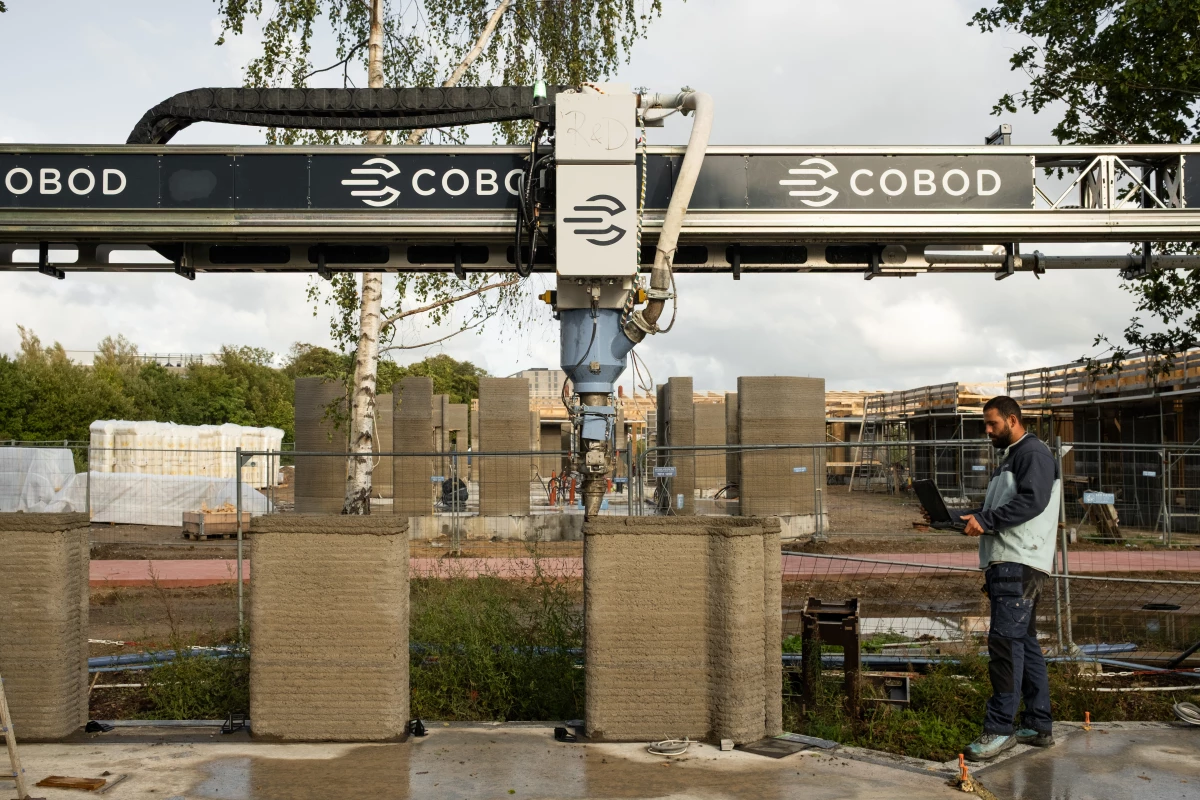
The 3D-printed student housing development, named Skovsporet, was built on-site using a COBOD BOD3 printer
SAGA
View 5 ImagesView gallery – 5 images
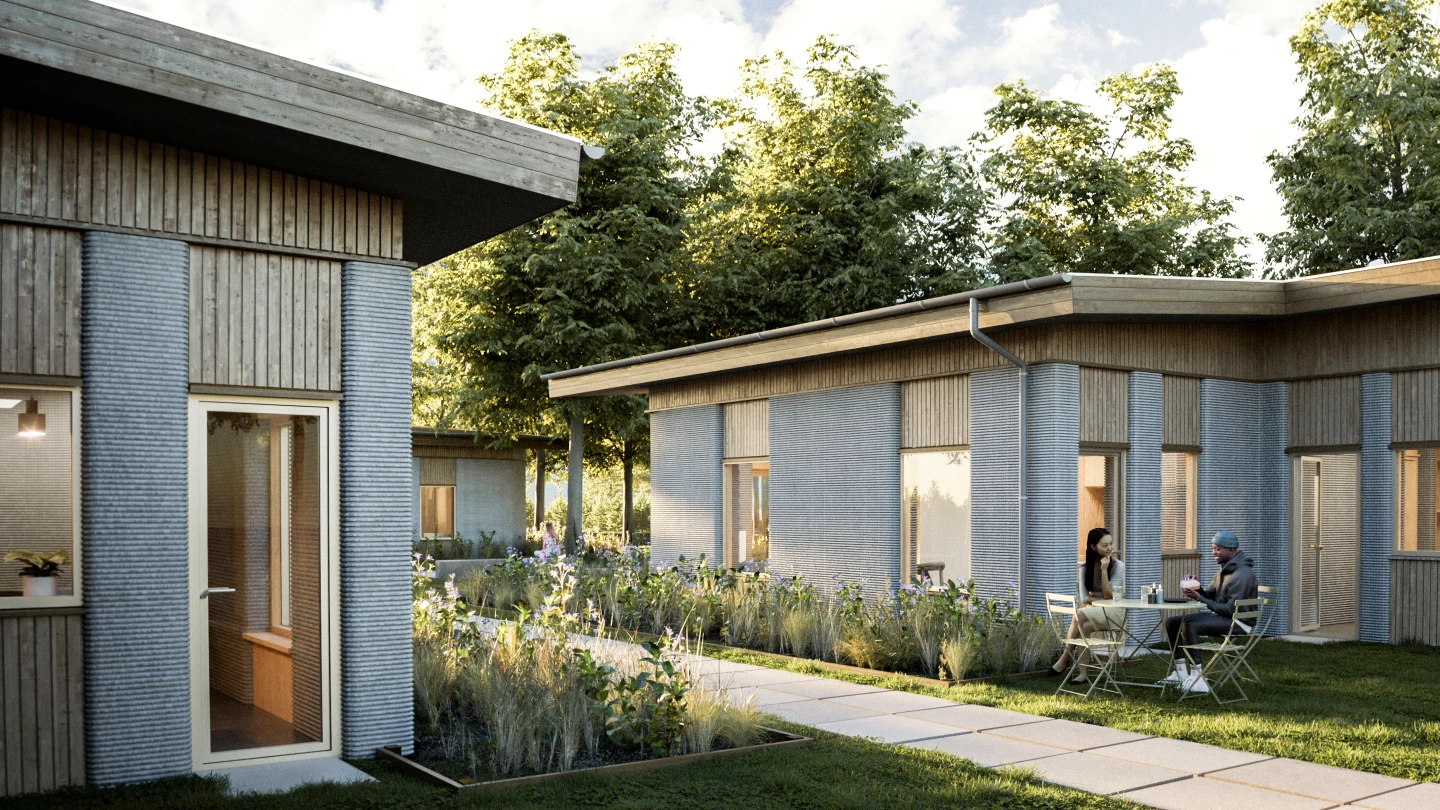
Described as Europe’s largest 3D-printed housing project, the Skovsporet development is currently underway in Denmark. A total of 36 student apartments were built with remarkable speed, as the cutting-edge technology allowed the equivalent of more than one apartment per day to be printed.
Designed by SAGA Space Architects, with 3DCP and COBOD, Skovsporet is located in the town of Holstebro. It was commissioned by affordable housing organization NordVestBo for a local university campus.
The development consists of six buildings in all, with the 36 student apartments spread between them. It was built on-site using a COBOD BOD3 3D printer, which is the 3D-printing firm’s successor to the BOD2 model used on the VeroVistas and the world’s largest 3D-printed building.
The 3D printer extruded a cement-like mixture out of a nozzle in layers to create the basic structure of the apartments from a pre-designed blueprint. Thanks to the automated nature of the printing process, just three people were needed on site and over time progress was sped up significantly.
“Over the course of the project, printing productivity increased significantly,” explains COBOD. “Printing time reduced from several weeks on the first building of six apartments to just five days on the last, equal to more than one apartment per day.”
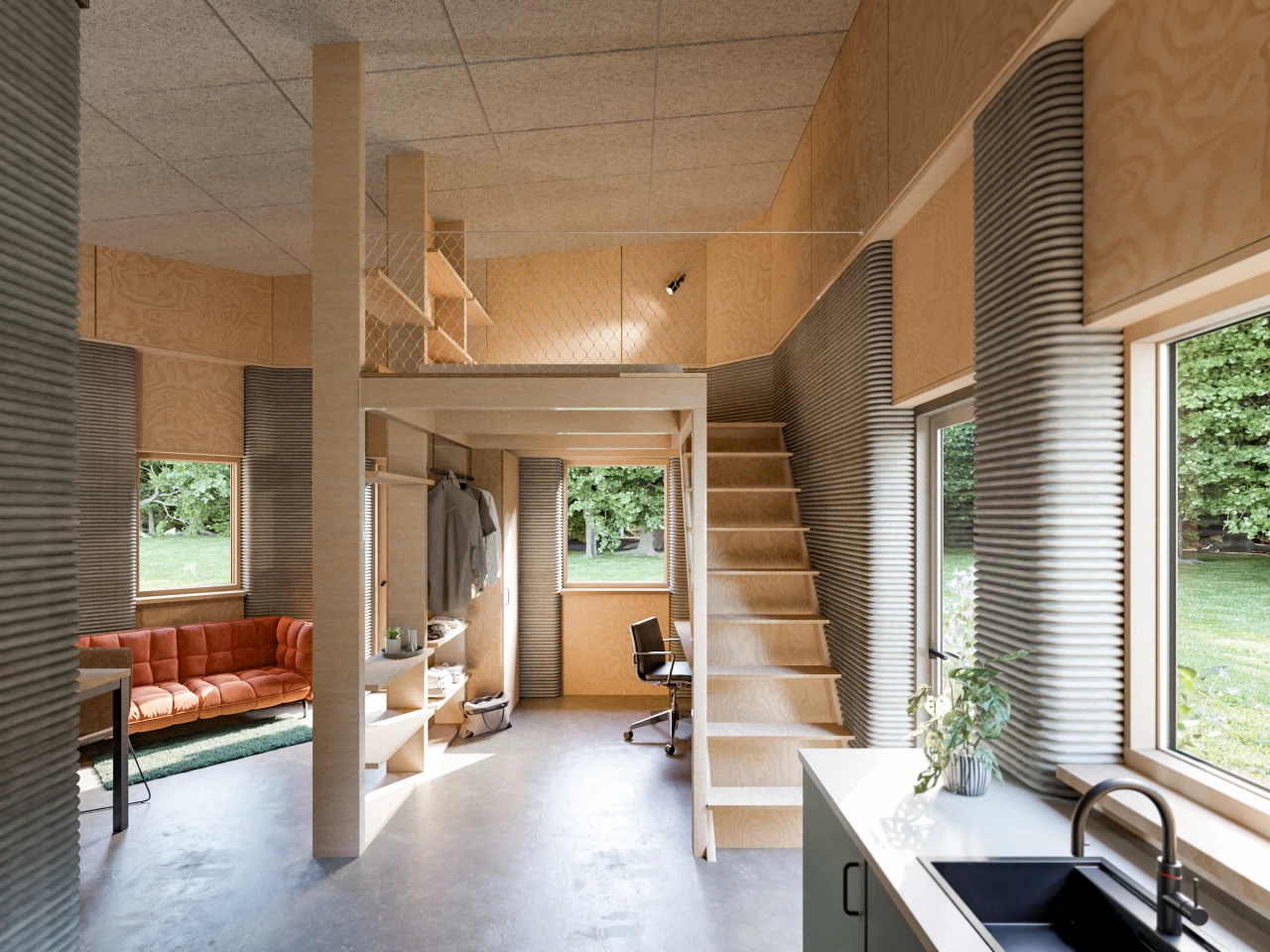
The student residences range in size from 40 to 50 sq m (431 to 538 sq ft), with each unit including a kitchen, study area, lounge, bathroom, and a bedroom with a double bed. Large roof windows maximize natural light, and the interior decor makes use of coated plywood and glass to offset the coldness of the concrete.
However, it’s important to stress that while the 3D printing robot has completed its work, the job’s not yet completed. A human workforce has now taken over and is currently fitting windows, interiors, furniture, and everything else required to turn a basic shell into actual housing. Outside, landscaped gardens, walking paths, and bicycle parking are also being added to help foster a student-friendly environment.
Skovsporet is expected to be completed by August 2026. The project comes during what has been a remarkable 3D-printing boom in 2025, with the burgeoning technology moving to the mainstream in Europe, Australia, and the United States.
Sources: COBOD, SAGA Space ArchitectsView gallery – 5 images
Tags
ArchitectureBuilding and Construction3D PrintingHousing

Adam scours the globe from his home in Spain in order to bring the best of innovative architecture and sustainable design to the pages of New Atlas. Most of his spare time is spent dabbling in music, tinkering with old Macintosh computers and trying to keep his even older VW bus on the road.

 canisgallicus