
New target to prevent Alzheimer’s patients forgetting loved ones
November 10, 2025

Researchers are studying how changes in the brain may cause Alzheimer’s patients to forget loved ones, and exploring new ways to prevent memory loss
Illustration by John DiJulio/University Communications
View 2 Images
New research has found that the loss of social memory – recognizing friends and family – in Alzheimer’s disease (AD) could come down to specific structures around brain cells. And targeting this delicate scaffolding may potentially prevent this heartbreaking stage in cognitive decline.
Scientists from the University of Virginia (UVA) School of Medicine first discovered the role these structures – known as perineural nets – play in AD neurodegeneration in July 2024, and the team has now demonstrated that the loss of these structures disrupts the brain’s ability to recall social connections.
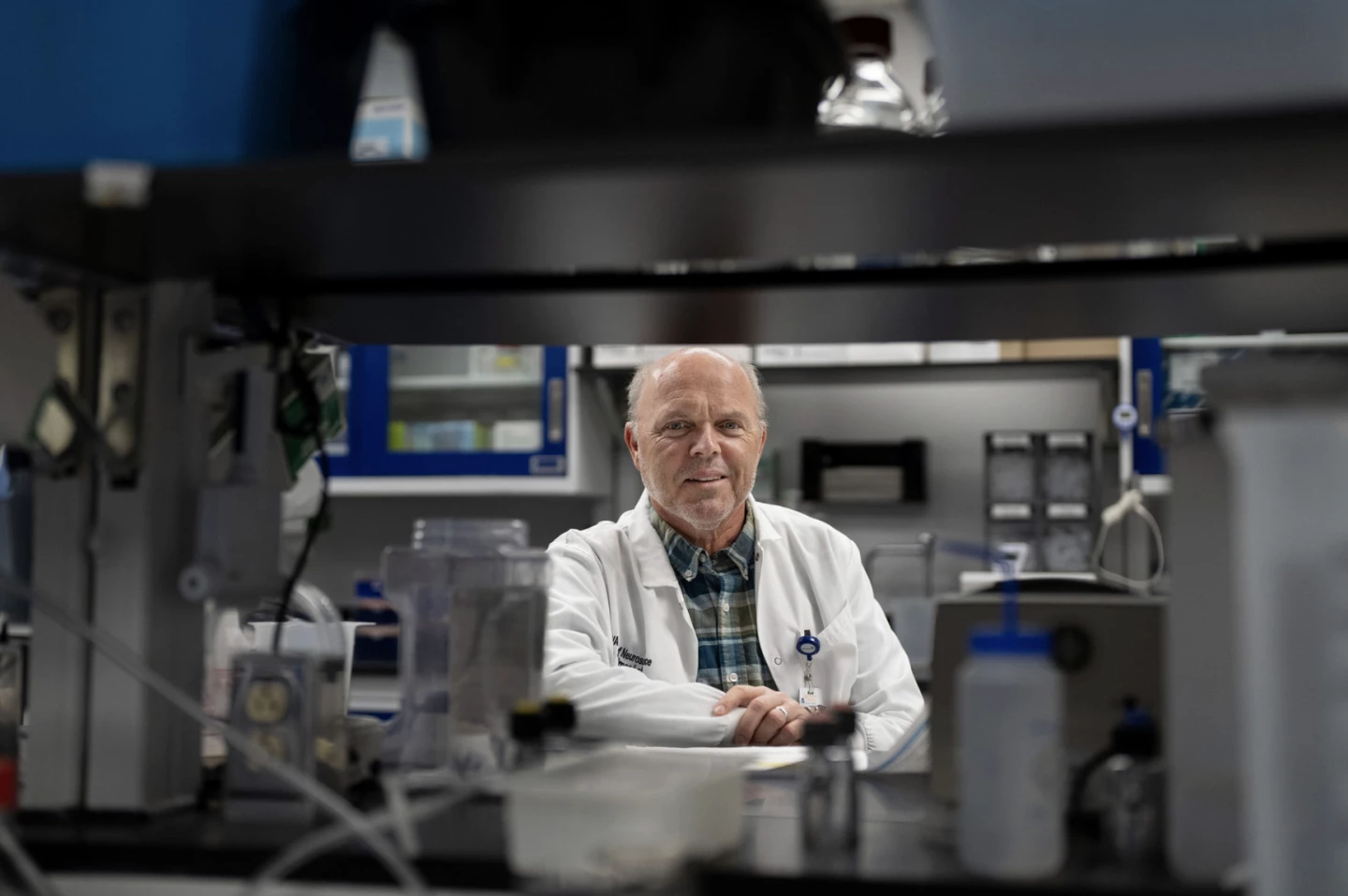
“Finding a structural change that explains a specific memory loss in Alzheimer’s is very exciting,” said Sontheimer, chair of UVA’s Department of Neuroscience and member of the UVA Brain Institute. “It is a completely new target, and we already have suitable drug candidates in hand.”
Sontheimer and team believed that disruptions in these perineural nets, which protect communicating nerve cells, result in the neurons being unable to form and store memories. While perineuronal nets were first discovered back in 1898 by Camillo Golgi, the UVA scientists believe these structures are a lot more important to our brain’s health than previously thought. These nets surround inhibitory neurons, which play a key role in regulating brain activity, slowing down the signals transmitted by excitatory nerve cells.
When the nets are damaged through AD, specialized support cells (astrocytes) cease being able to remove potassium or glutamate from the synapse that connects the neurons, which then causes glutamate to “spill over” into regions it shouldn’t be, potentially killing off neighboring neurons.
In a mouse model, the researchers found that damaged perineural nets resulted in the animals losing their “social memory,” unable to recognize mice they were familiar with – even though other parts of their memory and object recognition was intact. This is, of course, something that occurs as AD progresses, where patients can fail to identify loved ones yet retain “object memory” for some time. When the scientists kept the perineural nets intact, mice were able to recognize familiar animals.
“In our research with mice, when we kept these brain structures safe early in life, the mice suffering from this disease were better at remembering their social interactions,” said graduate student Lata Chaunsali. “Our research will help us get closer to finding a new, nontraditional way to treat or, better yet, prevent Alzheimer’s disease, something that is much needed today.”
The team used matrix metalloproteinase (MMP) inhibitors – which are predominantly being investigated in cancer research – to block the AD-driven damage to perineural nets in mice, and the treatment halted their destruction. While still early days, these existing drugs could be an entirely new way to protect the brain as the disease progresses.
“Although we have drugs that can delay the loss of perineuronal nets, and thereby delay memory loss in disease, more research needs to be done regarding safety and effectiveness of our approach before this can be considered in humans,” Sontheimer said. “One of the most interesting aspects of our research is the fact that the loss of perineuronal nets observed in our studies occurred completely independent of amyloid and plaque pathology, adding to the suspicion that those protein aggregates may not be causal of disease.”
The research was published in the journal Alzheimer’s & Dementia.


