
Goldman Sachs Says Gen Z Is Pretty Much Permanently Screwed
“History also suggests that the full consequences of AI for the labor market might not become apparent until a recession hits.”
By Joe Wilkins
Published Oct 16, 2025 12:26 PM EDT
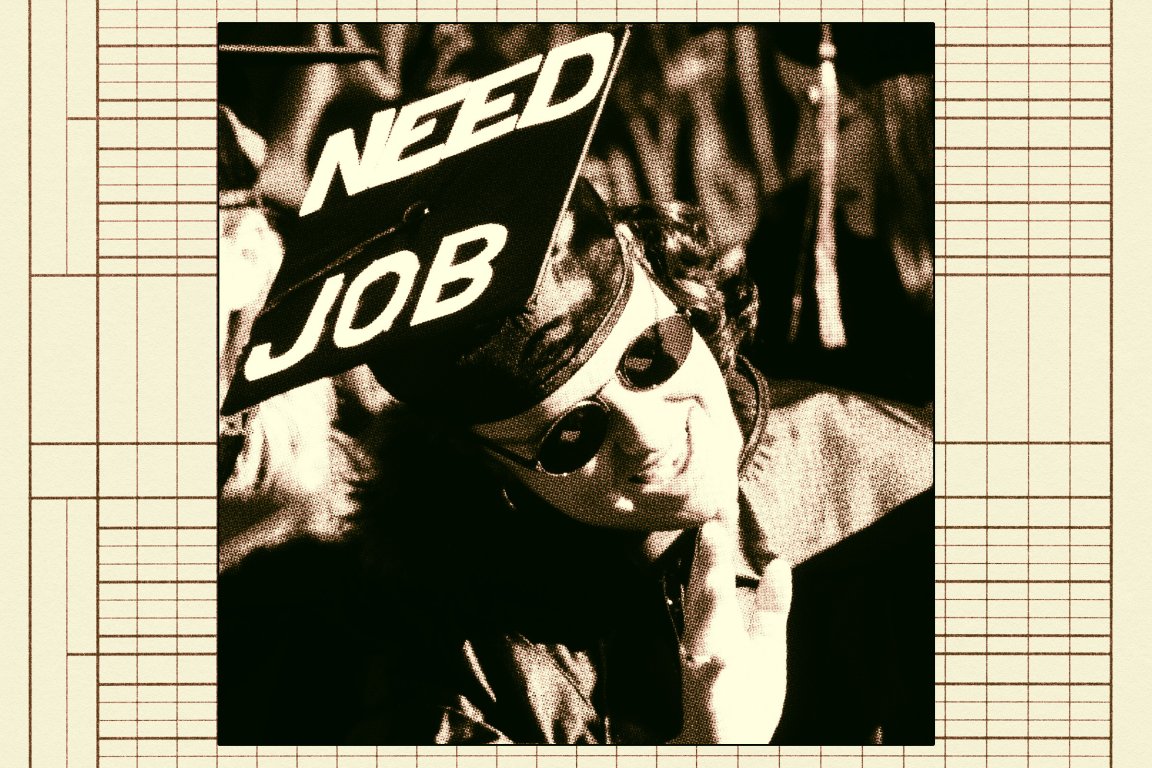
For any young job seekers struggling in today’s horrible labor market, experts working for one of the wealthiest companies in the world have a little tough love for you: you’re pretty much cooked, fam.
In an analysis of recent economic trends in the US, Goldman Sachs economists David Mericle and Pierfrancesco Mei wrote that “jobless growth” is pretty much the new normal.
“The modest job growth alongside robust GDP growth seen recently is likely to be normal to some degree in the years ahead,” Mei and Mericle said, according to Fortune, which obtained the note. The two expect that the majority of GDP growth will come from productivity gains boosted by AI progress, with only a “modest contribution” from labor supply growth, or the increase in available workers.
“History also suggests that the full consequences of AI for the labor market might not become apparent until a recession hits,” they added. When it comes to tech innovation, “some transitional friction has been normal historically, and is certainly possible in the future.”
The effect of all this, Fortune observes, is that hiring in every industry except healthcare has turned net on negative over the past few months, as executives and management teams double down on AI in order to streamline operations and cut out expensive overhead — in the form, mainly, of paychecks.
This unfortunate insight piggybacks off Federal Reserve Chair Jerome Powell’s comments in September, when he said the labor market had become “low-hire, low-fire.” Powell’s insight: “kids coming out of college and younger people, minorities, are having a hard time finding jobs.”
It’s a bitter pill to swallow, but there’s also plenty of reason to be skeptical of all the AI doomsaying.
Yes, it’s true that hiring has slowed to a crawl — one report found that hiring in the US is now the slowest its been since 2009, when the economy was still in the throes of one of the worst financial disasters in history. However, economists are nowhere near a consensus on the cause, and AI is more likely a scapegoat than a culprit.
For example, as the Goldman Sachs analysts noted, AI’s overall impact on the macroeconomy is still limited, a conclusion also put forward by the Yale Budget Lab. Given the hundreds of billions of dollars invested into AI so far, investors clearly expect to see an unprecedented shakeup of the US economy — if the AI revolution comes to pass.
But at the moment, prospects for that new technological epoch look dim. AI is far from the golden goose business executives assumed it would be, failing at 95 percent of the companies that roll it out. After betting the farm on AI to automate its workers, company after company has eaten crow, either being forced to hire back their workers, or scrap their AI programs in favor of outsourced labor.
In each case, the real issue isn’t AI’s purported ability to do everyone’s job, but the same old class of ruling elites who’ve always fought tooth and nail to keep every penny which they’ve never toiled to earn in the first place.

More on automation: Data Shows That AI Use Is Now Declining at Large Companies
Joe Wilkins
Contributing Writer
I’m a tech and transit correspondent for Futurism, where my beat includes transportation, infrastructure, and the role of emerging technologies in governance, surveillance, and labor.

 canisgallicus