
Tiny Peptide Shows Powerful Brain Healing After Traumatic Injury
·October 7, 2025
Summary: A small peptide called CAQK, composed of just four amino acids, has shown remarkable neuroprotective effects in mouse and pig models of traumatic brain injury. When injected intravenously, CAQK travels directly to damaged brain tissue, where it binds to overexpressed proteins and reduces inflammation, cell death, and tissue damage.
Treated animals displayed improved memory and motor function without toxicity, suggesting strong potential for safe, non-invasive therapy. Researchers plan to seek FDA approval for human clinical trials, marking a major advance toward drug-based treatments for traumatic brain injury.
Key Facts:
- Targeted Repair: CAQK homes in on injured brain areas, reducing inflammation and cell death.
- Non-Invasive Therapy: Delivered intravenously, avoiding risky brain injections.
- Pre-Clinical Success: Improved recovery in mice and pigs without toxicity; human trials planned.
Source: CSIC
Advanced Chemistry of Catalonia (IQAC) of the Spanish National Research Council (CSIC), an institution under the Ministry of Science, Innovation and Universities, has discovered that a small compound—a peptide made up of four amino acids called CAQK—has a significant neuroprotective effect in mouse models of traumatic brain injury.
When administered intravenously shortly after injury in animal models (mice and pigs), CAQK specifically targets the damaged areas of the brain, attracted by a protein that is overexpressed in injured tissue following trauma.
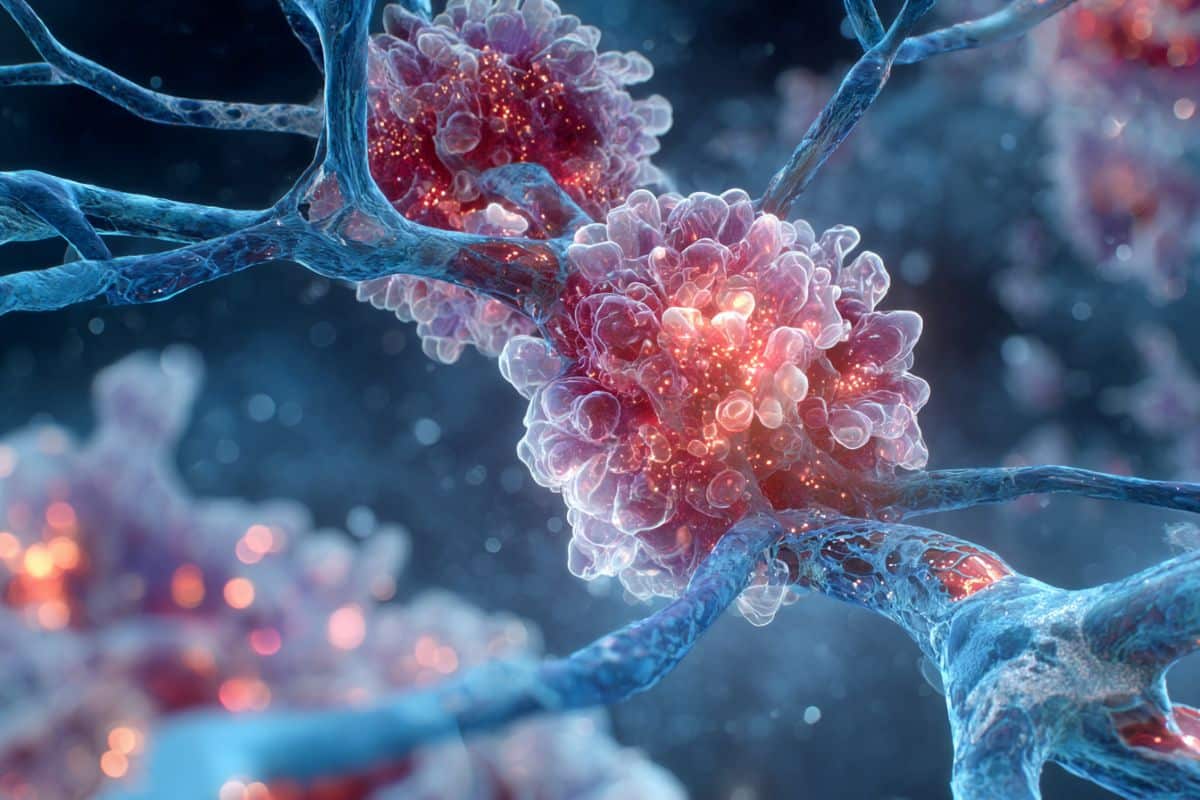
CAQK accumulates in the region marked by this protein and is able to reduce inflammation, cell death, and damage to brain tissue. Moreover, in mice, it improved functional recovery without apparent toxicity.
The results, published in the journal EMBO Molecular Medicine, open new possibilities for treating injured areas of the brain.
The study was led by the company Aivocode (a spin-off of the Sanford Burnham Prebys Institute) in San Diego, California, in collaboration with the Institute for Advanced Chemistry of Catalonia (IQAC-CSIC) and the University of California, Davis.
Aivocode, founded by researchers Aman P. Mann, Sazid Hussain, and Erkki Ruoslahti (authors of the study), plans to soon seek authorization from the U.S. Food and Drug Administration (FDA) to begin Phase I clinical trials in humans.
Although no specific date has been set, the fact that CAQK is a short peptide—easy to produce and with good tissue penetration—makes it a strong candidate for drug development.
Traumatic Brain Injury
Traumatic brain injury (TBI) is brain damage typically caused by blows to the head, such as those resulting from traffic accidents, workplace incidents, or falls. It is estimated to affect around 200 people per 100,000 inhabitants each year.
Currently, treatment focuses on stabilizing the patient by reducing intracranial pressure and maintaining blood flow, but there are no approved drugs to halt brain damage or its secondary effects, such as inflammation or cell death. In addition, the therapies under investigation require direct injections into the brain, an invasive technique that can cause complications.
“The current interventions for treating acute brain injury aim to stabilize the patient by reducing intracranial pressure and maintaining blood flow, but there are no approved drugs to stop the damage and secondary effects of these injuries,” explains Dr. Pablo Scodeller, researcher at IQAC-CSIC and co-author of the study.
The Great Challenge of Neurology
Finding a non-invasive way to treat an injured brain is one of the major challenges in neurology. This study moves in that direction, building on previous work carried out by the researchers in 2016 and published in Nature Communications.
At that time, researcher Aman P. Mann, together with Pablo Scodeller, working in the laboratory of Dr. Ruoslahti (senior author of both studies) at Sanford Burnham Prebys, discovered a peptide—a small chain of amino acids, the building blocks of proteins—that specifically targeted injured areas of the brain in mice.
The peptide, named CAQK, was identified through a large-scale screening technique known as peptide-phage display, which allows the selection of molecules with affinity for specific tissues. In that earlier study, CAQK was used as a “vehicle” to deliver drugs directly to the damaged area.
However, in their new work, the researchers went a step further and demonstrated that the CAQK peptide itself has therapeutic effects.
To evaluate its therapeutic activity, the peptide was first administered intravenously shortly after a moderate or severe traumatic brain injury, and it was observed that the peptide accumulated in the injured brains of mice and pigs (the latter having brains more similar to humans than mice).
Furthermore, it was found that the peptide binds to special molecules called glycoproteins (proteins attached to sugars), which become more abundant after an injury and are part of the extracellular matrix—a supporting network that surrounds brain cells.
Treatment of mice with traumatic brain injury using this peptide resulted in a reduction in lesion size compared to control mice.
“We observed less cell death and lower expression of inflammatory markers in the injured area, indicating that CAQK alleviated neuroinflammation and its secondary effects. Behavioral and memory tests conducted after treatment also showed improvement in functional deficits, with no evident toxicity,” explains the study’s first author, Dr. Mann.
The study’s results demonstrate that the CAQK peptide can help repair the damaged area, highlighting its potential therapeutic applications following trauma.
“What’s exciting is that, in addition to proving highly effective, it’s a very simple compound—a short peptide that is easy to synthesize safely at large scale. Peptides with these characteristics show good tissue penetration and are non-immunogenic,” concludes Scodeller.
Key Questions Answered:
Q: What makes CAQK different from other brain injury treatments?
A: It can be administered intravenously and selectively targets injured brain tissue without invasive procedures.
Q: How does CAQK work?
A: The peptide binds to specific glycoproteins overexpressed after brain injury, reducing inflammation and protecting neurons.
Q: When could human trials begin for using CAQK to treat TBI?
A: Researchers plan to seek FDA authorization soon to start Phase I clinical testing.
About this neuropharmacology and TBI research news
Author: Pilar Quijada
Source: CSIC
Contact: Pilar Quijada – CSIC
Image: The image is credited to Neuroscience News

 canisgallicus