

Seaweed could help build the cities of tomorrow
September 05, 2025
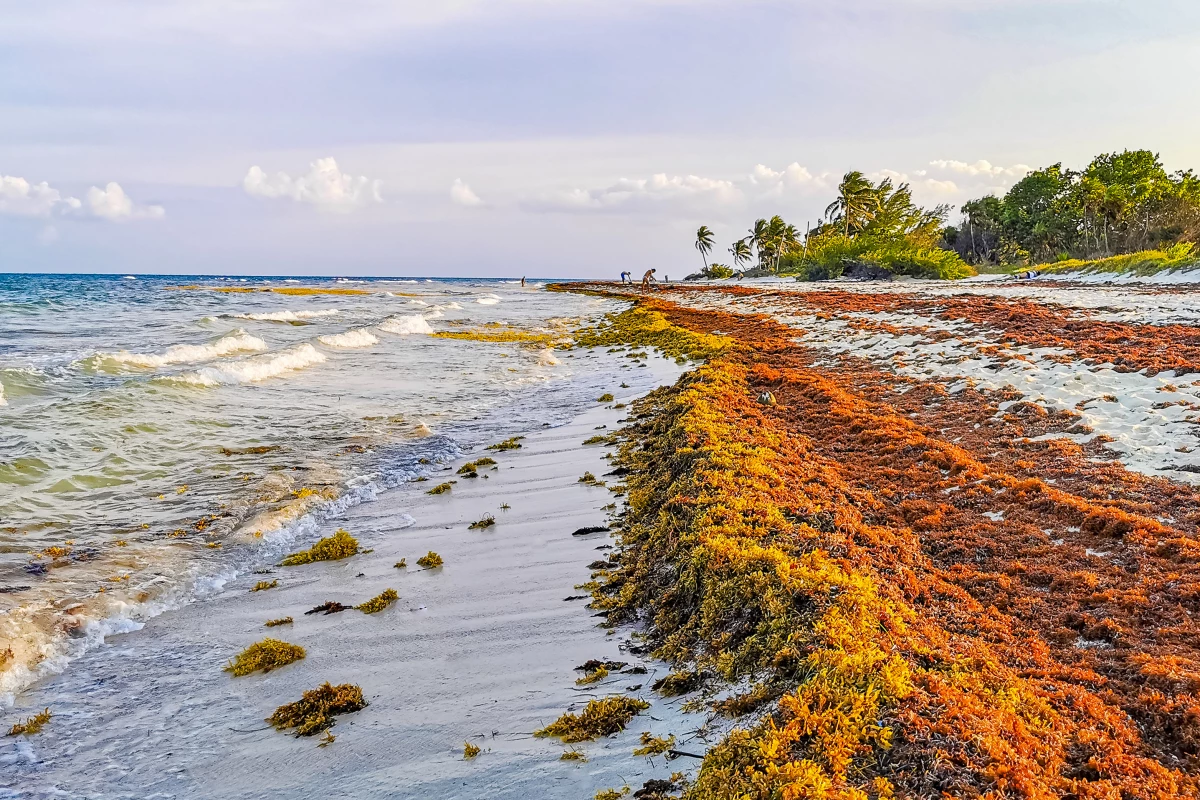
A common form of seaweed, piling up on tropical beaches, could be used to make eco-friendly concrete
Once a harmless drifter in the Sargasso Sea, an algae known as sargassum is now flooding tropical beaches, from Brazil to the Caribbean, with stinky, toxic piles. As it rots, it releases gases like ammonia and methane, turning paradise into a health hazard.
It’s bad for tourism, fishing, and marine life, and worse, most of it ends up dumped in landfills. No reuse. No recycling. Just rot.
The longer the thumb, the bigger the brain, evolution study suggests
Can we turn this tide into something useful?
For some time now many smart minds have been finding ways to repurpose products previously considered waste. Seaweed has been a particular target for many. In 2020, researchers developed an affordable and commercially viable process to convert waste seaweed into biofuel, fertilizer, and other products. And in 2022, scientists from the Indian Institute of Technology developed seaweed-based membranes for greener soundproofing.
Now, a new study published in the Journal of Materials in Civil Engineering reports that sargassum seaweed could be transformed into the next generation of eco-friendly building blocks.
The researchers discovered that mixing sargassum algae into ceramic clay makes the clay lighter, greener, and cooler. These algae-infused clays can be used in concrete to reduce weight, for slabs to improve insulation, and as a gardening material.
João Adriano Rossignolo, a professor at the Department of Biosystems Engineering at the School of Animal Science and Food Engineering of the University of São Paulo (FZEA-USP), who coordinated the study, said, “Normally, sargassum is collected and disposed of in landfills without any practical use. That’s why we decided to research a way to take advantage of this large amount of biomass on the beaches.”
Before conducting construction experiments, researchers thoroughly inspected the raw materials. To create lightweight ceramic clay aggregates, they blended sargassum seaweed into clay in three concentrations: 0%, 20%, and 40%. These mixtures were then shaped through extrusion, similar to squeezing clay through a mold, and fired at temperatures of 800, 900, and 1,000 °C (1,472, 1,652, and 1,832 °F) using both traditional and microwave ovens.
Once the algae-infused clay samples were prepared, researchers tested them for shrinkage, water absorption, porosity, density, and strength. They also compared the environmental impact of these new materials with that of traditional expanded clay using a life cycle assessment (LCA).
The findings showed that adding sargassum, especially at a 40% concentration, made the clay lighter. However, only the samples baked in microwave ovens met the required strength standards across all temperatures. This was due to better densification and a more refined internal structure.
The life cycle assessment (LCA) revealed a promising finding: materials made from sargassum seaweed outperformed traditional expanded clay in terms of environmental impact. That finding led researchers to a bold conclusion: microwave-sintered sargassum clay isn’t just viable, it’s a smart way to tackle the seaweed surge along tropical coastlines.
Using algae to produce lightweight ceramic aggregates helps reduce the use of natural resources and enhances energy efficiency. But the innovation didn’t stop there.
The team also explored using sargassum in particulate panels for furniture and construction, as well as in fiber cement tiles, replacing limestone with sargassum ash.
“The results were surprising,” Rossignolo said, “as we were able to use 30% sargassum in the panels and replace 100% of the limestone with its ash, with results that fully comply with current standards for these products and improve the durability and mechanical properties of the materials.”
The study was published in the Journal of Materials in Civil Engineering.
Source: FAPESP

 canisgallicus