
‘Tourists, go home!’: Mass tourism exasperates locals in Europe and beyond
Saturation point
Europe
An increasing number of visitors has sparked numerous anti-tourism movements in Spain and elsewhere in Europe. Locals blame tourists for driving up housing costs, inflation, and causing environmental degradation. Some affected regions are beginning to take small steps to ease their residents’ concerns.
Issued on: 29/07/2024 – 19:24Modified: 29/07/2024 – 19:26
7 min Reading time
By:
Pauline ROUQUETTE

A collective of several hundred associations in Spain known as Ecologistas marched through the town of El Puerto de Santa Maria on July 20 to denounce “uncontrolled mass tourism”, chanting: “Our city is not for sale!”
Thousands of protesters marched on July 6 in Barcelona to denounce an excess of visitors, preceding another large demonstration against mass tourism on July 22 in Mallorca, an island reputed for its beaches, protected creeks, limestone mountains and archeological sites.
Spain recorded an additional 24 million tourists in the first quarter of 2024 compared to the same period the previous year, representing an annual increase of 14.5 percent. The country had already registered an all-time high in international visitors in 2023.
The tourism boom is driving up prices in shops as well as housing costs, a surge which locals say is complicating their access to housing.
Popular destinations in Spain like Barcelona and Seville, but also Venice in Italy, Étretat in France, and Athens and Paros in Greece all suffered a slump in tourism during the Covid-19 years. Tourism in Europe and elsewhere is now picking up again, with people encouraged by low-cost flights or the promotion of certain sites on social networks.
The sector represents an undeniable source of income for the countries concerned. The increase in visitors and prices in Spain, for example, led to tourist spending to surge by 22.6 percent in the first quarter of 2024, surpassing €31.5 billion, according to the National Institute of Statistics. Yet uncontrolled mass tourism also increasingly represents a scourge for local populations.
‘An unbearable place to live’
Spain’s most-visited city, Barcelona, welcomes some 12 million people a year, many of whom arrive by cruise ship. The increasing number of tourists each year is putting pressure on health services, waste management, water supply and housing – to the detriment of inhabitants.
Around 3,000 people marched through the city of Gaudi in early July chanting, “Tourists, go home!” and squirting people they identified as tourists with water pistols.
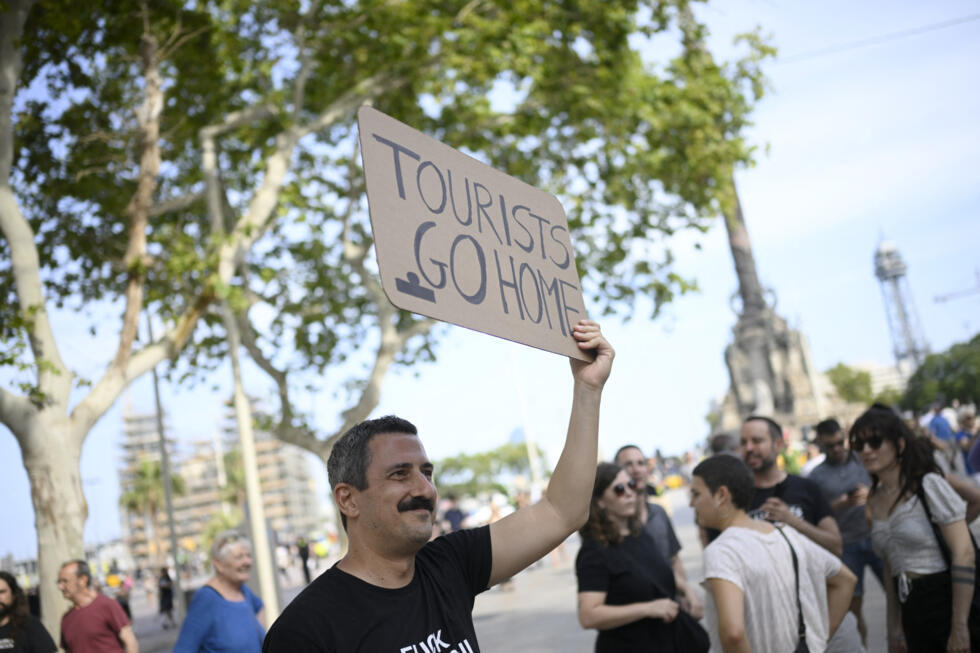
The authorities reacted by announcing they will bar apartment rentals to tourists by 2028; a total of 10,000 apartments will lose their licenses for short-term rentals on platforms like Airbnb. The city’s leftist Mayor Jaume Collboni also announced plans to raise the tourist tax for cruise passengers who visit the city for fewer than 12 hours.
Locals in Andalusia, another Spanish destination popular with international tourists, have also voiced their exasperation with mass tourism. “I dream of retiring, renting out my apartment and leaving Seville,” Francisco Martinez, the president of Ancha la Feria neighbourhood association, told Spanish daily El País about the invasion on terraces in the historic city centre.
“The city centre might be good for drinking a beer, but it has become an aggressive and unbearable place to live.”
Seville’s conservative Mayor Jose Luis Sanz announced in February that a plan was under way to charge an entry fee to the Plaza de Espana, a major attraction particularly popular with tourists visiting the Andalusian capital.
“We are planning to close the Plaza de España and charge tourists to finance its conservation and ensure its safety,” he wrote on X. He accompanied the news with a video showing broken tiles and balustrades, and street vendors niched in its alcoves and sitting on the staircases.
Authorities in Venice, Italy, have launched a pilot programme to charge day-trippers a €5 entry fee to be able to stroll along its famous canals on busy days. The measure was deemed insufficient by most residents, who would have preferred to limit the number of visitors per day to successfully protect the city. Peru, for example, adopted a measure to limit access to Machu Picchu to 2,500 visitors per day.

Other European cities, such as Amsterdam in the Netherlands, have opted to increase the tourist tax. The Dutch capital confirmed it was hiking its tourist tax on hotel rooms to 12.5 percent of the price for all visitors. The city, which is actively working to prevent the kind of tourism that compromises quality of life for its residents, has also tightened its regulations to curb tourism linked to cannabis consumption, and now prohibits the construction of new hotels.
‘They take our homes while they live in the Maldives’
In the Athenian district of Metaxourgeio in Greece, locals are increasingly frustrated with the presence of tourists. “They take our homes while they live in the Maldives. And we give them tzatziki and togas,” said a resident.
Companies in this bohemian district are transforming buildings into coworking spaces to accommodate digital nomads – a growing sub-category of people who travel and work remotely. The total number of short-term rentals in Athens has soared by almost 500 percent in less than a decade.
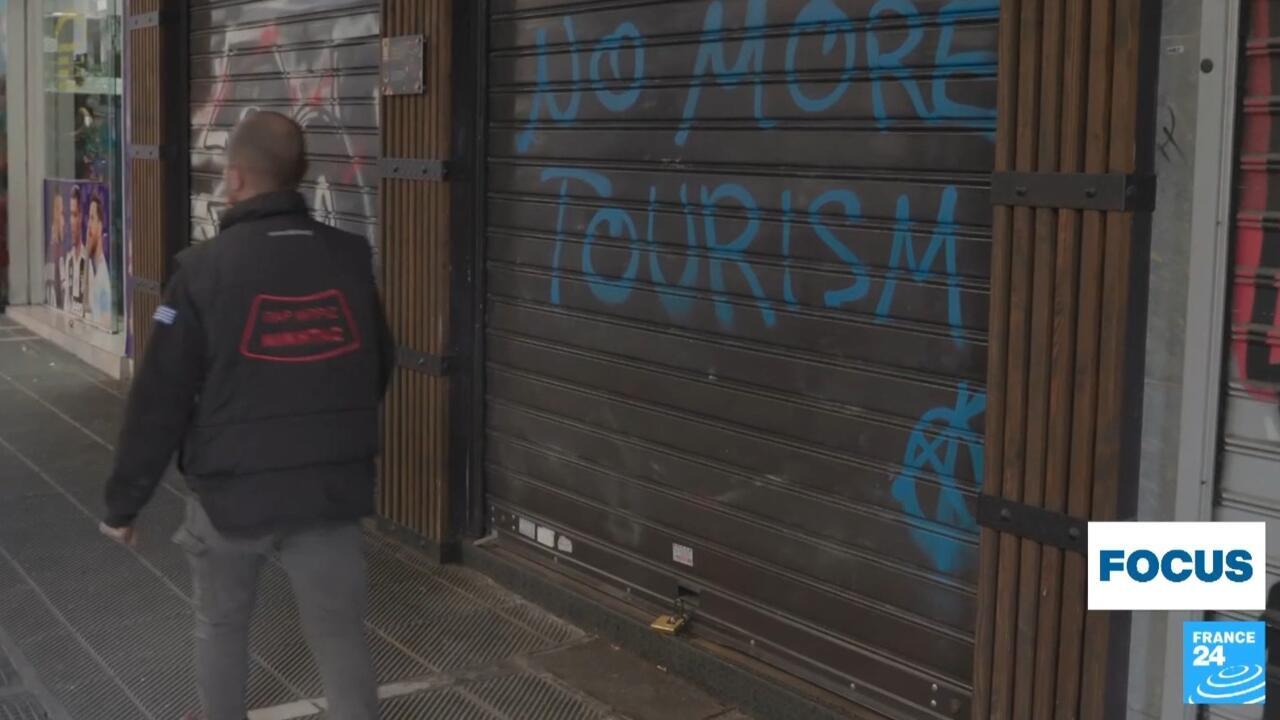
To slow down the phenomenon of mass tourism, Greece has started raising taxes and doubling the minimum required investment for the “golden visa“, a system that allows citizenship to be bought for a price. Yet the government is hesitating to adopt more stringent measures.
“We have to take into account the needs of the entire population, both renters and owners,” said Harry Theoharis, Greece’s former deputy minister of national economy and finance. He added that while he was convinced further measures were necessary, further research was also needed to avoid taking measures that would destroy the market.
The “beach towel revolt” in Paros, in the Cyclades region of Greece, emerged as a movement against the privatisation of the island’s beaches. “We are concerned about the dispossession of the beaches of Paros by companies that exploit part of the coastline,” wrote the collective, which was born on Facebook a year ago.
As a key stop for Greek cruises, the island of Santorini sees hordes of tourists flood its hotels, beaches and restaurants every year. Out of the 32.7 million people who visited Greece last year, about 3.4 million, or one in 10, visited the island, which has just 15,500 inhabitants.
In the narrow streets of the town of Oia, locals put up signs urging visitors to respect their homes: “RESPECT … It’s your holiday … but it’s our home.”
According to the Hellenic Ports Association, 800 cruise ships brought 1.3 million passengers in 2023. With parts of the island on the verge of being saturated, authorities are considering imposing restrictions.
Read moreOn Santorini, anger over cruelty towards ‘tourist donkeys’

 canisgallicus