
The Muslim Brotherhood is a very secretive organization and prefers to act through a large number of front organizations to push its Islamist agenda in the West. When it comes to influencing the youth in North America, the Brotherhood has a number of tools it’s using. Apart from associations, they have also been working through unions and student groups for decades. The first student union was established in 1962 at the University of Illinois and was soon joined by unions from Indiana and Minnesota.
However, its main tool, the Muslim Students Association, was founded in 1968 after operating informally in the years prior to its establishment. Its primary goal before the enactment of the new Immigration and Nationality Act was to prepare and support Arab and Muslim students studying abroad in various American universities for their return to their home countries after completing their studies. This was to enable them to become active members of the Muslim Brotherhood and other political Islam groups, equipped with global qualifications, thereby contributing to those groups’ eventual rise to power.
Suspected al-Qaeda member Aafia Siddiqui was active in the MSA at MIT when she attended there in the 1990s and was known for participating in charity for Islamic organizations. At MIT, several of the MSA’s most active members followed the teachings of Abdullah Azzam, a Muslim Brother who was Osama bin Laden’s mentor.” Azzam had established the Al Kifah Refugee Center to function as its worldwide recruiting post, propaganda office, and fund-raising center for the mujahideen fighting in Afghanistan. It would become the nucleus of the al-Qaeda organization. The University of California Irvine Muslim Student Union is an affiliated chapter of MSA National, which was suspended for the 2010–11 school year for disrupting a speech given by Israeli Ambassador
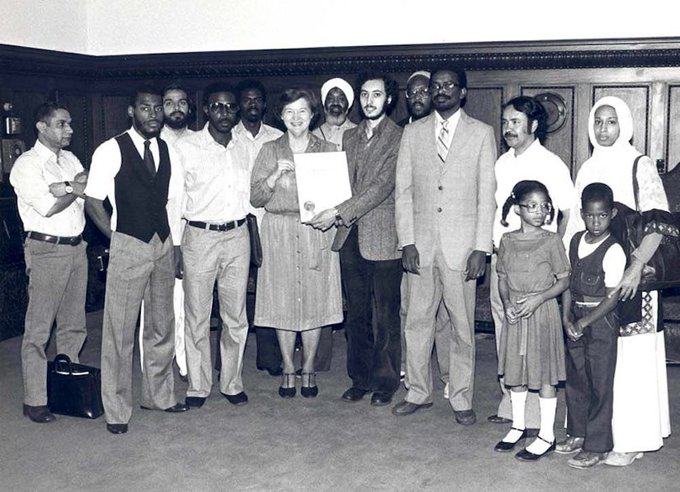
at a university sponsored event. In the years following the 9/11 attacks, the NYPD monitored MSA chapters in the Northeast US, citing a list of 12 people arrested or convicted on terrorism charges in the United States and abroad who had once been members of Muslim student associations. In rationalizing their monitoring activities, the NYPD noted they followed the same rules as the FBI, but several civil rights organizations argued that they engaged in unconstitutional racial and religious profiling and spying without evidence against individuals. The universities involved in the student monitoring included Yale; Columbia; the University of Pennsylvania; Syracuse; New York University; Clarkson University; the Newark and New Brunswick campuses of Rutgers; the State University of New York campuses in Buffalo, Albany, Stony Brook and Potsdam; Queens College; Baruch College; Brooklyn College and La Guardia Community College. The picture below shows an MSA chapter meeting in Pennsylvania in 1980.

 canisgallicus