
Aug 21, 10:07 AM EDT/ by Joe Wilkins
If You’re a Millennial, We Have Bad News About Your Rapidly Impending Death
Prepare for your final avocado toast, millennials.
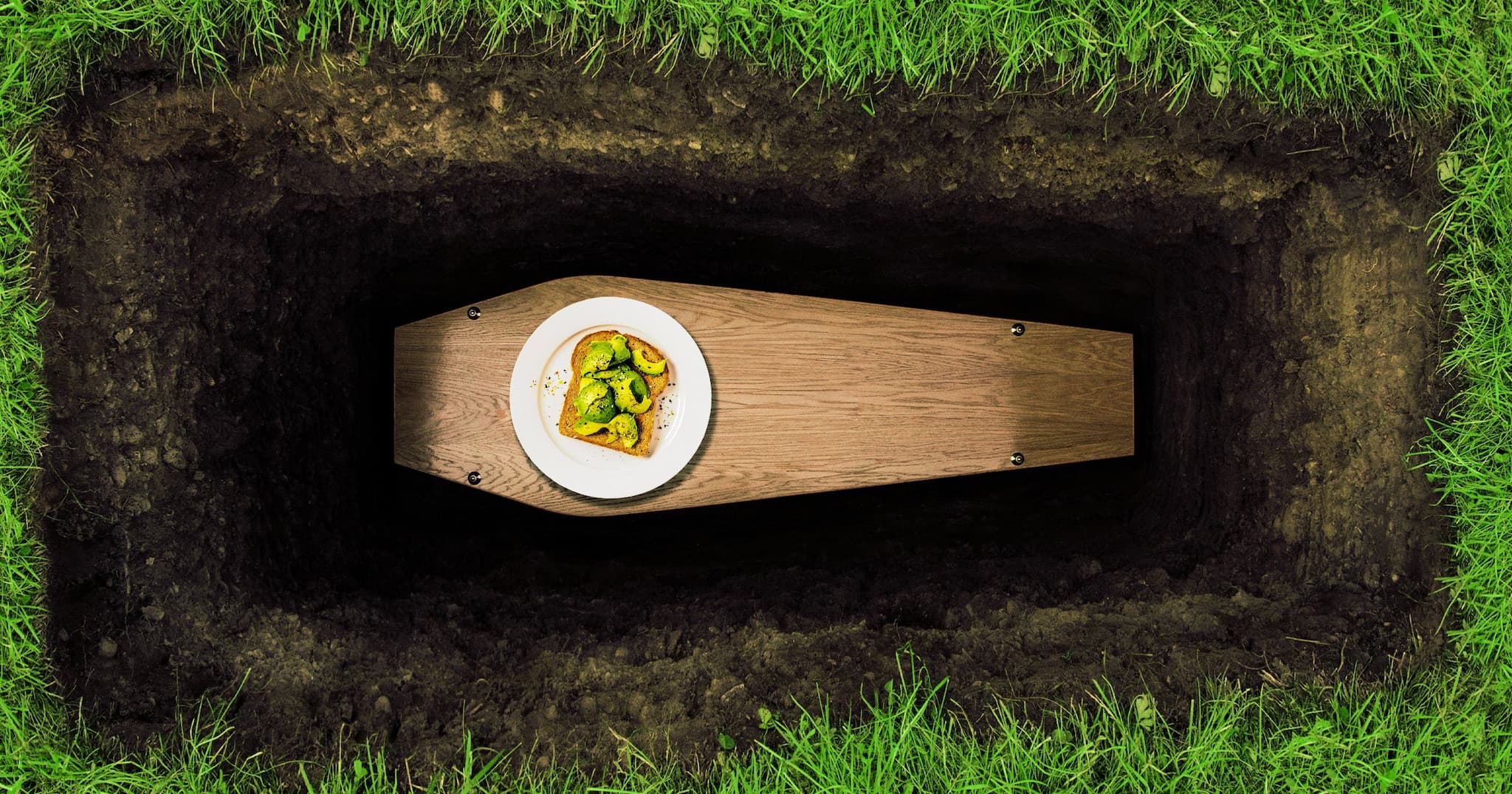
As the world was emerging from the turmoil of COVID in 2023, insurers noticed an alarming trend: Americans were dying at a significantly higher rate compared to other countries.
Anyone familiar with the way the US handled the viral outbreak — especially compared to similar countries — might not be surprised. But while the pandemic certainly contributed to a spike in deaths, expectations of a return to pre-pandemic mortality rates were smashed as number crunchers noticed a larger trend that was decades in the making.
Alarmingly, the data trickling in was indicating a disproportionate rise in deaths among young Americans aged 25 to 44, encompassing millennials and some older members of gen Z.
The question then was whether lingering complications due to COVID were to blame. Now, two years later, millennial and late-gen Z aged Americans continue to shuffle off the mortal coil in higher and higher numbers — even as deaths among other age groups return to normal.
A recent essay by mortality experts for Slate examined the grim trend, which the insurance industry dubs “excess mortality” — the number of actual recorded deaths compared to the expected figure — in light of recent data.
While Americans in general die at a much higher rate than residents of other high-income countries, the rise excess mortality among millennials still manages to stand out.
As the experts write for Slate, about 50 percent of the deaths among Americans under 65 wouldn’t have happened if those unfortunate souls lived in another country. For those young adults aged 25 to 44, that number becomes a whopping 62 percent, or two out of every three deaths.
The exact cause of rising excess mortality among millennials is still debated, and likely can’t be blamed on a single issue. However, while life expectancy has fluctuated through the years, we do know that the number of excess deaths in the US has risen steadily among all age groups since 1980 — the year of US President Ronald Reagan’s landslide electoral victory.
That might not be a coincidence, as the millennial death drive likely has its roots in a number of Reagan-era political decisions made to siphon money to the ultra-rich.
Since the economic policies enacted by Reagan and his ideological majority in Congress, the US has gradually decimated its social safety net, empowered corporate interests over public welfare, and prioritized devastating military interventions throughout the global south at the expense of workers’ rights, public services, and economic equality.
While Reagan is now long deceased, his policies are now firmly entrenched as the status quo, resulting in many of the issues faced by young Americans today, such as rising economic inequality and a crumbling healthcare system.
Without stable jobs, healthcare, affordable housing, quality food, and physical connection to their communities, this rising mortality rate is unlikely to change barring a substantial reorganization of economic policy. Until then, young Americans will keep paying the price, one life at a time.
More on death: There’s Something Really Suspicious About the Way This Star Died

 canisgallicus