
Your Gut May Be the Key to Chronic Fatigue, Long COVID
·July 27, 2025
Key Questions Answered
Q: What did the study uncover about ME/CFS?
A: The study revealed that ME/CFS disrupts key interactions between the gut microbiome, immune system, and metabolism, identifying biological markers that distinguish patients from healthy individuals with up to 90% accuracy.
Q: How does the AI platform, BioMapAI, help?
A: BioMapAI integrates thousands of data points—including microbiome profiles, blood tests, immune markers, and symptoms—to identify patterns and disruptions unique to ME/CFS, making precision medicine approaches more feasible.
Q: Why are these findings important for patients?
A: The research not only strengthens the biological legitimacy of ME/CFS but also offers personalized insight into symptom origins, potentially guiding future dietary, lifestyle, and therapeutic interventions—especially for long COVID and related conditions.
Summary: A groundbreaking study using AI has revealed how ME/CFS disrupts critical connections between the immune system, gut microbiome, and metabolism. The new platform, BioMapAI, achieved 90% accuracy in identifying ME/CFS patients based on stool, blood, and symptom data—offering long-overdue validation for millions living with this debilitating illness.
Researchers found that patients had distinct biological signatures, including lower levels of beneficial fatty acids, disrupted immune cell activity, and metabolic imbalances. These findings could guide personalized treatments and provide a scientific foundation for future therapies, especially for long COVID sufferers with overlapping symptoms.
Key Facts:
- AI Breakthrough: BioMapAI distinguished ME/CFS patients with 90% accuracy using immune, microbiome, and metabolic data.
- Biological Signatures: Patients showed disrupted tryptophan metabolism, inflammatory immune cells, and reduced butyrate levels.
- Precision Medicine Potential: Findings may lead to targeted interventions for ME/CFS and long COVID.
Source: Jackson Laboratory
Millions suffering from myalgic encephalomyelitis/chronic fatigue syndrome (ME/CFS), a debilitating condition often overlooked due to the lack of diagnostic tools, may be closer to personalized care, according to new research that shows how the disease disrupts interactions between the microbiome, immune system, and metabolism.
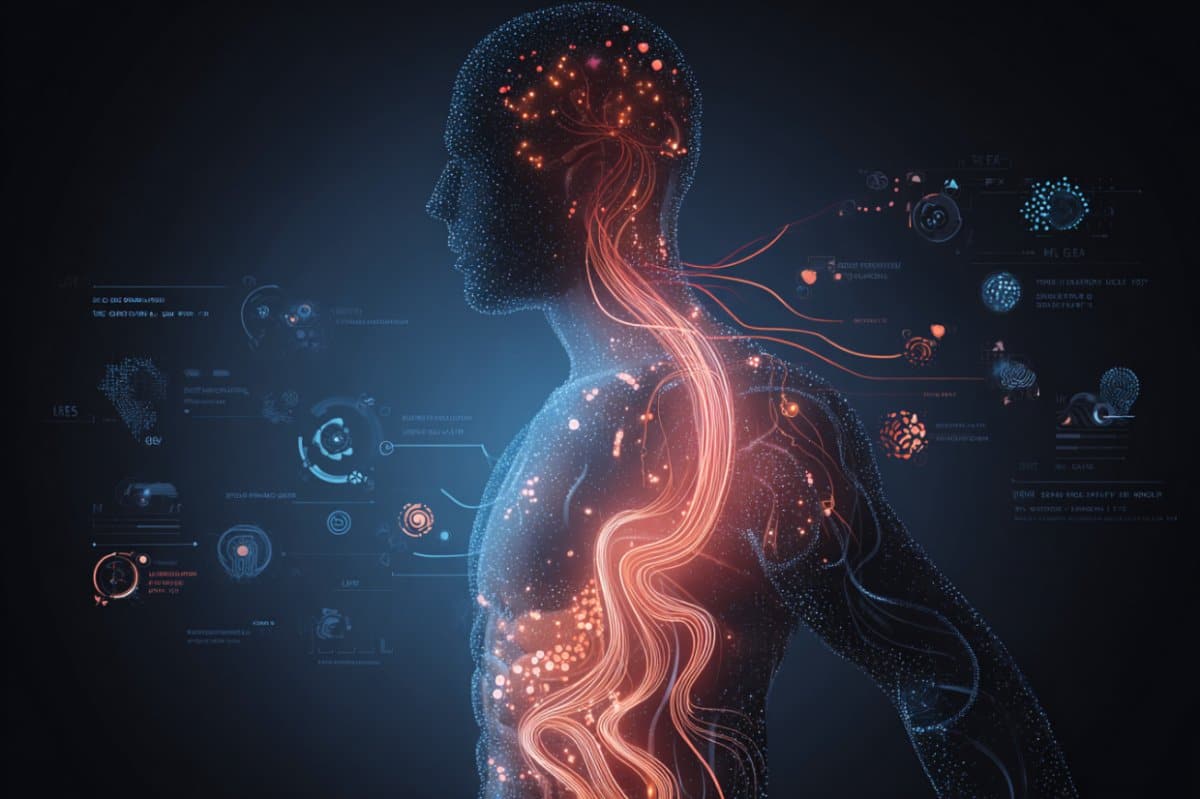
The findings—potentially relevant to long COVID due to its similarity with ME/CFS—come from data on 249 individuals analyzed using a new artificial intelligence (AI) platform that identifies disease biomarkers from stool, blood, and other routine lab tests.
“Our study achieved 90% accuracy in distinguishing individuals with chronic fatigue syndrome, which is significant because doctors currently lack reliable biomarkers for diagnosis,” said study author Dr. Derya Unutmaz, Professor in immunology at The Jackson Laboratory (JAX).
“Some physicians doubt it as a real disease due to the absence of clear laboratory markers, sometimes attributing it to psychological factors.”
The research was led by Dr. Julia Oh, formerly at JAX and now a microbiologist and professor at Duke University, in collaboration with ME/CFS clinicians Lucinda Bateman and Suzanne Vernon of the Bateman Horne Center, and Unutmaz, who directs the JAX ME/CFS Collaborative Research Center. Details appear today in Nature Medicine.
Mapping the Invisible
Chronic fatigue syndrome is characterized by severe symptoms that significantly impair physical and mental activities, including persistent fatigue, sleep abnormalities, dizziness, and chronic pain.
Experts often compare ME/CFS to long COVID, as both conditions frequently follow viral infections, such as Epstein-Barr virus. In the United States, ME/CFS affects between 836,000 and 3.3 million individuals— many undiagnosed—and costs the economy $18 to $51 billion annually due to healthcare expenditures and lost productivity, according to the Centers for Disease Control and Prevention.
Prior studies have noted immune disruptions in ME/CFS, Unutmaz said. This new research builds upon those findings by investigating how the gut microbiome, its metabolites, and immune responses interact.
The team linked these connections to 12 classes of patient-reported symptoms, which were aggregated from hundreds of datapoints generated by patient health and lifestyle surveys.
These include sleep disturbances, headaches, fatigue, dizziness, and other symptoms the researchers mapped in their entirety from microbiome changes to metabolites, immune responses, and clinical symptoms.
“We integrated clinical symptoms with cutting-edge omics technologies to identify new biomarkers of ME/CFS,” Oh said. “Linking symptoms at this level is crucial, because ME/CFS is highly variable. Patients experience a wide range of symptoms that differ in severity and duration, and current methods can’t fully capture that complexity.”
To conduct the study, the researchers analyzed comprehensive data collected from the Bateman Horne Center, a leading ME/CFS, Long-Covid, and fibromyalgia research center in Salt Lake City, Utah.
Dr. Ruoyun Xiong, also a lead author on the study, developed a deep neural network model called BioMapAI. The tool integrates gut metagenomics, plasma metabolomics, immune cell profiles, blood test data, and clinical symptoms from 153 patients and 96 healthy individuals over four years.
Immune cell analysis proved most accurate in predicting symptom severity, while microbiome data best predicted gastrointestinal, emotional, and sleep disturbances. The model connected thousands of patient data points, reconstructing symptoms such as pain and gastrointestinal issues, among several others.
It also revealed that patients who were ill for less than four years had fewer disrupted networks than those who were ill for more than ten years.
“Our data indicate these biological disruptions become more entrenched over time,” Unutmaz said. “That doesn’t mean longer-duration ME/CFS can’t be reversed, but it may be more challenging.”
The study included 96 age- and gender-matched healthy controls, showing balanced microbiome-metabolite-immune interactions, in contrast to significant disruptions in ME/CFS patients linked to fatigue, pain, emotional regulation issues, and sleep disorders.
ME/CFS patients also had lower levels of butyrate, a beneficial fatty acid produced in the gut, along with other nutrients essential for metabolism, inflammation control, and energy.
Patients with elevated levels of tryptophan, benzoate, and other markers indicated a microbial imbalance. Heightened inflammatory responses, particularly involving MAIT cells sensitive to gut microbial health, were also observed.
“MAIT cells bridge gut health to broader immune functions, and their disruption alongside butyrate and tryptophan pathways, normally anti-inflammatory, suggests a profound imbalance,” said Unutmaz.
An Actionable Dataset
Even though the findings require further validation, they significantly advance scientists’ understanding of ME/CFS and provide clearer hypotheses for future research, the authors said.
Since animal models can’t fully reflect the complex neurological, physiological, immune, and other system disruptions seen in ME/CFS, Oh said it will be crucial to study humans directly to identify modifiable factors and develop targeted treatments.
“The microbiome and metabolome are dynamic,” Oh said. “That means we may be able to intervene—through diet, lifestyle, or targeted therapies—in ways that genomic data alone can’t offer.”
BioMapAI also achieved roughly 80% accuracy in external data sets, confirming key biomarkers identified in the original group. This consistency across diverse data was striking, the authors said.
“Despite diverse data collection methods, common disease signatures emerged in fatty acids, immune markers, and metabolites,” Oh said. “That tells us this is not random. This is real biological dysregulation.”
The researchers intend to share their dataset broadly with BioMapAI, which supports analyses across diverse symptoms and diseases, effectively integrating multi-omics data that are difficult to replicate in animal models.
“Our goal is to build a detailed map of how the immune system interacts with gut bacteria and the chemicals they produce,” Oh said.
“By connecting these dots we can start to understand what’s driving the disease and pave the way for genuinely precise medicine that has long been out of reach.”
Additional authors include Elizabeth Aiken, Ryan Caldwell, Lina Kozhaya, and Courtney Gunter (The Jackson Laboratory), and Suzanne D. Vernon and Lucinda Bateman (Bateman Horne Center).
Funding: Funding was provided by NIH grant 1U54NS105539.
About this chronic fatigue and microbiome research news
Author: Cara McDonough
Source: Jackson Laboratory
Contact: Cara McDonough – Jackson Laboratory
Image: The image is credited to Neuroscience News
Original Research: Closed access.
“AI-driven multi-omics modeling of myalgic encephalomyelitis/chronic fatigue syndrome” by Derya Unutmaz et a;. Nature Medicine
Abstract
AI-driven multi-omics modeling of myalgic encephalomyelitis/chronic fatigue syndrome
Myalgic encephalomyelitis/chronic fatigue syndrome (ME/CFS) is a chronic illness with a multifactorial etiology and heterogeneous symptomatology, posing major challenges for diagnosis and treatment.
Here we present BioMapAI, a supervised deep neural network trained on a 4-year, longitudinal, multi-omics dataset from 249 participants, which integrates gut metagenomics, plasma metabolomics, immune cell profiling, blood laboratory data and detailed clinical symptoms.
By simultaneously modeling these diverse data types to predict clinical severity, BioMapAI identifies disease- and symptom-specific biomarkers and classifies ME/CFS in both held-out and independent external cohorts.
Using an explainable AI approach, we construct a unique connectivity map spanning the microbiome, immune system and plasma metabolome in health and ME/CFS adjusted for age, gender and additional clinical factors.
This map uncovers altered associations between microbial metabolism (for example, short-chain fatty acids, branched-chain amino acids, tryptophan, benzoate), plasma lipids and bile acids, and heightened inflammatory responses in mucosal and inflammatory T cell subsets (MAIT, γδT) secreting IFN-γ and GzA.
Overall, BioMapAI provides unprecedented systems-level insights into ME/CFS, refining existing hypotheses and hypothesizing unique mechanisms—specifically, how multi-omics dynamics are associated to the disease’s heterogeneous symptoms.
Join our Newsletter
I agree to have my personal information transferred to AWeber for Neuroscience Newsletter ( more information )
Sign up to receive our recent neuroscience headlines and summaries sent to your email once a day, totally free.
We hate spam and only use your email to contact you about newsletters. You can cancel your subscription any time.
Tags
AIArtificial Intelligencebrain researchCFSchronic fatigue syndromeDeep Learninggut bacteriaJackson Laboratorylong COVIDMachine LearningmicrobiomemicrobiotaneurobiologyNeuroscience
ShareTweetShareShareSubmitEmail

Neuroscience News posts science research news from labs, universities, hospitals and news departments around the world. Science articles cover neuroscience, psychology, AI, robotics, neurology, brain cancer, mental health, machine learning, autism, Parkinson’s, Alzheimer’s, brain research, depression and other sciences.
Related
How Astrocytes Keep Neural Teams in Sync
Childhood Trauma May Rewire Brain for Lifelong Aggression
How the Brain Reactivates Emotional Experiences
Leave a Reply
Your email address will not be published. Required fields are marked *
Comment *
Name *
Email *
Website
Notify me of follow-up comments by email.
Notify me of new posts by email.

Neuroscience News Sitemap
Neuroscience Graduate and Undergraduate Programs
Free Neuroscience MOOCs
About
Contact Us
Privacy Policy
Submit Neuroscience News
Subscribe for Emails
Neuroscience Research
Psychology News
Brain Cancer Research
Alzheimer’s Disease
Parkinson’s News
Autism / ASD News
Neurotechnology News
Artificial Intelligence News
Robotics News
Search Neuroscience News
Neuroscience News is an online science magazine offering free to read research articles about neuroscience, neurology, psychology, artificial intelligence, neurotechnology, robotics, deep learning, neurosurgery, mental health and more.
Neuroscience News


 canisgallicus