
Tiny AI Models Reveal How We Really Make Decisions
·July 18, 2025
Summary: Decision-making often involves trial and error, but conventional models assume we always act optimally based on past experience. A new study used small, interpretable artificial neural networks to uncover how humans and animals actually make choices—revealing the suboptimal strategies we often use.
These models predicted individual decisions more accurately than traditional theories by reflecting real-world, imperfect behavior. This work could transform how we understand cognitive strategies and tailor mental health or behavioral interventions.
Key Facts:
- Realistic Insights: Tiny AI models revealed decision-making strategies are often suboptimal but systematic.
- Individual Differences: The models predicted individual behavior better than optimality-based frameworks.
- Broader Impact: Findings may inform mental health approaches by mapping cognitive diversity.
Source: NYU
Researchers have long been interested in how humans and animals make decisions by focusing on trial-and-error behavior informed by recent information.
However, the conventional frameworks for understanding these behaviors may overlook certain realities of decision-making because they assume we make the best decisions after taking into account our past experiences.
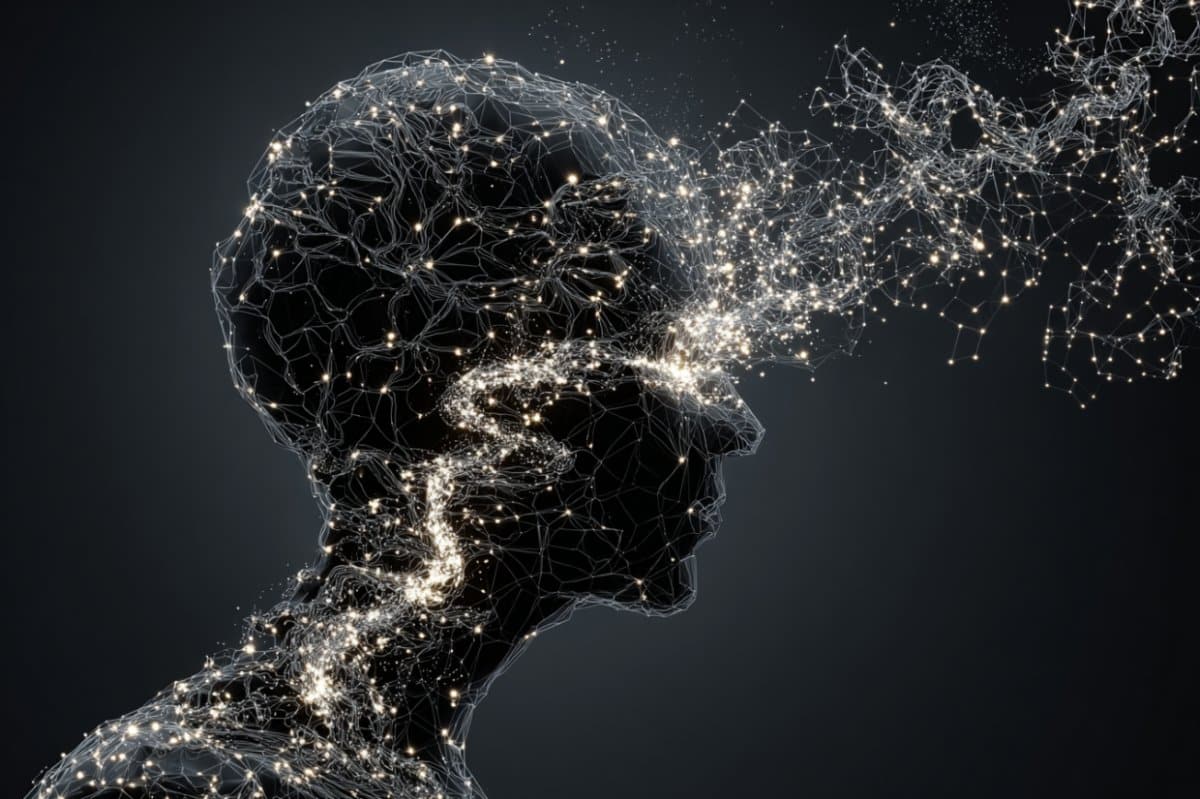
A newly released study by a team of scientists deploys AI in innovative ways to better understand this process.
By using tiny artificial neural networks, the researchers’ work illuminates in detail what drives an individual’s actual choices—regardless of whether those choices are optimal or not.
“Instead of assuming how brains should learn in optimizing our decisions, we developed an alternative approach to discover how individual brains actually learn to make decisions,” explains Marcelo Mattar, an assistant professor in New York University’s Department of Psychology and one of the authors of the paper, which appears in the journal Nature.
“This approach functions like a detective, uncovering how decisions are actually made by animals and humans. By using tiny neural networks—small enough to be understood but powerful enough to capture complex behavior—we’ve discovered decision-making strategies that scientists have overlooked for decades.”
The study’s authors note that small neural networks—simplified versions of the neural networks typically used in commercial AI applications—can predict the choices of animals much better than classical cognitive models, which assume optimal behavior, because of their ability to illuminate suboptimal behavioral patterns.
In laboratory tasks, these predictions are also as good as those made by larger neural networks, such as those powering commercial AI applications.
“An advantage of using very small networks is that they enable us to deploy mathematical tools to easily interpret the reasons, or mechanisms, behind an individual’s choices, which would be more difficult if we had used large neural networks such as the ones used in most AI applications,” adds author Ji-An Li, a doctoral student in the Neurosciences Graduate Program at the University of California, San Diego.
“Large neural networks used in AI are very good at predicting things,” says author Marcus Benna, an assistant professor of neurobiology at UC San Diego’s School of Biological Sciences.
“For example, they can predict which movie you would like to watch next. However, it is very challenging to describe succinctly what strategies these complex machine learning models employ to make their predictions —such as why they think you will like one movie more than another one.
“By training the simplest versions of these AI models to predict animals’ choices and analyzing their dynamics using methods from physics, we can shed light on their inner workings in more easily understandable terms.”
Understanding how animals and humans learn from experience to make decisions is not only a primary goal in the sciences, but, more broadly, useful in the realms of business, government, and technology.
However, existing models of this process, because they are aimed at depicting optimal decision-making, often fail to capture realistic behavior.
Overall, the model described in the new Nature study matched the decision-making processes of humans, non-human primates, and laboratory rats.
Notably, the model predicted decisions that were suboptimal, thereby better reflecting the “real-world” nature of decision-making—and in contrast to assumptions of traditional models, which are focused on explaining optimal decision-making.
Moreover, the NYU and UC San Diego scientists’ model was able to predict decision-making at the individual level, revealing how each participant deploys different strategies in reaching their decisions.
“Just as studying individual differences in physical characteristics has revolutionized medicine, understanding individual differences in decision-making strategies could transform our approach to mental health and cognitive function,” concludes Mattar.
Funding: The research was supported by grants from the National Science Foundation (CNS-1730158, ACI-1540112, ACI-1541349, OAC-1826967, OAC-2112167, CNS-2100237, CNS-2120019), the Kavli Institute for Brain and Mind, the University of California Office of the President, and UC San Diego’s California Institute for Telecommunications and Information Technology/Qualcomm Institute.
About this AI and decision-making research news
Author: James Devitt
Source: NYU
Contact: James Devitt – NYU
Image: The image is credited to Neuroscience News
Original Research: Open access.
“Discovering cognitive strategies with tiny recurrent neural networks” by Marcelo Mattar et al. Nature
Abstract
Discovering cognitive strategies with tiny recurrent neural networks
Understanding how animals and humans learn from experience to make adaptive decisions is a fundamental goal of neuroscience and psychology.
Normative modelling frameworks such as Bayesian inference and reinforcement learning provide valuable insights into the principles governing adaptive behaviour.
However, the simplicity of these frameworks often limits their ability to capture realistic biological behaviour, leading to cycles of handcrafted adjustments that are prone to researcher subjectivity.
Here we present a novel modelling approach that leverages recurrent neural networks to discover the cognitive algorithms governing biological decision-making.
We show that neural networks with just one to four units often outperform classical cognitive models and match larger neural networks in predicting the choices of individual animals and humans, across six well-studied reward-learning tasks.
Critically, we can interpret the trained networks using dynamical systems concepts, enabling a unified comparison of cognitive models and revealing detailed mechanisms underlying choice behaviour.
Our approach also estimates the dimensionality of behaviour and offers insights into algorithms learned by meta-reinforcement learning artificial intelligence agents.
Overall, we present a systematic approach for discovering interpretable cognitive strategies in decision-making, offering insights into neural mechanisms and a foundation for studying healthy and dysfunctional cognition.
Join our Newsletter
I agree to have my personal information transferred to AWeber for Neuroscience Newsletter ( more information )
Sign up to receive our recent neuroscience headlines and summaries sent to your email once a day, totally free.
We hate spam and only use your email to contact you about newsletters. You can cancel your subscription any time.
Tags
AIArtificial Intelligencebrain researchcognitiondecision makingDeep LearningMachine LearningneurobiologyNeuroscienceNYU
ShareTweetShareShareSubmitEmail

Neuroscience News posts science research news from labs, universities, hospitals and news departments around the world. Science articles cover neuroscience, psychology, AI, robotics, neurology, brain cancer, mental health, machine learning, autism, Parkinson’s, Alzheimer’s, brain research, depression and other sciences.
Related
Why Antidepressants Work Better for Some

Illusory Beliefs Fuel Risky Health Choices
Sleeping Brain Reveals Clues to Hidden Disorders
Leave a Reply
Your email address will not be published. Required fields are marked *
Comment *
Name *
Email *
Website
Notify me of follow-up comments by email.
Notify me of new posts by email.

Neuroscience News Sitemap
Neuroscience Graduate and Undergraduate Programs
Free Neuroscience MOOCs
About
Contact Us
Privacy Policy
Submit Neuroscience News
Subscribe for Emails
Neuroscience Research
Psychology News
Brain Cancer Research
Alzheimer’s Disease
Parkinson’s News
Autism / ASD News
Neurotechnology News
Artificial Intelligence News
Robotics News
Search Neuroscience News
Neuroscience News is an online science magazine offering free to read research articles about neuroscience, neurology, psychology, artificial intelligence, neurotechnology, robotics, deep learning, neurosurgery, mental health and more.
Neuroscience News




 canisgallicus