
Labor Disciplined
Jun 20, 1:09 PM EDTbyJoe Wilkins
CEOs Using AI to Terrorize Their Employees
A brutal new cudgel.
/ Artificial Intelligence/ Automation/ Ceos/ Labor
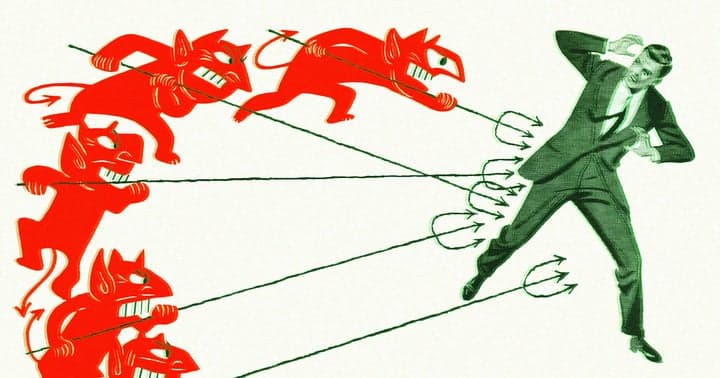
Image by Getty / Futurism
As artificial intelligence becomes the corporate buzzword du jour, executives are finding more and more ways to shoehorn the trendy tech into their everyday business operations.
That has a lot of workers anxious about automation, income inequality, and increased workloads — something c-suite bigwigs are all too happy to take advantage of.
Though AI — really just a fun name for large language models (LLMs), or predictive chatbots — in its current state isn’t likely to bring a labor revolution anytime soon, CEOs find that the threat of AI automation works just as well.
As Axios highlighted this week, CEOs are increasingly using AI adoption as a cudgel to justify layoffs, or to manufacture consent for layoffs in the future. Amazon CEO Andy Jassy, for example, recently said AI is likely to “reduce our total corporate workforce,” while JPMorgan executives told investors that AI will allow for a “10 percent headcount reduction.”
Others, like Shopify CEO Tobi Lutke, are threatening workers directly, saying that AI is now the “baseline expectation.” Per Axios, Shopify managers hiring human workers now have to explain to top brass why AI wouldn’t be a better choice for any given job.
This kind of doomsday messaging goes hand in hand with increased expectations for workers’ productivity. A recent survey found that 77 percent of workers reported that AI adds to their workload. Of that, a staggering proportion — 39 percent — involves fixing the buggy tech’s sloppy mistakes.
While AI is a pretty recent phenomenon, these kinds of scare tactics aren’t new.
“Disciplining labor” is a concept that occasionally gets thrown around discussions of supply side economics. It’s a term used to describe broad economic measures that keep workers in line, in order to keep corporate profits high — suppressing unions, keeping wage growth low, and dangling the threat of unemployment over their heads.
In this sense, AI in its current form is simply a new whip for CEOs to use on their employees. It’s having what Jeffrey Sonnenfeld, a professor at the Yale School of Management, calls an “inculcation effect” on workers.
It’s a “warning with an anticipatory alert that preempts later trauma going viral,” he told Axios.
Plus, now that the job market has been devastated by AI spambots, finding a new gig is harder than ever. With AI, workers are forced onto their back foot as their corporate overlords demand more productivity for less pay. If the choice is to either work harder or clear out their desk, employees are then less likely to ask for quality of life improvements, or to organize for unions that could win them.
And that, of course, means corporate honchos get an even bigger piece of the pie.
More on Labor: CEO of Anthropic Warns That AI Will Destroy Huge Proportion of Well-Paying Jobs

 canisgallicus