

G7 members agree to increase public sector use of AI, collaborate on quantum
- Anja Karadeglija The Canadian Press
- Jun 17, 2025 Updated 17 hrs ago
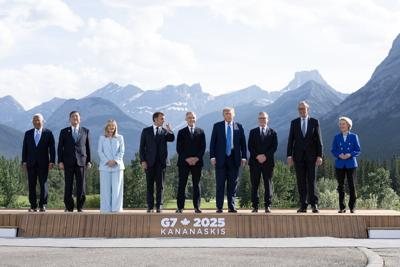
OTTAWA – G7 countries pledged Tuesday to increase adoption of artificial intelligence, including in the public sector and among smaller businesses, while also promising to promote investment in emerging quantum technologies.
A joint statement on AI, issued as the global summit was wrapping up in Kananaskis, Alta., said the seven countries would work “together to accelerate adoption of AI in the public sector to enhance the quality of public services for both citizens and businesses and increase government efficiency.”
It said Canada will use its G7 presidency to host a series of “rapid solution labs” looking at barriers to AI adoption in the public sector. G7 members also agreed to develop a “road map” for successful AI projects and a catalogue of “open-source and shareable AI solutions for members.”
The G7 nations also pledged to support adoption of artificial intelligence by small and medium businesses.
“We plan to create the conditions for small and medium-sized enterprises (SMEs), including micro-enterprises — the engine of our economies — to access, understand, and adopt AI in ways that drive value and productivity,” they said in a related document.
The AI joint statement says G7 countries will work to address AI’s heavy energy consumption and increase access to AI in developing countries.
“We recognize that increased AI adoption will place growing pressure on our energy grids, produce negative externalities and have implications for energy security, resilience and affordability,” it said.
It said member countries also “hear the concerns of emerging market and developing country partners about the challenges they face in building resilient AI ecosystems, including the risks of disruption and exclusion from today’s technological revolution.”
In a separate document, the seven countries also issued a “common vision” for quantum technologies.
It says quantum technologies “have the potential to bring significant and transformative benefits to societies worldwide” and are “poised to create economic and social benefits in sectors such as finance, communication, transport, energy, health and agriculture.”
The document also warned quantum could have “far-reaching implications for national and international security.”
Florian Martin-Bariteau, research chair in technology and society at the University of Ottawa, noted the statement promised to establish a joint working group on quantum technologies.
He said that’s a “huge advance, so early in the development stage of such a strategic technology.”
Quantum technologies use the principles of quantum mechanics for applications like computing. The Kananaskis summit is the first time quantum, tech that is in an earlier stage of development than artificial intelligence, has been a priority at a G7 meeting.
This report by The Canadian Press was first published June 17, 2025.
The Canadian Press. All rights reserved.

 canisgallicus