

Show Search
New chip for wearables has AI-powered heart attack detection baked in
May 11, 2025
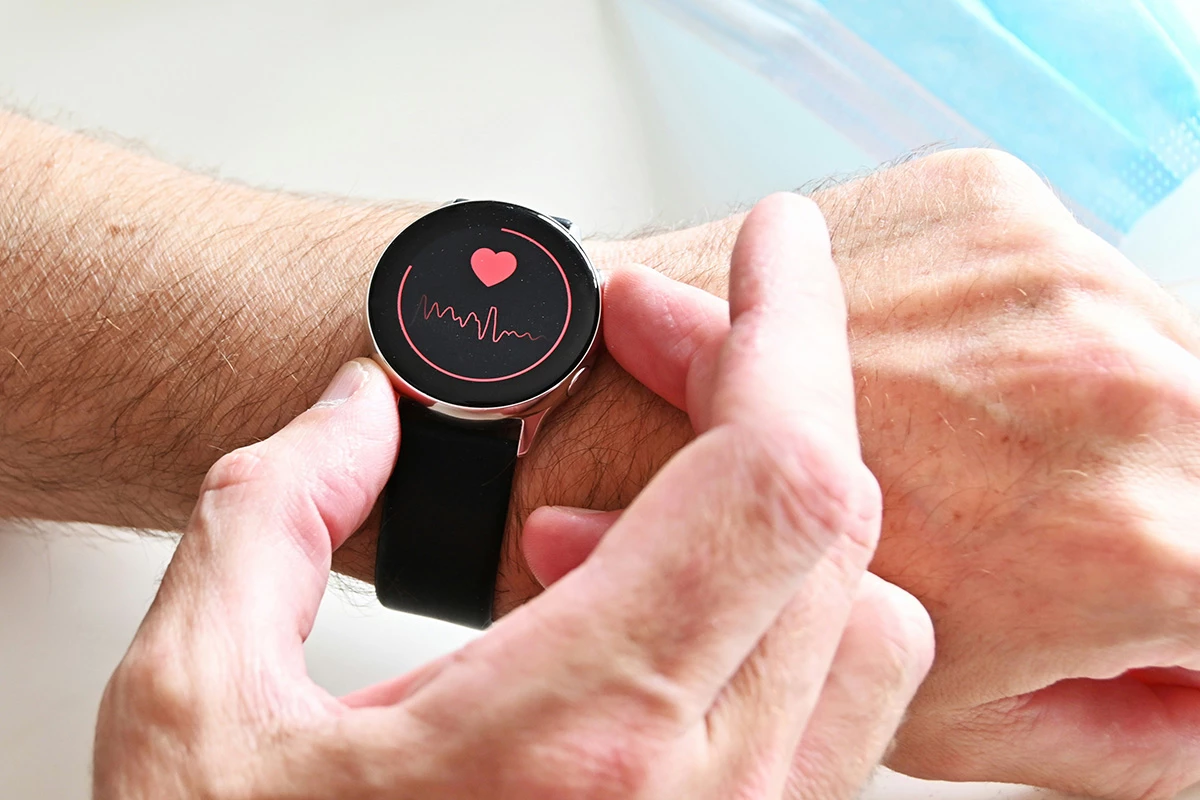
A wearable that can alert you about a potential heart attack could save your life – and we’re inching closer to reliable tech to do just that
View 2 Images
Researchers at the University of Mississippi have developed technology to detect heart attacks in real time with a high degree of accuracy, and packed it into a chip that could fit in a wearable device. The team hopes it may someday feature in life-saving medical gadgets.
The scientists’ work combines an effective mathematical technique called Fast Fourier Transform (FFT) for analyzing electrocardiogram (ECG) signals with artificial neural networks that can classify them as “normal” or “heart attack-like” all on a power-efficient chip. The team says this allows for a detection accuracy of 92.41%, which beats other methods.
That’s unlike some similar devices on the market today, which use AI to recognize patterns in ECG data from wearables either in the cloud or a companion app on a smartphone. This difference enables the tech to work in real time, which means patients could potentially be alerted by their wearable and receive appropriate care sooner. That’s critical when it comes to saving a life or preventing major damage in the case of a myocardial infarction, more commonly referred to as a heart attack.
It’s worth noting that the FFT technique has been around for a long while now, and numerous firms working on ECG monitoring tech like Fourth Frontier utilize AI in their pipelines. The AI-powered detection-on-a-chip tech is novel, but it’s not yet something your doctor can prescribe to you.
There are many challenges in creating a wearable heart attack detector. For starters, you’d need to miniaturize the hardware and package it into a well-designed device, so it could be worn regularly while also accounting for the limitations of the form factor in recording ECGs.
Next, you’d need to fine-tune the software to accurately spot ST elevation findings in ECGs that would indicate a heart attack, and avoid false negatives and false positives at the same time. Then, you’d have to prove to strict regulatory bodies, like the US Food and Drug Administration (FDA), that your tech is truly up to scratch and reliably does what it says on the tin.
Even at that stage, there are hurdles in the form of what these agencies might deem as acceptable levels of accuracy. That’s one of the reasons why ECG-recording-capable products like the Apple Watch can’t straight-up claim to be able to tell you when you’re going to have a heart attack.
Only after that could you really bring a medical-grade “heart attack detector” to the market. So the Mississippi team has a long way to go in productizing its chip-based tech before we’ll see it prescribed or available on store shelves.
The researchers, who published the results of their study in the journal Intelligent Systems, Blockchain and Communication Technologies in March, hope to find more avenues for their method of combining AI with data analysis techniques.
Author and electrical and computer engineering professor Kasem Khalil said, “We want to be able to predict or identify many problems using technology like this. Whether that’s heart attacks or seizures or dementia. The detection of a disease or condition depends on the disease itself, but we’re working to find faster, more efficient ways of doing that.”
Source: University of Mississippi

 canisgallicus