
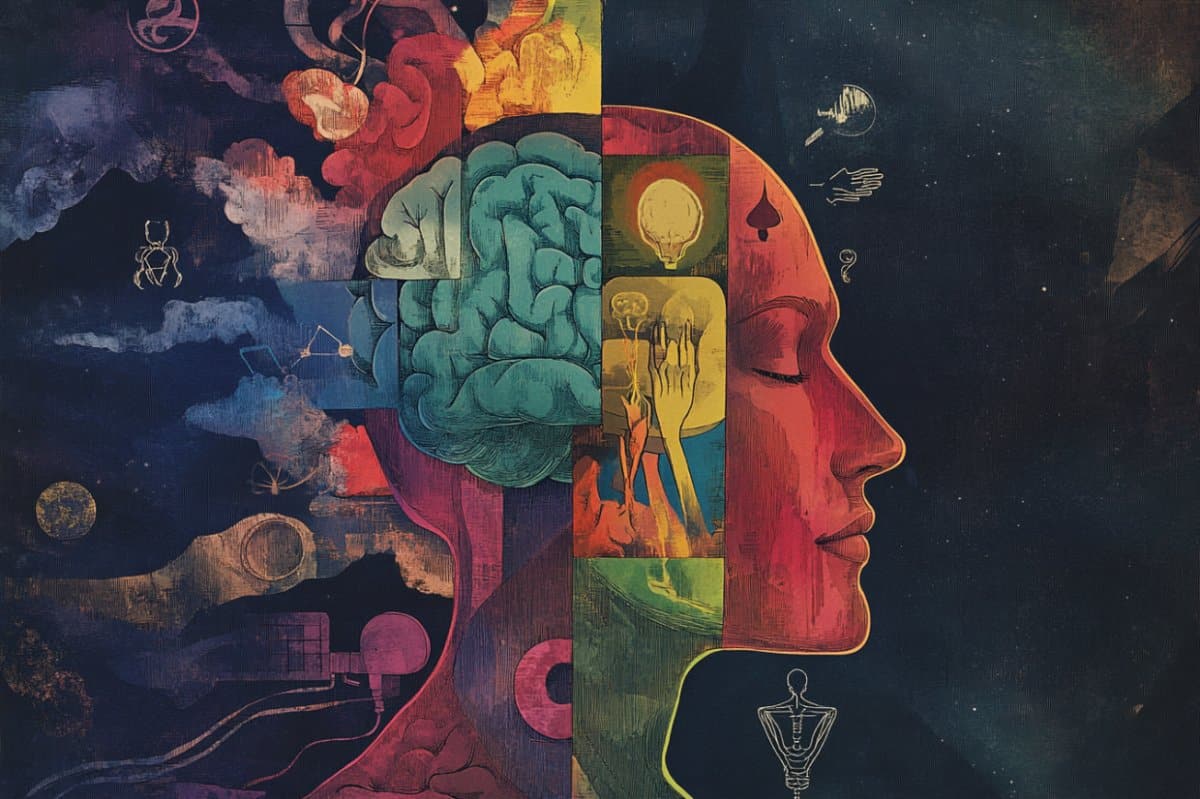
The researchers stress that people’s personalities do not determine their mental health problems. Credit: Neuroscience News
Personality Traits Strongly Linked to Mental Health Risks
FeaturedNeurosciencePsychology
May 2, 2025
Summary: A major study of over 16,000 participants found that personality traits explain about 25% of the overall risk for mental health problems like depression, anxiety, and phobias. Traits such as higher neuroticism, higher agreeableness, and lower conscientiousness were particularly associated with general mental health risk.
The researchers emphasized that while personality is a strong predictor, it is only one factor among many, including genetics and life experiences. The findings suggest that understanding personality could help create better-targeted mental health interventions.
Key Facts:
- Personality Predicts Risk: About 25% of mental health risk is tied to personality traits.
- Neuroticism Linked to Risk: Higher neuroticism, lower conscientiousness, and higher agreeableness predicted general mental health issues.
- Multiple Factors Matter: Personality is a strong factor but does not solely determine mental health outcomes.
Source: University of Edinburgh
Common mental health conditions are more closely related to people’s personalities than previously thought, a study suggests.
Personality traits explain about a quarter of the overall risk of mental health problems such as depression, anxiety and phobias, the study found.
Researchers say the findings show personality is one of the most reliable predictors for the onset and persistence of mental health problems.
Researchers at the University of Edinburgh and the University of Tartu in Estonia analysed data from more than 16,000 members of the Estonian Biobank – a collection of health data from volunteers across the country.
They surveyed people’s personality according to the five traits psychologists define as the main dimensions of human personality: extraversion, neuroticism, conscientiousness, openness to experience and agreeableness.
They also looked at more nuanced personality traits – such as tendencies to feel embarrassed, needing reassurance and needing help from others – as predictors of general mental health problems.
The researchers also looked at both the general risk of experiencing different types of mental health problems and the risk of some specific problems that only some people experience, such as fear, sleeplessness, fatigue, inattention, and hyperactivity.
Each participant described their personality traits and mental health, and each participant was also rated by someone else who knew them well.
They found that personality traits were more strongly related to mental health problems than suggested by previous studies.
About 25 per cent of the differences in people’s risk of mental health problems could be traced to their personality traits.
On top of the general risk, personality traits explained another quarter of the risk for specific mental health problems.
People with a higher general mental health risk tended to have higher neuroticism – a tendency to feel negative emotions.
They also tended to have higher agreeableness – a positive orientation towards other people – and lower conscientiousness – a tendency to be organised and hardworking.
However, specific mental health problems varied in their associations with personality traits.
Some areas of mental health, such as sleep problems, were not particularly strongly correlated with any aspect of personality.
Senior Researcher, Professor René Mõttus, of the University of Edinburgh’s School of School of Philosophy, Psychology and Language Sciences, said: “By combining data from two sources, we were able to overcome common problems in personality assessments, such as response bias and other types of measurement error. This allowed us to estimate the associations much more accurately.”
The researchers stress that people’s personalities do not determine their mental health problems.
Lead author, Helo Liis Soodla, of the University of Tartu, said: “Many people whose traits might statistically predict poor mental health report great well-being. Conversely, many people who experience mental health problems at some point in their lives do not appear to be at risk based on their personality traits.
“In any given individual, a number of things can affect mental health, from genetic risk variants to stressful childhood events. Each factor on its own accounts for only a tiny proportion of the risk of poor mental health. And much is simply down to luck.”
The researchers say the more we know about the potential of traits to increase mental health risk, the more likely we are to be able to design successful interventions to reduce the risks.
Funding:
The work was funded by the Estonian Research Council.
About this mental health and personality research news
Author: Joanne Morrison
Source: University of Edinburgh
Contact: Joanne Morrison – University of Edinburgh
Image: The image is credited to Neuroscience News
Original Research: Open access.
“Assessing the Overlap of Personality Traits and Internalizing Psychopathology Using Multi-Informant Data: Two Sides of the Same Coin?” by René Mõttus et al. Journal of Psychopathology and Clinical Science

 canisgallicus