

Pets found to deliver significant health benefits to the lonely
By Paul McClure
April 27, 2025

Group activities with a focus on pets foster more meaningful connections
View 3 ImagesView gallery – 3 images
Two groups that are particularly prone to social isolation – older adults and international students – felt much less lonely when they engaged in pet-focused activities, according to a new study. The cost-effective approach also boosted health and well-being.
We’ve previously written about how loneliness and social isolation can each have a detrimental effect on health, especially mental health. And we’ve covered the positives that pets can provide, boosting mental health and brain function.
In a new study by the National Center for Healthy Ageing, a partnership between Monash University and Peninsula Health, researchers looked at whether engaging with animals fostered social connections and improved the health of two groups who are particularly at risk of loneliness: older adults living in aged care facilities and international students who’ve left their home countries in pursuit of education.
“We found that both older adults and international students experienced a significant decrease in feelings of loneliness and a significant increase in their health,” said Dr Em Bould, a senior research fellow at Monash’s School of Primary and Allied Healthcare and the study’s lead and corresponding author. “The presence of live pets in particular helped to break the ice and facilitated conversations between participants.”

For the Australian-first study, the researchers approached two residential aged care facilities in Victoria, Australia, to host a pilot project of the “Pets and People” program they’d developed. Six older adults (average age, 83), 10 international Monash University students (average age, 22) and three senior management staff from the aged care facilities participated in the pilot, which involved them meeting face-to-face and undertaking “animal-assisted activities” for an hour a week for 18 weeks. The researchers ensured that, each week, the overarching theme of the meetings was pets, including Bould’s pet dog, Barney, a robotic companion dog or cat that had been gifted to the facilities by the researchers, and pets brought in by residents’ family members.
Before commencing the Pets and People program and afterwards, the participants completed questionnaires that assessed their sense of social connection and community, subjective well-being and mental health, confidence to engage in social situations, and loneliness. Loneliness was assessed using the UCLA Loneliness Scale, which measures how often a person feels disconnected from others. The EuroQol-5 Dimension Instrument (EQ-5D-5L) was used to measure health across five domains: mobility, self-care, usual activities, pain/discomfort, and anxiety/depression. Each domain has five levels, from “no problems” to “extreme problems,” and is combined into a single number that reflects the person’s health state. Also, within four weeks of completing the Pets and People program, participants were invited to take part in a semi-structured interview to gauge their subjective experiences.
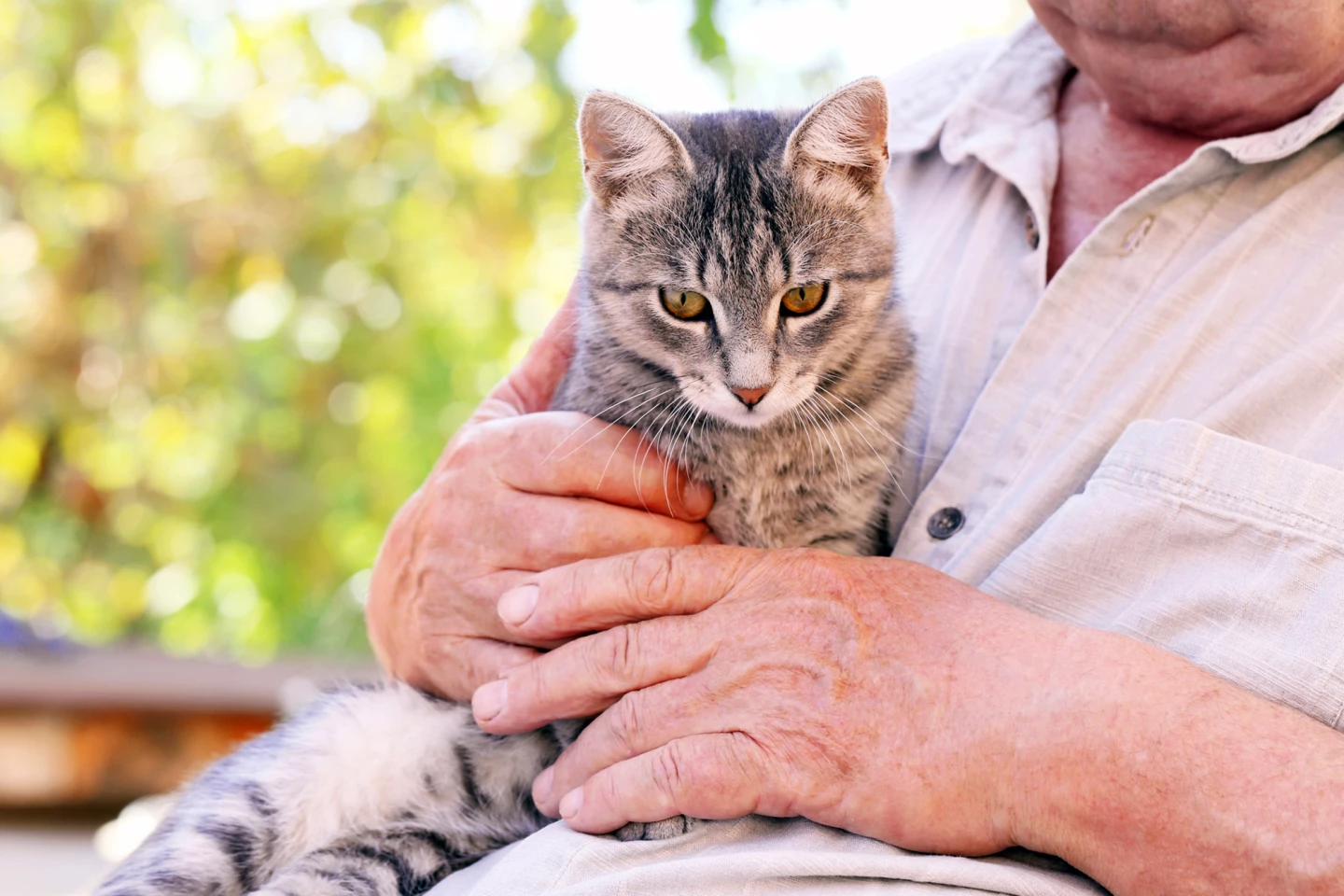
Participants’ responses to interview questions were instructive. The researchers found that participants’ shared interest in pets led to more meaningful engagement with others. As one older adult told researchers, “One hundred percent, having a shared interest really helped get the conversation going. I don’t get any company, so I enjoyed talking to the students about animals, but we also talked about other things. It’s perked me up. I look forward to it.”
Similarly, an international student participant said, “I think it’s easier when there’s a starting point for me to talk to them rather than starting from nothing, because I get it’s hard, like for them to share something or share experiences of their life with a complete stranger.”
They also found that the presence of pets, whether real or robotic, helped participants’ subjective well-being. “I got a lot of pleasure out of the program, and Barney being there, of course, but I liked [the robotic pet] the best … I get very lonely here, so the program has helped facilitate social connections for me,” said an older adult. And an international student: “The activities and the pets were definitely helpful, it just makes everyone feel happy, because who doesn’t like pets?”
Further proof of improvement was seen in the participants’ UCLA Loneliness Scale scores, which decreased significantly from a mean of 49.4 to a mean of 41.4. This was accompanied by a clinically significant increase in EQ-5D-5L scores from a mean of 0.741 to 0.800, indicating an improvement in health-related quality of life.
The researchers concluded that the program was relatively cost-effective. For each person who completed 10 or more weeks of the 18-week program, the cost was AU$237 (around US$150) per person.
“The pilot of the Pets and People program and evaluation findings have demonstrated a promising example of a low-cost program that can enhance health-related quality of life, well-being and feelings of loneliness,” said Bould. “The Pets and People program has the potential for replication and scaling across aged care settings both in Australia and internationally.”
Following the pilot program’s evaluation, Bould has continued working with one of the aged care providers, who rolled out the Pets and People program across five of their aged care facilities and community support programs.https://www.youtube.com/embed/_R7pnqT8jJU?enablejsapi=1
Pilot of the Pets and People program
The study was published in the journal Complementary Therapies in Clinical Practice.
Source: Monash University

 canisgallicus