
Panopticon Parenting
Mar 23, 7:30 AM EDTbyNoor Al-Sibai
What Kids Are Actually Using Phones for in School Is So Pathetic That We May Need to Take a Quick Walk for Mental Health Purposes
Yikes.
/ Future Society/ Education/ Smartphones/ Students
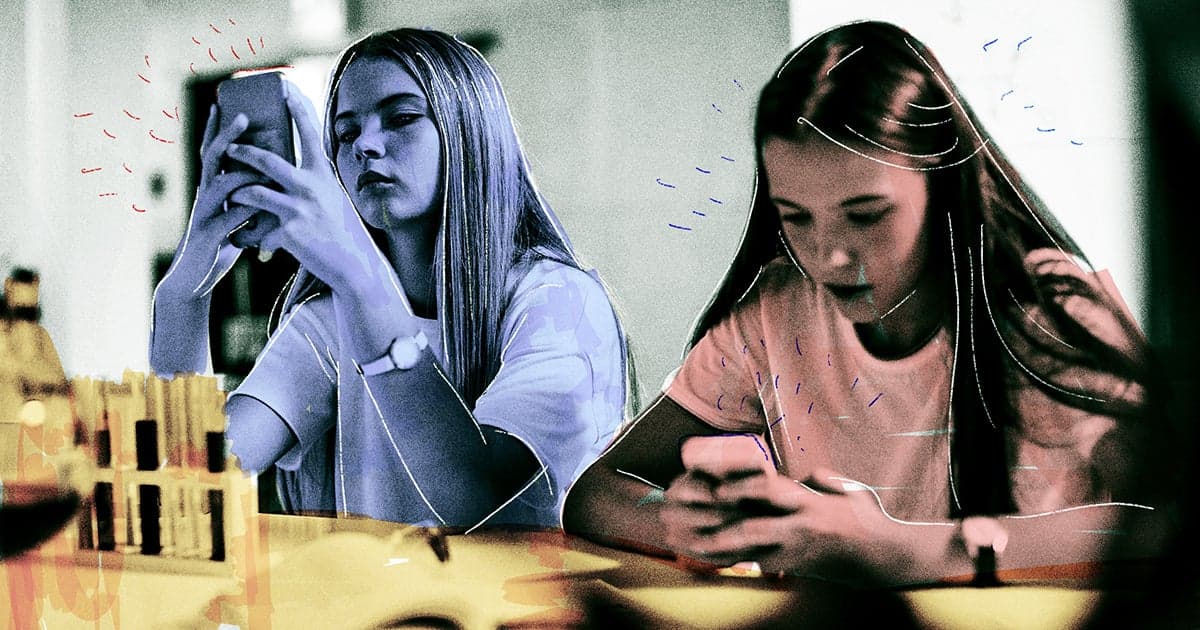
Image by Getty / Futurism
Amid a push around the country to ban cell phones and smartwatches in schools, the main opponents to such measures are parents who are seemingly addicted to talking to their children all day long.
As the New York Times reports, schools where smart devices have been partially or fully banned during instructional hours have seen incredible increases in student attentiveness and communication.
One would think that the kids themselves would be more opposed to having their phones taken away all day — but as educators have found in schools and districts where phones have been locked up, they cope just fine.
Their parents, on the other hand, have been a harder nut to crack because some of them are extremely resistant to not being able to get in touch with — or not being able to monitor — their offspring.
New York governor Kathy Hochul, who is attempting to impose statewide restrictions on phones in schools, told the newspaper that she’s spoken to first-grade teachers who are aghast to walk into their classrooms and be greeted by a bunch of little kids wearing smartwatches.
“Mommy and Daddy were checking in all day long saying, ‘I miss you and can’t wait to see you,'” Hochul told the NYT. “That’s a parental need, not a student need.”
Unfortunately, this is not the first time this apparent trend of high-tech helicopter parenting has been documented.
Last year, the newspaper Education Week surveyed nearly 900 principals, teachers, and district leaders and found that a whopping one in five said they were aware of parents remotely monitoring their kids in class. Four percent of that total survey population said that some parents did so more than once per day, three percent said they did so multiple times a week, and an additional three percent said the parents were checking in weekly.
In an interview with EdWeek, Illinois teacher Liz Schulman — who wrote an op-ed about this creepy practice for Slate last March — said that she wasn’t aware that parents were remotely checking in on their kids (and her students) until one of her pupils told her about it. Though the parents she spoke to said they were digitally watching over their kids to make sure they weren’t playing video games on their phones, the whole thing left a bad taste in the teacher’s mouth.
“As a classroom teacher, I do believe in the sanctity of the classroom space as a place for students to take academic risks and be free of surveillance so they can express themselves,” Schulman, who teaches high school English in Evanston and education policy at Northwestern, told EdWeek.
If the kids themselves are able to handle phone-free school days just fine, their overzealous parents need to figure out how to handle it too. “Touching grass” is an insult generally reserved for the too-online, but maybe it needs to be expanded to these panopticon parents, too.
Advertisement
More on screen time: Blocking the Internet on People’s Phones for Two Weeks Led to Profound Changes in Mental Health and Attention Span

 canisgallicus