

This personality type thrives when life gives out lemons, science finds
February 09, 2025
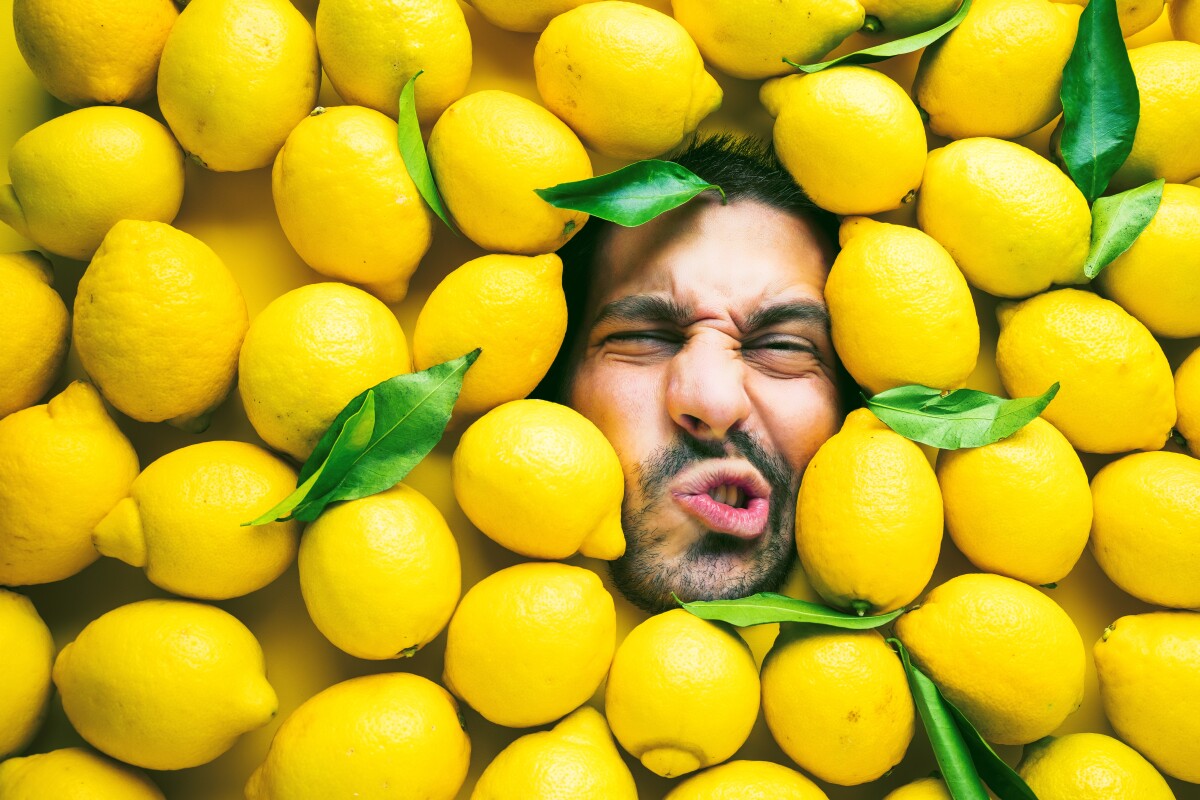
Some people are better at making lemonade from life’s lemons
View 1 Images
How you cope in a crisis and then move on from it may have less to do with your learned life skills and instead be shaped by your base personality traits. A new study has now put forward just what traits seem to make some people so much better at ‘turning lemons into lemonade.’
In 2021, Oregon State University researchers surveyed 503 Americans to ask them questions about how they behaved and felt during a period of uncertainty, change and disruption. Not surprisingly, the best example of this that everyone experienced was the pandemic. Questions were designed to be able to assess individuals, based on their answers, on the Adult Playfulness Trait Scale (APTS), to test the hypothesis that people with more lighthearted, fun-loving natures may cope better and see more silver linings during tough times.
The APTS measures ‘playfulness’ – which is admittedly a broad term – in three subsets: Fun-seeking motivation, uninhibitedness, and spontaneity. The researchers then classified playfulness, with the top 25% of scores being in the high cohort, and the bottom 25% in the low group. Then, the middle 50% were excluded in order to make trait comparisons between distinct personality types.
Interestingly, the scientists found that both groups felt similar during the pandemic – worry, isolation, fear – but those with the most playful personalities dealt with this worldwide barrage of ‘lemons’ very differently. They responded that they’d found creative ways to adapt to changes, were more proactive when it came to flexibility, and had a willingness to spin the awful time as a personal net positive for the future.
So while it’s a no brainer that people with strong resilience are likely to weather life’s storms better, playfulness personalities may not have to work as hard to develop this personal strength – it could be inherent.
“Our study revealed that playfulness and resilience are intimately connected through what we call ‘lemonading’ – the ability to imagine and generate positive experiences even in difficult circumstances,” explained the study’s corresponding author Xiangyou ‘Sharon’ Shen of OSU. “While more and less playful individuals reported feeling equally vulnerable and isolated during the pandemic, highly playful people actively altered challenging situations, found creative substitutes for what was lost, viewed obstacles as opportunities for growth, and maintained a sense of control over their responses.”
The data also revealed that the most playful people had more faith in the future – at the time, this included feelings that, despite the pandemic still ranging at the time of the survey, the world would get over it and life would go back to relative normality before too long. Yet they were as realistic about the present they were living through as the least playful 25%.
“While rose-tinted glasses would color everything positively, potentially distorting reality, the ‘color spotlight’ effect we observed is more selective,” said Shen. “Playful individuals didn’t minimize COVID-19 risks or overestimate the effectiveness of protective measures. They directed their ‘spotlight’ toward possibilities for positive change and growth, illuminating potential paths forward even in dark times.”
“Playfulness” can sound unserious, but the researchers point out that it has little to do with intelligence or other cognitive functions such as critical thinking. Instead, the most playful people are the thrill-seekers and fun-lovers, which might make them better prepared for coping with uncertainty and taking massive changes in their stride. They were more likely to find new exercise routines, take up new hobbies and embrace what they couldn’t control and turn it into self growth. Know someone who found a new career or returned to school during the pandemic? Chances are they are high on the playful scale.
“Playfulness is a vital but underappreciated resource for maintaining wellbeing, particularly during challenging times,” said Shen. “Understanding how playful individuals navigate adversity can inform strategies to help people cope with stress and uncertainty. This is particularly relevant as we face increasing global challenges that require both realistic assessment and creative adaptation.”
While the very nature of psychology studies means there’s a level of over-generalization in order to find quantifiable, measurable data, the researchers note that of course personalities are much more nuanced and influenced by many other factors. There’s also a lot of crossover when it comes to traits, as well as the influence of life’s experiences, that shape how we feel and behave.
For example, many of these playfulness traits – spontaneity, impulsiveness, cognitive flexibility, uninhibitedness and resilience – are also common in many people with attention-deficit/hyperactivity disorder (ADHD). And there’s growing evidence that ADHD brains tend towards high adaptability and out-of-the-box problem solving. Individuals may even find calm and thrive during a crisis – much like this paper’s most playful personality types.
Also, the researchers point out that someone may have a low playfulness score but have similar feelings and behaviors as the top 25% in this survey. Again, it shows how complex humans are. And the good news for anyone who certainly doesn’t thrive on adversity – surrounding yourself with playful friends and family can help you adopt some of the more helpful emotions, thoughts and behaviors when life drops a crate of lemons on your life.
“While our study focused on measuring rather than developing playfulness, research suggests several approaches to cultivate this quality,” said Shen. “For instance, engage in activities that spark joy, be open to new experiences, and hang out with people who make you laugh. You don’t have to play to be playful. It’s about bringing a spirit of fun, openness, and flexibility to everyday moments.”
So, channel the “lemonading” effect that playfulness appears weighted towards, which the scientists say can reframe how you view challenges and more proactively seek enjoyment and learn resilience. The key, they say, is actively shaping experiences even during difficult times, rather than passively enduring what life throws your way.
The study was published in the journal Frontiers in Psychology.
Source: Oregon State University via Scimex

 canisgallicus