
Tetris: The surprise therapy for PTSD flashbacks
September 23, 2024
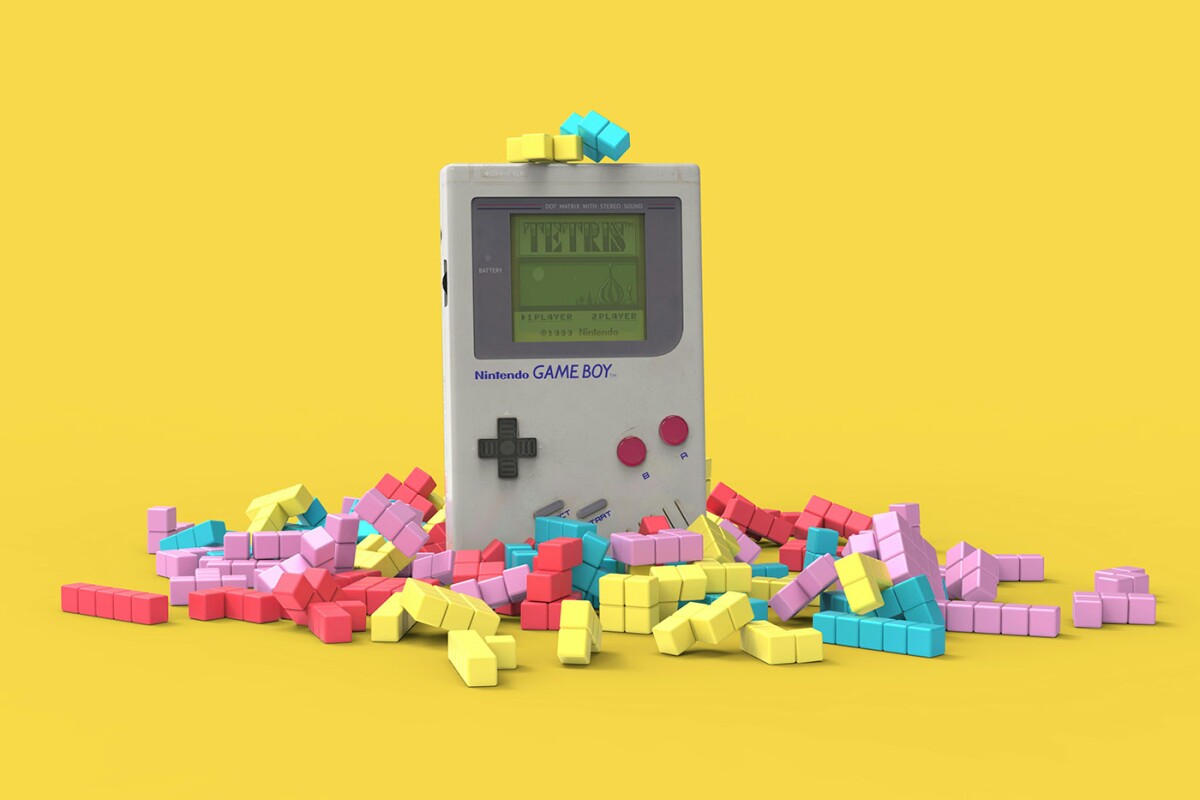
This classic video game from the 80s is good for more than just keeping you occupied
Tom Tang / Unsplash
View 2 Images
A study conducted by researchers at Uppsala University shows that playing the popular video game Tetris can significantly reduce flashbacks in people suffering from post-traumatic stress disorder (PTSD).
That’s potentially good news for the millions of people around the world living with the condition – including military veterans and frontline healthcare workers.
The idea isn’t entirely new, and this particular angle involving Tetris has been in play since 2009. That’s when Emily Holmes, now a professor at Uppsala University, began looking into whether the game could serve as an early intervention for people who have been exposed to trauma.
In a study Holmes led 15 years ago, participants who played Tetris shortly after watching a traumatic film experienced fewer flashbacks than those who sat quietly after the screening. While the results were encouraging, that was a small study with just 40 participants in a highly controlled setting.
The latest study involved 164 healthcare workers in Sweden who worked with COVID-19 patients, and were exposed to work-related trauma. It was conducted during the pandemic, between September 2020 and April 2022.
The results were remarkable. At a five-week follow-up with the participants – who experienced 15 flashbacks a week on average – those in the control group who only listened to the radio for treatment reported an average of five episodes a week, while those in the gaming group had just one.
The experimental group that played Tetris also reported only half as many flashbacks six months after their treatment than the control group.
Beating flashbacks at their own game
Holmes had previously hypothesized that Tetris could “disrupt dysfunctional mental imagery (e.g., imagery-based intrusive memories of adverse events)” by taxing your visuospatial memory. That was realized in her earlier studies, where people played Tetris shortly after being exposed to traumatic material.
This recent study goes further, and proves that the game can prevent the reoccurrence of intrusive memories over longer periods of time.
So how does it work? Tetris requires you to exercise a spatial reasoning skill called mental rotation, where you rotate the visual image of an object to see it from different angles in your head. https://www.youtube.com/embed/gOuv9B78JWY?enablejsapi=1
Playing Tetris for mental rotation skills
As the game presents you with a never-ending series of bricks in different configurations, you need to figure out how to rotate these bricks and drop them in the right location on the screen to create a horizontal line and clear it.
Now, let’s talk about your noggin. The researchers who’ve worked in this area believe that the brain has a limited capacity for visual memory.
It’s also been found that taxing your memory resources with a concurrent visuospatial task reduces the vividness and emotional impact of mental imagery – such as traumatic flashbacks.
That’s where Tetris comes in. In demanding mental rotation, it’s an example of a visuospatial task that is theorized to compete with the same cognitive resources as the mental imagery underlying intrusive memories.
This recent experiment shows that Tetris can effectively reduce flashbacks for long periods, with just 20 minutes of play.
That’s pretty good for a treatment that can be administered using a free resource (you can play Tetris online at no charge), in a short amount of time, and a single guided session. Holmes also hopes that this sort of intervention could even act as a preventative measure.
“My vision is that one day we will be able to provide a tool for people such as healthcare professionals after traumatic events to help prevent and treat early PTSD symptoms, that is a ‘cognitive vaccine’, in a similar way that we currently vaccinate against some infectious physical diseases,” she explained.
Who knew that arranging bricks would be good for more than killing time? The latest research has been published in the journal BMC Medicine.
Source: Uppsala University
We recommend
- Drug repurposing for cancer therapyYing Xia, Ming Sun, Hai Huang, et al., Signal Transduction and Targeted Therapy, 2024
- Precise cell therapy for liver fibrosis: Endothelial cell and macrophage therapyLiping Deng, iLIVER, 2022
- Antibody drug conjugate: the “biological missile” for targeted cancer therapyZhiwen Fu, Signal Transduction and Targeted Therapy, 2022
- Fire up the pyre: inosine thermogenic signaling for obesity therapyNienke Willemsen, Signal Transduction and Targeted Therapy, 2022
- Targeted Drug Therapy for Intracranial TumorsWANG Han, Journal of Sichuan University (Medical Science Edition), 2022
- Neoantigens: promising targets for cancer therapyNa Xie, Signal Transduction and Targeted Therapy, 2023

 canisgallicus