

This article is more than 3 months old
‘Alarming’ surge in mental ill health among young people in face of ‘unprecedented’ challenges, experts warn
This article is more than 3 months old
Insecure employment, climate crisis and social media are driving ‘dangerous’ decline, research finds
Melissa Davey medical editor
Wed 14 Aug 2024 00.30 CEST Share
Intergenerational inequality, unregulated social media, wage theft, insecure employment and the climate crisis are driving a “dangerous” and “alarming” global surge in mental ill health among youth, a consortium of health experts has warned.
There is an urgent need to address these driving factors and improve mental health treatments to stymie rates of premature death, disability and lost potential, all of which have escalated over the past two decades, the research from The Lancet Psychiatry Commission on youth mental health found.
Published on Wednesday, the work was led by the executive director of Australia’s Orygen Centre of Excellence in Youth Mental Health, psychiatrist prof Patrick McGorry, who said “this is the most serious public health problem we’ve got”.
“If the rapid deterioration in health was happening in any other health area, like diabetes or cancer, there would be dramatic actions taken by governments,” he said.
While mental ill-health accounts for at least 45% of the overall burden of disease in people aged 10 to 24, only 2% of global health budgets are devoted to mental healthcare, the report found.
Even in the wealthiest countries, less than half of the need is addressed, the report said.
There is “an ambivalence society often displays towards young people and their needs”, McGorry said.

“But we are seeing a great fragmentation of society, really caused by the economic theory that we’re operating under of neoliberalism, where everything is a commodity,” he said.
This global emphasis on individualism and competition is destroying social bonds, eroding public welfare and services and is empowering harmful industries and corporations, he said.
“It may appear on the surface that previous generations had it more difficult, given the Great Depression, world wars and nuclear threats,” McGorry said. “But actually, there’s much less security and hope for the future surrounding the current generation than ever before. The challenges today’s generation of young people face are unprecedented, they’re devastating, and they’re worse than they’ve ever been.”
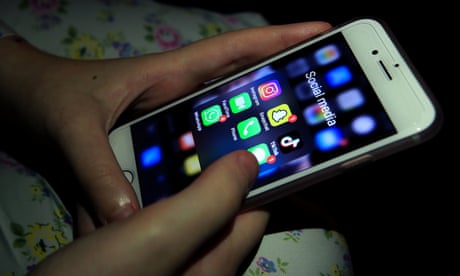
He said in many countries, the median price of a house is several times the average annual salary. In addition, poorly regulated social media and digital platforms, which drive political polarisation, are leaving young people feeling increasingly isolated, McGorry said.
“There are so many harmful things happening on the platforms which tech titans are responsible for, and they’re completely a law unto themselves,” he said.
“It’s not the young people that are the problem, or that we should be restricting. We should be making it [the digital environment] a safe place to be in.”
One 23-year-old who advises Orygen on its youth strategies, who only wanted to be identified as Li, said that she was first exposed to pornography online when she was just 12 and this had a lasting and devastating impact on her self-esteem and body image.
“There is so much adult content online and exposure to it is often completely unsolicited,” Li said.

“I felt that the internet was a place for me to escape to or, connect with other people from all over the world who had similar experiences to me. But instead I was exposed to really unregulated, really bad stuff, and my parents’ generation don’t really understand.”
The commission’s paper, coauthored by psychiatrists, psychologists, researchers and young people, describes how young people are the highest users of the internet, often “constantly” online, and this has the potential for harm and risks mental health.
The paper warns; “Mental ill health, which has been the leading health and social issue impacting the lives and futures of young people for decades, has entered a dangerous phase”.
“[It] is a major threat to the lives and futures of young people, and alarming evidence suggests that its prevalence and impact are steadily increasing in many high-resource settings.”
An accompanying analysis led by King’s College London acknowledges that much of the evidence underpinning the commission’s report comes from high-income countries, which is problematic because 90% of children and adolescents live in low-income and middle-income countries which “have the highest burden of mental ill health”.

In low-income and middle-income countries, the level of unmet need for mental health services can reach near 100%, World Health Organization (WHO) spokesperson Carla Drysdale said.
“All countries, no matter the resource constraints, can take steps to improve mental health prevention and care for young people,” she said. Building a non-specialist workforce that includes school counsellors, community-based workers and peers is crucial, she said.
“WHO is supporting countries’ efforts to build community-based mental health care for young people, redesigning services and care pathways in ways that makes them accessible.”
Suicide is the leading cause of death among those aged 15 to 44 in Australia, 15 to 19 in New Zealand, and people aged 15 to 39 in India.
A child and youth psychiatrist not involved with the commission’s report, Dr Paul Denborough, described the Lancet paper as “spot on, in that a society where there’s greater inequality and marginalisation is very destructive”.
“The policies of governments are really not favouring young people,” he said.
“Young people are aware of intergenerational unfairness in policies – they are saying; ‘You older people don’t give a shit about us’”.
Denborough is a clinical director of headspace in Australia, a free or low-cost service for young people aged 12 to 25.
Denborough said it was important to recognise the multiple stressors young people face and address the root causes of that distress, rather than automatically labelling young people with a mental illness.
“The inequality, the lack of affordable housing, the insecure employment and the policies that drive those are often the root cause,” he said.
“If society is not running that intergenerational fairness lens over what they’re doing and addressing the causes, then you’re just Band-Aiding the problem.”
In Australia, the crisis support service Lifeline is 13 11 14. In the UK and Ireland, Samaritans can be contacted on freephone 116 123, or email jo@samaritans.org or jo@samaritans.ie. In the US, you can call or text the National Suicide Prevention Lifeline on 988, chat on 988lifeline.org, or text HOME to 741741 to connect with a crisis counselor. Other international helplines can be found at befrienders.org

 canisgallicus