
Book
Kids’ anxiety is on the rise. This book aims to help.
My Magic Mind is designed to be read five minutes at a time, along with a short journal entry.
Harvard Public Health Magazine
Kids’ anxiety is on the rise. This book aims to help.
Share This
Filed Under
Written by
Nicole Rura
Clara Rura
Published
September 10, 2024
Read Time
4 min
During play dates and soccer practice, conversation among parents sometimes turns to our kids’ stress, anxiety, and resilience. To many of us, it feels like our children are still experiencing the mental health effects of the pandemic’s isolation and its deep undercurrent of fear and uncertainty.
Research supports our concerns. The most recent National Survey of Children’s Health found anxiety in children increased to 9.2 percent, a 29 percent jump compared to the previous survey.
My nine-year-old daughter, Clara, doesn’t seem to dwell on her worries much—yet—but I thought that learning to identify and handle anxiety would be valuable life skills, especially as she approaches middle school.
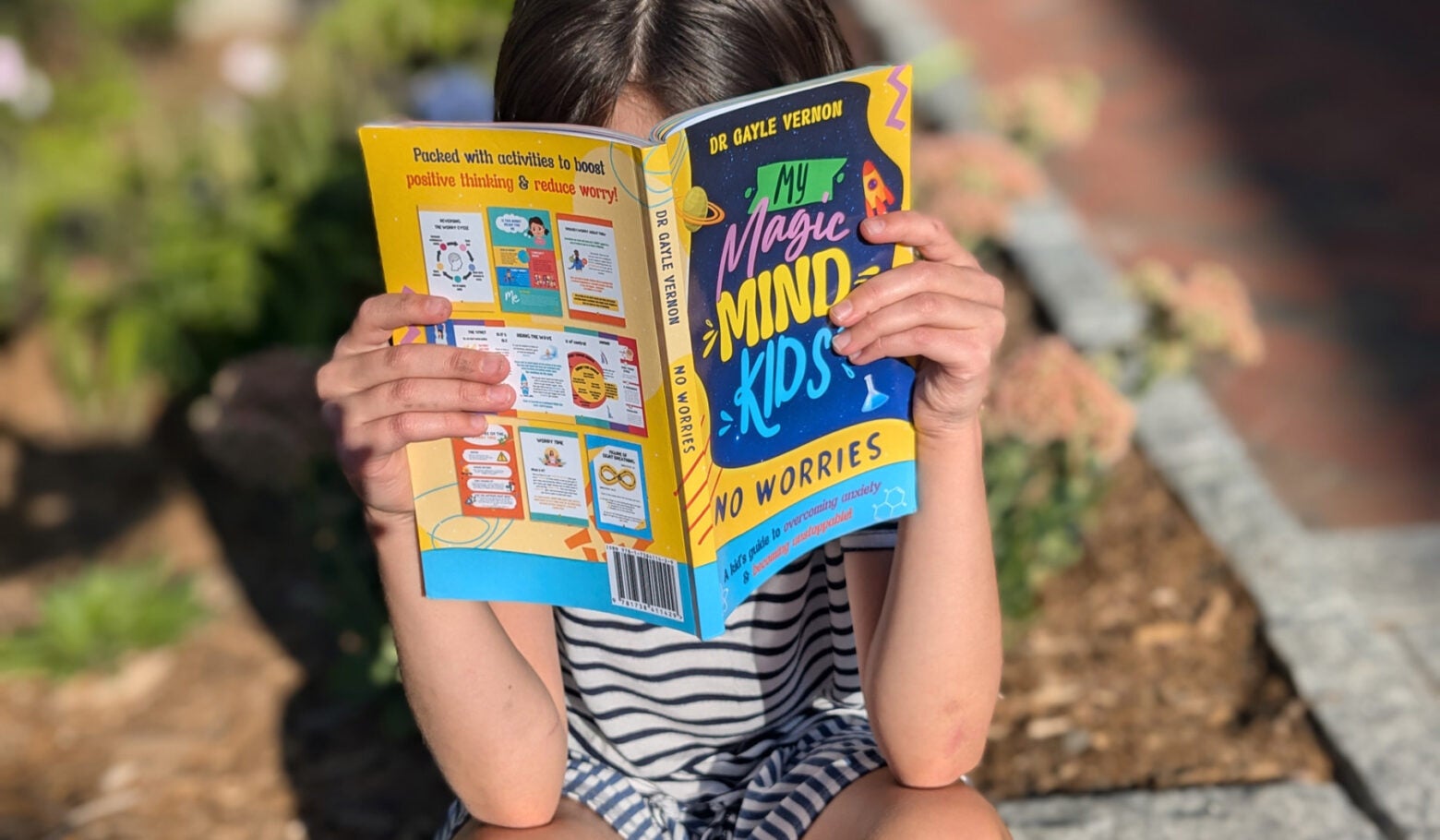
To help her, I found My Magic Mind Kids: No Worries, which came out in paperback in January, and the accompanying My Magic Mind Journal, both by Gayle Vernon. The book is designed to be read in five-minute pieces, along with a daily four- or five-question journal entry. After she’d been using them for several weeks, Clara shared her thoughts about the book and journal with me.
Nicole Rura: What did you like the most about the book and journal?
Clara Rura: One of the best things about the journal is the weekly review, [with prompts like] “The best part about my week was…” or “Something from this week that I can improve on is…” I wish the weekly reviews were more often, like twice a week. The journal also has weekly subjects that you learn about more in depth, which made me think more about how to change habits to reach goals.
Sign up for Harvard Public Health
Exploring what works, what doesn’t, and why.
Delivered to your inbox weekly.
- Email addressBy clicking “Subscribe,” you agree to receive email communications from Harvard Public Health.
- PhoneThis field is for validation purposes and should be left unchanged.
Nicole: Any other thoughts on the journal?
Clara: The introduction was very good. It was set up to kind of get you into the journal and practice using it. However, I didn’t like when it asked me to figure out how much time I spent on something like sleep or reading. I don’t keep track of those, so that was hard.
Nicole: What did you think about the book?
Clara: This is a very good book, especially for somebody that is having trouble with worry. It described what worry is and how to deal with worry. It also talked about how you can deal with something that is causing worry, like forgetting homework at home. Tell your teacher. Don’t just worry a lot and not tell anybody.
Sometimes I felt like the book was kind of getting nosy and too much into to my business. I didn’t like that.
Nicole: Do you feel like the book and journal helped you?
Clara: Not really, because I don’t worry that much. Like, I have small worries, not big, gigantic worries, so it didn’t feel like I have the same type of worry that they’re focused on.
The book did have some good ways to calm yourself down if you’re worried, like count to 10, box breathing, or figure eight breathing. I don’t really like breathing when I’m worried. I like to do something to occupy me, like sometimes drawing or reading will help me. Those were also some of the suggestions.
More from HPH
Book
How to calm The Anxious Generation
Feature
The mental health needs of Black and Hispanic girls often go unmet. This group wraps them in support
Ideas
As more youth struggle with behavior, clinicians are partnering with lawyers to help
Nicole: How did the book and journal change how you think about your emotions and yourself?
Clara: I liked the part about thinking about your emotions as your body’s alarm system. If you’re worried, something’s not right. The book says that you can think about a worry as smoke or fire. So I can figure out if it’s smoke (something that’s bad but not really that bad) or a fire (something that really is bad) that is triggering the alarm. Once you figure out what’s triggering the alarm, then the question is, what are you going to do about the fire, if it is a fire. If it’s just smoke, you can tell yourself that and try to let that worry go.
There’s also a part about stretch zones and how pushing yourself a little bit can make worries less of a problem. Like if you’re scared of spiders, you could stretch and look at a picture of a spider, so you’re still safe and can go back to your comfort zone. Holding a spider right away might be too far outside of your safe stretch zone.
Nicole: Who do you think this book would be good for?
Clara: The book says it’s designed for eight- to 12-year-olds. I think this book is really designed for like six to 10 years.
Photo: Clara Rura reads My Magic Mind Kids. Photo by Nicole Rura.
Contributors
NR
Nicole Rura
Nicole Rura is senior communications officer at Harvard University Public Affairs and Communications.
CR
Clara Rura
Clara Rura is a nine-year-old student in Cambridge, Massachusetts.

 canisgallicus