
08-22-2024IMPACT
This machine turns rubble from bombed Ukrainian buildings into Lego-like blocks that can make new homes
A new brick factory in a shipping container uses debris to make construction material.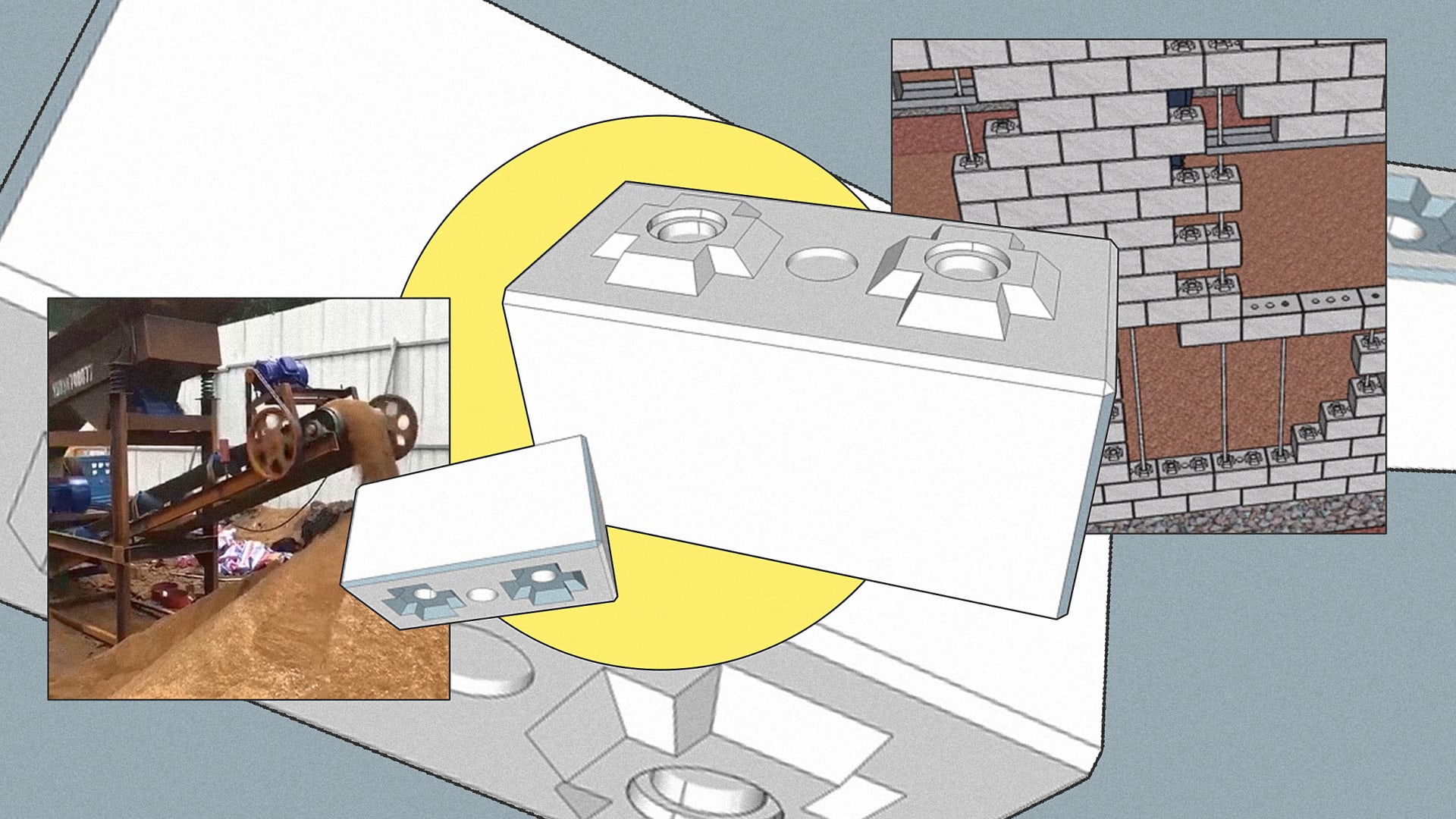
[Images: Crisis Construction]
In the 30 months since Russia invaded Ukraine, hundreds of thousands of buildings have been destroyed. A new machine will soon begin using some of the rubble to make Lego-like blocks for building new homes.
“The concept is to recycle and use what’s there,” says Nic Matich, one of the cofounders of Mobile Crisis Construction, the Australia-based nonprofit that designed the equipment. A mill grinds up old walls, glass, and debris into a fine material that’s mixed with a small amount of clay, cement, and water. Then the machine presses it all into a block. The blocks take a few days to cure, and then can be used to build walls.

The interlocking shape of the blocks means that they can be stacked together without traditional mortar. “Unskilled labor can put these walls together with very limited training,” Matich says. In earthquake-prone areas, rebar can be added through holes that are built into the blocks.
A single machine can make up to 8,000 bricks per day; the nonprofit estimates that it can produce enough blocks to construct 10 homes every three days. (That’s just the outside structure, not including what’s needed to finish the homes inside.)

Subscribe to the Compass Newsletter.Fast Company’s trending stories delivered to you daily
SIGN UP
Matich, who has a background in crisis response, and cofounder Blake Stacey, an engineer with expertise in bricks, started working on the project around five years ago after talking about a design for interlocking blocks over drinks at a pub. “I said, ‘What if we had this thing in a [shipping] container and we could move it around?’” Matich says. “We could then respond to crises and rebuild.”
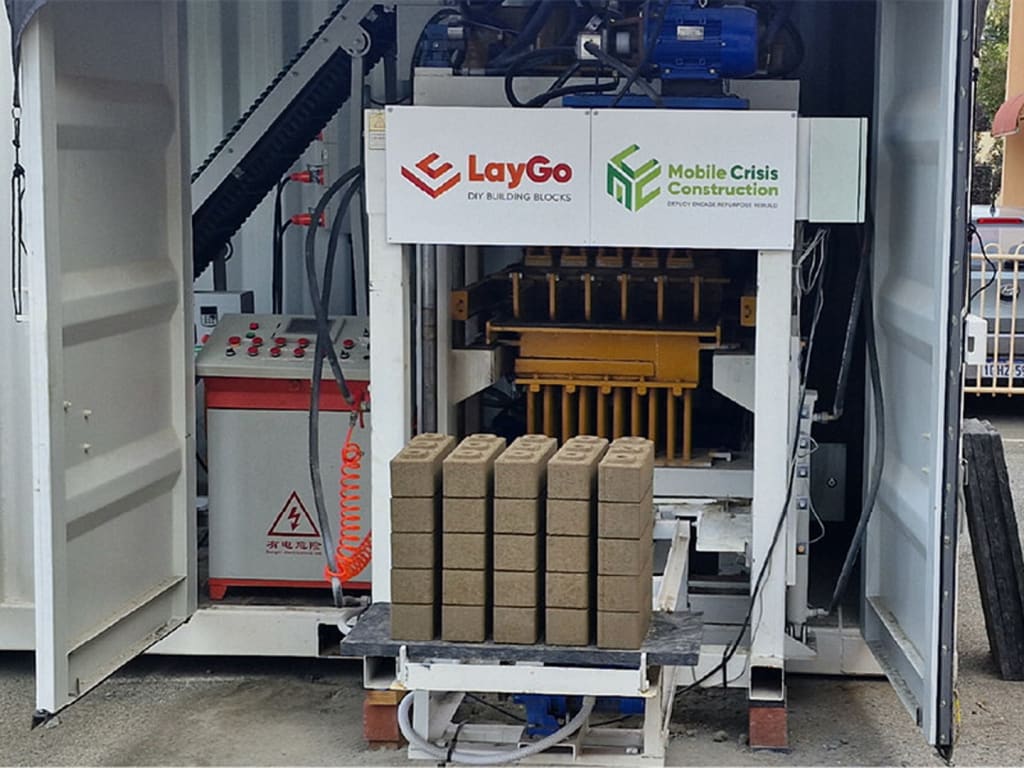
When they had the design ready, they started trying to raise funding to respond after disasters like earthquakes. But because the news cycle moves so quickly, Matich says, potential donors lost interest in each disaster before they could raise the $70,000 or $80,000 needed to build each machine. The ongoing war in Ukraine, however, got more support. The first shipping container, with the machine built inside, is now on its way to an area outside Kiev. (The mill, which is freestanding, ships in a smaller crate.) The machine needs little power, unlike a traditional brick factory with a high-temperature kiln, so it can run on a small generator even when the grid is down in the area.[Image: Crisis Construction]
The first project, a collaboration with a local foundation, will rebuild several townhouses. “It’s very simple construction, all in a row,” Matich says. “It’s sort of a test case.” The nonprofit has already started raising money to build the next machine; there’s “no upper limit on how much Ukraine needs,” he says.
Eventually, the nonprofit hopes to become part of the standard response after disasters. “The UN might send in food, water, and temporary shelters,” says Matich. “And then we could have our machines roll in as a second phase response, and get used to rebuild the area.”
Apply to the Most Innovative Companies Awards and be recognized as an organization driving the world forward through innovation. Early-rate deadline: Friday, August 30.

 canisgallicus