
Celebrity suicides produce an infection-like contagion effect
A team of infectious disease experts has created a model based on the death of Robin Williams that helps calculate the risk of suicidal behavior after a celebrity takes their own life
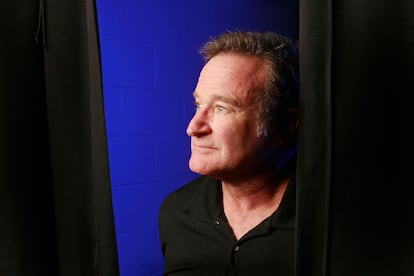
In the months following August 4, 1962, when Marilyn Monroe’s death, probably by suicide, became known, the number of people who attempted suicide in the United States rose by 12%. A similar phenomenon was observed shortly after the deaths of actor Robin Williams and chef Anthony Bourdain. Although the contagion effect is amplified when the protagonists are famous, it also happens with acquaintances, and some analyses attribute 5% of youth suicides to imitation.
Many suicides take place during a brief crisis and because the tools are at hand, not because of a sustained conviction. And this can be used to develop preventive measures. Over the past two decades, Hungary has halved its suicide rate by improving psychiatric care and increasing the number of hotlines for people in crisis. Denmark has also seen improvements with seemingly simple measures, such as reducing the number of paracetamol tablets that can be bought at one time.
In this effort to understand the nature of suicide and ways to prevent it, understanding the mechanisms of contagion helps reduce transmission, as is the case with infectious diseases. With that goal in mind, a group of researchers led by Jeffrey Shaman, a researcher at Columbia University who uses mathematical models to understand and prevent the transmission of diseases such as malaria or Covid, presented in the journal Science Advances a similar model to understand the contagion of suicidal thoughts and behaviors.
The results — which looked at the spread of suicidal behavior after the death of Robin Williams in 2014 and of Anthony Bourdain and the designer Kate Spade, which occurred three days apart in 2018 — show that there was a significant increase of suicides after both the 2014 and 2018 events. The rise was greater following the death of the actor, perhaps because he was better known, and more people could identify with him.
In the case of Williams, the researchers estimated that the odds of a person who had never had suicidal thoughts starting to have suicidal ideation in the days after the news broke increased 100-fold, and the risk of a person who already had suicidal thoughts acting on them tripled. After the deaths of Bourdain and Spade, the effect was roughly half that. These figures were calculated based on calls made to a suicide prevention hotline and official mortality statistics.
“In addition, people who already had suicidal thoughts became more contagious and were 10 times more likely to influence a person without such thoughts to start thinking about them,” Shaman explains, adding that “these changes were temporary, lasting only a few weeks.”
Juan Pablo Carrasco, a psychiatrist at the Provincial Hospital of Castellón in Spain, has studied how social media can help contain or exacerbate contagion. “Thirty percent of people who see suicidal content on the internet, on social media, do not look for it, they are shown it by the algorithm, and that is problematic, especially for a person at risk,” he explains. Just as in the case of an infectious outbreak, when masks can be used or citizens are asked to collaborate to reduce the transmission of a pathogen, social media should take action to prevent the spread of this type of content.
Shaman acknowledges that much more work is still needed to understand variations in the contagion effect of different types of suicide, and how it affects by gender or by country. But these kinds of findings support more targeted efforts, such as public announcements aimed at specific groups or increasing the number of hotline staff after a celebrity suicide.
In addition to these efforts — which could be directed with models that predict the risk of a specific event —, experts have also been testing methods to reduce the opposite effect. “It is not about ignoring the subject of suicide, but rather dealing with it in the right way,” says Carrasco. Some basic recommendations include not elaborating on the methods of suicide, not treating the cases as morbid events, and including in the news ways in which people with suicidal thoughts can seek help.
If you need help
In the U.S., you can call or text the National Suicide Prevention Lifeline on 988, chat on 988lifeline.org, or text HOME to 741741 to connect with a crisis counselor.
Sign up for our weekly newsletter to get more English-language news coverage from EL PAÍS USA Edition
More information

Bruce Hood, psychologist: ‘Happiness focused on oneself doesn’t go very far’

 canisgallicus