
Scientists unveil secrets of imagination, memory formation with Artificial Intelligence
WION Web Team
New DelhiUpdated: Jan 21, 2024, 06:24 PM IST
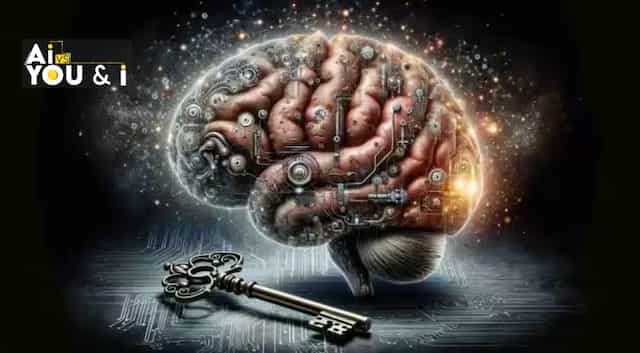
An illustration of human brain Photograph:(Twitter)
Story highlights
The study focused on networks representing the hippocampus and neocortex, crucial components of the brain that collaborate in memory, imagination, and planning.
Researchers at University College London’s Institute of Cognitive Neuroscience have shown how Artificial Intelligence can help explain the way memories enable humans to learn about the world, re-live old experiences, and construct new experiences for imagination and planning.
The study was published in Nature Human Behaviour journal.
https://imasdk.googleapis.com/js/core/bridge3.647.0_en.html#goog_2087293973
“Recent advances in the generative networks used in AI show how information can be extracted from experience so that we can both recollect a specific experience and also flexibly imagine what new experiences might be like,” the lead author Eleanor Spens, a doctoral student at University College London’s (UCL) Institute of Cognitive Neuroscience said in an official statement.
Also watch | Gravitas: Is AI going to replace your brain?
https://www.wionews.com/videos/gravitas-is-ai-going-to-replace-your-brain-551233/embed
“We think of remembering as imagining the past based on concepts, combining some stored details with our expectations about what might have happened,” Spens said.
What the study is about?
The study focussed on networks representing the hippocampus and neocortex, crucial components of the brain that collaborate in memory, imagination, and planning.
Spens highlighted the parallel between remembering and imagining the past based on concepts, a cognitive process that combines stored details in the brain with expectations about what event might have occurred.
Also read | Brainoware: This happened when scientists combined real human brain tissue with electronics
The AI model was exposed to 10,000 images of simple scenes, with the activity in the hippocampus region of the brain rapidly encoding each scene as it was experienced. This encoded information was then replayed to train the generative neural network in the neocortex.
The neocortical network learned to efficiently represent scenes conceptually.
This process mirrors exactly how humans pick up on patterns from past experiences to make predictions, a crucial skill for survival.
What does it mean?
The study sheds light on the role of the hippocampus in encoding the meaning of new scenes, allowing it to focus on unique features that the neocortex cannot reproduce. This dynamic interaction explains how the neocortex gradually acquires conceptual knowledge and collaborates with the hippocampus to reconstruct events in our minds, facilitating the ability to “re-experience” past events.
Furthermore, the research unveils insights into how the brain generates new events during imagination and planning for the future. It shows why existing memories often exhibit “gist-like” distortions, wherein unique features are generalised and remembered as more similar to features in previous events.
What is the bottom line?
This groundbreaking study not only deepens our understanding of the intricate interplay between memory and imagination but also highlights the potential of generative AI to unravel the mysteries of cognitive processes in the human brain.
(With inputs from agencies)

 canisgallicus