
‘I am starting to panic about my child’s future’: climate scientists wary of starting families
A fifth of female climate scientists who responded to Guardian survey said they had opted to have no or fewer children

Fri 10 May 2024 06.00 CEST
“I had the hormonal urges,” said Prof Camille Parmesan, a leading climate scientist based in France. “Oh my gosh, it was very strong. But it was: ‘Do I really want to bring a child into this world that we’re creating?’ Even 30 years ago, it was very clear the world was going to hell in a handbasket. I’m 62 now and I’m actually really glad I did not have children.”
Parmesan is not alone. An exclusive Guardian survey has found that almost a fifth of the female climate experts who responded have chosen to have no children, or fewer children, due to the environmental crises afflicting the world.
Such decisions were extremely difficult, they said. Dr Shobha Maharaj, an expert on the effects of the climate crisis from Trinidad and Tobago, has chosen to have only one child, a son who is now six years old. “Choosing to have a child was and continues to be a struggle,” she said.
Maharaj said fear of what her child’s future would hold, as well as adding another human to the planet, were part of the struggle: “When you grow up on a small island, it becomes part of you. Small islands are already being very adversely impacted, so there is this constant sense of impending loss and I just didn’t want to have to transfer that to my child.”
“However, my husband is the most family-oriented person I know,” Maharaj said. “So this was a compromise: one child, no more. Who knows, maybe my son will grow up to be someone who can help find a solution?”
The Guardian approached every contactable lead author or review editor of all reports from the Intergovernmental Panel on Climate Change since 2018. The IPCC’s reports are the gold standard of climate knowledge. Of the 843 contacted, 360 replied to the question on life decisions, a high response rate.
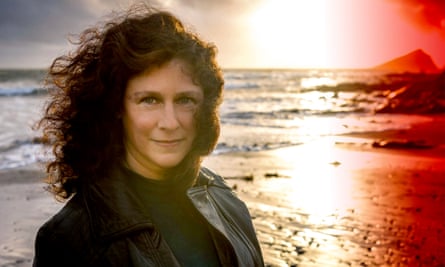
“When I was making my choice, it was very clear in the ecological community that human population growth was a problem” Camille Parmesan, who is based in France, said she was happy with the decision she made not to have children. Photograph: Lloyd Russell / University of Plymouth
Ninety-seven female scientists responded, with 17, including women from Brazil, Chile, Germany, India and Kenya, saying they had chosen to have fewer children. All but 1% of the scientists surveyed were over 40 years old and two-thirds were over 50, reflecting the senior positions they had reached in their professions. A quarter of the respondents were women, the same proportion as the overall authorship of the IPCC reports.
The findings were in response to a question about major personal decisions taken in response to the climate crisis by scientists who know the most about it, and who expect global temperatures to soar past international targets in coming years. 7% of the male scientists who responded said they had had either no children or fewer than they would otherwise have had.
Most of the female scientists interviewed had made their decisions about children in past decades, when they were younger and the grave danger of global heating was less apparent. They said they had not wanted to add to the global human population that is exacting a heavy environmental toll on the planet, and some also expressed fears about the climate chaos through which a child might now have to live.
The role of rising global population in the destruction of nature and the climate crisis has been a divisive topic for decades. The publication of The Population Bomb by Prof Paul Ehrlich in 1968, mentioned by several of the scientists in their survey responses, was a particular flashpoint. The debate prompted past allegations of racism, as nations with fast-rising populations are largely those in Africa and Asia. Compulsory population control is not part of today’s population-environment debate, with better educational opportunities for girls and access to contraception for women who want it seen as effective and humane policies.
Parmesan, at the CNRS ecology centre in France, said: “When I was making my choice, it was very clear in the ecological community that human population growth was a problem: preserving biodiversity was absolutely dependent on stabilising population.”
Prof Regina Rodrigues, an oceanographer at the Federal University of Santa Catarina in Brazil, who also chose not to have children, was influenced by the environmental destruction she saw in the fast-expanding coastal town near São Paulo where she grew up.
“The fact of the limitation of resources was really clear to me from a young age,” she said. “Then I learned about climate change and it was even more clear to me. I’m totally satisfied in teaching and passing what I know to people – it doesn’t need to be my blood. [My husband and I] don’t regret a moment. We both work on climate and we are fighting.”

 canisgallicus