
Featured Post
A tragic ripple: The post-October 7 mental health crisis
First responders and survivors suffer from the failure to integrate mental health care into emergency response and recovery plans
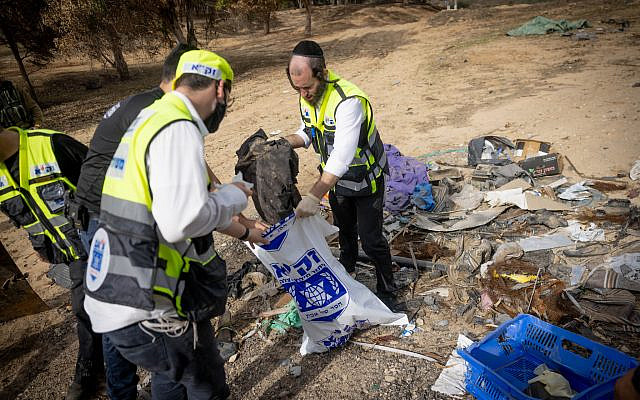
Zaka personnel collect clothes that belong to the victims of the October 7 massacre, near the Israeli-Gaza border, southern Israel, November 19, 2023. (Chaim Goldberg/Flash90)
Apr 28, 2024, 4:45 PM
Please note that the posts on The Blogs are contributed by third parties. The opinions, facts and any media content in them are presented solely by the authors, and neither The Times of Israel nor its partners assume any responsibility for them. Please contact us in case of abuse. In case of abuse,
Report this post.
In the wake of a catastrophic event, the focus often swiftly shifts to physical injuries and the immediate restoration of infrastructure. Yet, the profound emotional and psychological scars borne by those on the front lines and the survivors can linger long after, often overlooked and inadequately addressed. The recent tragic news from Israel serves as a painful reminder of this neglected aspect. An operator from the Magen David Adom’s (MDA) national call center, overwhelmed by the distressing calls during the horrific events of October 7 tragically succumbed to death by suicide. This incident, alongside recent reports of over 50 deaths by suicide among the survivors of the Nova festival, underscores a deep-seated mental health crisis—a crisis exacerbated by systemic failures and governmental shortfalls in mental health support.
The Overlooked Burden on First Responders
First responders, including emergency call center operators like the MDA staff, are the unsung heroes of disaster response. They manage the influx of distress calls, make critical decisions under pressure, and absorb the emotional weight of the community’s panic and fear. However, the psychological toll on these individuals is profound, enduring, and often invisible. The death of the MDA operator is a stark indicator that the support systems currently in place are insufficient and that the mental health of first responders is severely neglected. It’s a failure of the system that calls for immediate rectification.
The Silent Suffering of Survivors
Similarly, the survivors of traumatic events such as October 7th, which in some affects each and every citizen in Israel, face enormous psychological hurdles. Post-traumatic stress disorder (PTSD), other traumatic disorders, depression, and anxiety are common, yet support and treatment are frequently proving to be inaccessible or inadequate. The startling number of suicides among these survivors points to a dire need for a more robust mental health infrastructure, one that provides immediate and long-term support tailored to the unique needs of trauma survivors.
A Critique of Government Action
The response of governmental agencies to these mental health challenges has been woefully inadequate. There is a persistent underinvestment in mental health services, a lack of proactive mental health policies for trauma exposure, and an overall bureaucratic sluggishness in addressing the urgent needs of affected communities. Governmental bodies often resort to manifestly ineffective shortcuts while patting themselves on the back: temporary solutions, insufficient funding, and reactive strategies that fail to address the root of the crisis.
It’s time to end these shortcuts and establish comprehensive, preventative mental health care strategies. The current approach fails to protect vulnerable populations and places an unsustainable burden on healthcare systems, emergency response units, and the broader social fabric.
A Continual Call for Comprehensive Reform
This ongoing crisis demands a strategic overhaul of how mental health care is integrated into emergency response and recovery plans. The government must take responsibility for the following:
1. Implementing Robust Support Systems for First Responders: All emergency personnel must receive mandatory, regular psychological support and counseling. This should include routine debriefings after distressing calls and incidents, along with access to mental health days and support resources.
2. Expanding Access to Mental Health Services: Increase funding and resources for mental health care, ensuring that trauma-informed care is accessible in all communities, particularly those most susceptible to disaster and crisis.
3. Building Awareness and Removing Stigma: Launch comprehensive public education campaigns to elevate awareness of mental health issues, the importance of early intervention, and the critical nature of seeking help. These campaigns should also work to dismantle the stigma surrounding mental health, which often prevents individuals from accessing necessary care.
4. Fostering Research and Policy Innovation: Invest in research to better understand the long-term effects of trauma exposure (NOT JUST PTSD) and use this data to inform policy changes and the development of targeted mental health interventions.
Conclusion
The tragedies of the MDA operator and the Nova festival survivors are grim reminders of the cost of inaction. These are not isolated incidents but indicators of a systemic issue that demands bold, decisive, and immediate government action. As we mourn the loss of lives, we must channel our collective grief into advocacy for a system that not only responds to mental health needs after tragedies but actively works to prevent such crises from leaving an indelible mark on our society. The time for half-measures and shortcuts is over; a comprehensive, preventive, and adequately funded approach must be our path forward.
About the Author
Stuart is a co-founder of the Nafshenu Alenu mental health educational initiative founded in 2022. He currently serves on the Board of Visitors of McLean Hospital, affiliated with Harvard University Medical School. He serves as Chairman of the Board of OGEN – Advancement of Mental Health Awareness in Israel; chairman of Mental Health First Aid Israel and a partner in “Deconstructing Stigma” in Israel. He is on the Board of Directors of the Religious Conference Management Association. He has counseled over 7,000 individuals and families in crisis

 canisgallicus