
- SHOP
ABOUT EXPLORE
What is Outsider Art?
The controversy surrounding the exact definition of Outsider Art and allied fields has been going on ever since awareness of the phenomenon began so here we try to clarify the different aspects.
The development of the awareness of forms of creative expression that exist outside accepted cultural norms, or the realm of “fine art”, began with the researches of psychiatrists early in the century.
The work of Dr Morganthaler documented his patient Adolf Wolfli, a genius who produced countless thousands of works from a small cell in his Swiss asylum. Dr Hans Prinzhorn collected thousands of works by psychiatric patients and his book “Bildernerei der Geisteskranken” (Artistry of the Mentally Ill), published in 1922 became an influential work amongst Surrealist and other artists of the time.
One artist who was particularly affected by the works Prinzhorn presented was Jean Dubuffet. Together with others, including Andre Breton, he formed the Compagnie de l’Art Brut in 1948 and strove to seek out and collect works of extreme individuality and inventiveness by creators who were not only untrained artists but often had little concept of an art gallery or even any other forms of art other than their own.
Dubuffet’s concept of Art Brut was of works that were in their “raw” state, uncooked by cultural and artistic influences. He built up a vast collection of thousands of works, works which bore no relation to developments in contemporary art and yet were the innovative and powerful expressions of a wide range individuals from a variety of backgrounds.
ART BRUT

Art Brut was Jean Dubuffet’s original term for the works that he collected and revered; later adopted by the Collection de l’Art Brut at Lausanne. Art Brut means “raw art”. Raw because it is “uncooked” or “unadulterated” by culture. Raw because it is creation in its most direct and uninhibited form. Not only were the works unique and original but their creators were seen to exist outside established culture and society. The purest of Art Brut creators would not consider themselves artists, nor would they even feel that they were producing art at all. Art Brut is visual creation at its purest – a spontaneous psychic flow from brain to surface. (examples: Aloïse Corbaz, Carlo Zinelli, Madge Gill, Johann Hauser, Adolf Wölfli)
OUTSIDER ART

The term “Outsider Art” was introduced as the title of Roger Cardinal’s book in 1972 and was originally intended to act as an exact English equivalent to Dubuffet’s term, although from the outset it encompassed not only Art Brut but also works in the Neuve Invention category Over the years it has been used increasingly loosely and can often now refer to any artist who is untrained or with disabilities or suffering social exclusion, whatever the nature of their work. (examples: Adolf Wölfli, Johann Hauser, Chomo, Bill Traylor, Frederich Schroder-Sonnenstern, Ferdinand Cheval, Simon Rodia)
NEUVE INVENTION

Dubuffet realised that there existed many creators whose work was of comparable power and inventiveness to Art Brut, but their greater contact with normal society and the awareness they had of their art works precluded their inclusion within his strict Art Brut category. These creators were often humble workers who created in their spare time, or eccentric and untrained artists trying to make a living from their work – some of whom had dealings with commercial galleries. As an acknowledgement to them he formed his “Annex Collection”; in 1982 this became the Neuve Invention section of the Collection de l’Art Brut. As definitions become more merged this term is losing its significance. (examples: Gaston Chaissac, Mario Chichorro, Rosemarie Koczy, Gerard Lattier, Albert Louden, Frederich Schroder-Sonnenstern)
MARGINAL ART, ART SINGULIER

Marginal art (art singulier) is a term more used in Europe relating to the works of artists, usually, but not exclusively, self-taught, that are close to Art Brut and Outsider artists, both in appearance and directness of expression. These are the artists “on the margins”, that grey area of definition that lies between Outsider Art and normal mainstream art, very similar to Dubuffet’s Neuve Invention category. Art Singulier encompasses French marginal artists. (examples: Chomo, Danielle Jacqui, Raymond Reynaud, Ody Saban)
FOLK ART / CONTEMPORARY FOLK ART

Folk art is a simple and direct term that has become much used in North America. Originally pertaining to the indigenous crafts and decorative skills of peasant communities in Europe, the term was later applied to the simply-made practical objects of colonial days – a combination of charm and practical craftsmanship. In contemporary terms, Folk Art can cover anything from chain-saw animals to hub-cap buildings as well as the work of artists that would easily fall into the realm of Outsider Art. (examples: Sam Doyle, William Hawkins, William Edmondson, Mose Tolliver)
SELF-TAUGHT ART

Self-taught art is a popular term in the United States which avoids the stigmas that some feel are attached to the Outsider Art definition. Many American artists are already pushed to the outer limits of society as a result of prejudice and feel this term offers more dignity. (examples: Mr Imagination, Thornton Dial)
VISIONARY ART, INTUITIVE ART

Visionary art and intuitive art are fairly general terms; used together they can include much urban folk art of the third world, as well as works based on religious experiences and visions. They are avoid the specifics of Outsider Art or Folk Art and can also be used in conjunction with “Self-Taught”. (examples: Norbert Kox, Joe Coleman, Myrtice West, William Thomas Thompson, Donald Pass).
NAïVE ART

Naïve art refers to untrained artists who depict largely realistic scenes, often in skilled detail, with people, animals, and other aspects of the observed world, sometimes combined with fantasy images. They often aspire to normal artistic status and may often be seen as quite sophisticated amateurs verging on professionalism. (examples: Grandma Moses, John Kane, Ivan Generalic, Douanier Rousseau).
VISIONARY ENVIRONMENTS

Visionary environments are spaces, buildings and sculpture parks built by intuitive artists almost defy definition. They have become known by various terms, Visionary Environments and Contemporary Folk Art Environments being perhaps the most appropriate in current use. Although Outsider Art has been used to describe the environments, some feel the label to be insulting to these particular creators, many of whom are integrated members of their local communities. Another popular term, especially in the US, is Grassroots Art, which can also cover the more humble expressions and constructions of ordinary folk in both town and country. (examples: Simon Rodia’s Watts Towers, SP Dinsmoor’s Garden of Eden, Ferdinand Cheval’s Palais Ideal, Nek Chand’s Rock Garden)
Take a look at Raw Vision’s magazine subscriptions
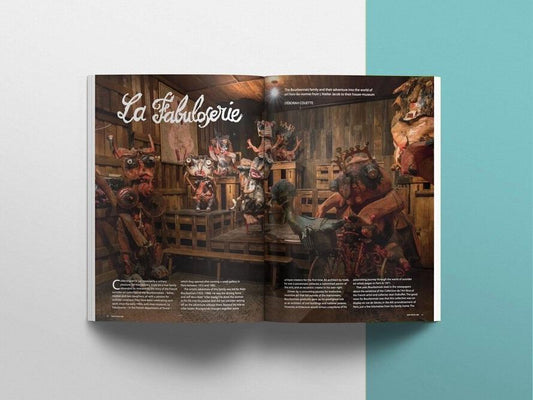 Print subscription – start with #117 Regular price From €55,00
 Gift subscription – start with #117 Regular price From €55,00
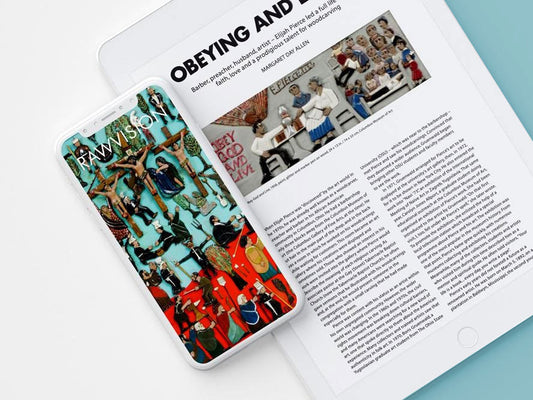 Digital subscription – start with #117 Regular price From €27,00
 Institutional subscription – start with #117 Regular price From €66,00

MORE INFO
POLICIES
Get our weekly newsletter, plus a 10% discount code:
Email Twitter Facebook Pinterest Instagram TikTok
© 2024, RAW VISION
Get 10% off when you sign up to our weekly newsletter

 canisgallicus