


How Words Struggle For Existence in Our Brains
Why are some words forgotten over time? Researchers investigate how words secure their place in the vocabulary of the future.
By Cody Cottier
Mar 15, 2024 1:00 PM
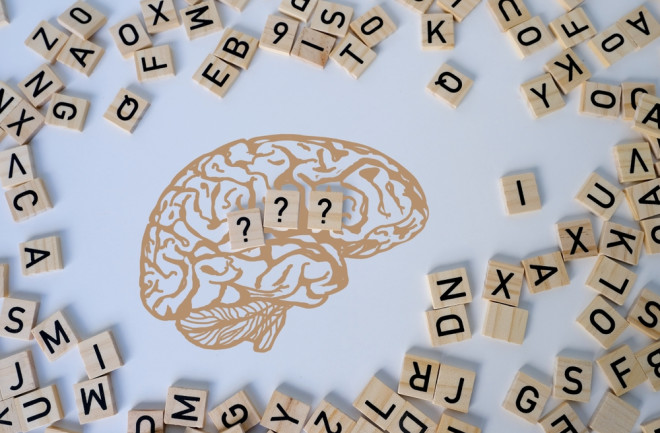
(Credit: Kittyfly/Shutterstock)
Newsletter
Sign up for our email newsletter for the latest science news
Words, like biological species, are engaged in what Charles Darwin called a “struggle for existence.” Some have what it takes, earning the right to roll off the next generation of tongues, while others get consigned to the pages of Merriam-Webster — or become forgotten entirely.
What sets the survivors apart? A recent study in the journal PNAS, by a team of international researchers, found that many successful English words have three crucial traits: they’re acquired early in life, they refer to something concrete, and they’re emotionally arousing. (They offer “sex” and “fight” as two notable examples.)
Playing the “Telephone” Game

(Credit: ESB Professional/Shutterstock)
To figure that out, they asked some 12,000 people to retell short stories. That is, they essentially ran a giant game of “telephone,” where one person whispers something to the person beside them, they repeat it to the next, and so on. As every 8-year-old knows, it’s an object lesson in the challenge of preserving a message across multiple retellings. With enough intervening speakers, “The dog chews shoes” easily transforms into “Which blog do you use?”
Yet certain patterns emerge from the inconsistency, revealing which words are likely to make it through the gauntlet. “The beauty of this approach,” says Fritz Breithaupt, a cognitive scientist at Indiana University Bloomington and a lead author of the study, “is that it shows a transition of the original story to something that is more optimally suited to our own cognitive apparatus.”
Read More: How Learning a Language Changes Your Brain
To make that more concrete, the point is that we shape language (often without realizing it) to fit our mental abilities. We pick and choose from the countless words vying for space in our brains. If one is too hard to understand and recall, or if it just doesn’t grab our attention, then we’re likely to discard it, sometimes in favor of an alternative. You don’t hear “pulchritudinous” much these days, because “beautiful” does a better job.
Baby Talk

(Credit: LeManna/Shutterstock)
Unsurprisingly, the words we learn first are some of the best adapted to the environment of our minds. As the speakers retold their stories, they quickly reverted to what they’d learned at a young age. (Of course, we don’t all learn the same words at the exact same moment in life, but there are well-established averages).
This suggests that no matter how large our lexicon grows, the sophisticated, technical language of adulthood can’t compete with basic vocabulary. “Baby language is not something we just shed and forget,” Breithaupt says. “It’s the core we go back to.”
But if that were the only force at work, we’d all be babbling like infants in the most rudimentary terms, never getting far beyond “mama” and “cookie.” There are countervailing (bet that word wouldn’t last two retellings) pressures, social and cultural processes that nudge language in different directions.
Read More: The Biology of Baby Talk
Technological advances, for example, introduce all sorts of new words (or neologisms), like “television” and “Bluetooth.” They can also originate in the never-ending need to express new ideas, as well as reframe old ones that have “lost their ability to engage the listener,” as the researchers put it. And existing but difficult words may take refuge in subcultures that keep them alive for idiosyncratic purposes, like “hypothesis” in scientific communities and “acquittal” in legal circles.
Words We Can Picture
Another common characteristic of words learned late in life is abstractness. “Hypothesis” may have called some image to mind, perhaps glass beakers and white lab coats, but it probably didn’t summon anything as distinct as the word “dog.” Research has shown that when language evokes something accessible to our senses, we find it more interesting and understandable.
Breithaupt is quick to note that we need abstractions. “Truth,” “love” and “kindness” don’t refer to physical entities, but that doesn’t diminish their importance. In fact, every word is to some degree abstracted from reality. “But ultimately,” he says, “the concrete words, the things we can picture, they have an advantage.”
Emotion Rules, Good or Bad
The words that stand the test of time also tend to bring out strong emotions. Interestingly, it doesn’t matter whether those feelings are positive or negative — “sex” and “terrorist” are both provocative in their own way. They jump out at us, almost as if seizing cognitive territory by force.
This fits with psychological studies showing that emotional arousal enhances memory. The idea is that because we can’t possibly remember everything, we preferentially pay attention to and remember whatever is most significant. And what’s arousing tends to be significant, regardless of its positive or negative associations (snake in the grass, mate in the bed).
Words for a Better World

(Credit: PeopleImages.com – Yuri A/Shutterstock)
To see if these factors scale up, influencing language change over the course of not just a few retellings but entire human generations, Fritz and his colleagues also analyzed a vast set of text from the past 200 years. Incredibly, the many differences between spoken and written language notwithstanding, they found the same three trends toward words that are acquired early, are concrete, and that arouse feeling.
Read More: Words Seem to Lose Their Meaning When We Repeat Them Over and Over. Why?
There was one unexpected discrepancy, though: Both positively and negatively arousing words had a leg up on neutral ones in the “telephone” experiment, but over long spans of time there seems to be a stronger bias toward the positive. As one potential explanation, Breithaupt points to the work of cognitive psychologist and public intellectual Steven Pinker (who coincidentally edited the paper) on the rise of global wellbeing over the past century.
In spite of widespread pessimism about the future of humanity and its home planet, Pinker has argued that the world is in fact a happier, safer, more peaceful place than it’s ever been. “And if that is true,” Breithaupt says, “you would expect language to reflect that somewhat. If you have a lot of suffering and pain and so on, you need the vocabulary that expresses that.”
Agents of Creativity

(Credit: Kittyfly/Shutterstock)
If this all makes us sound a bit like mindless vehicles of linguistic evolution, speaking in words we’re cognitively primed to select, Breithaupt has a more optimistic take. He describes his participants’ retellings as powerfully transformative acts: “We actually are agents of change, agents of creativity. Every single one of us.”
In another recent study, published in Scientific Reports in January, he and several colleagues at Indiana University Bloomington found that when you ask the AI system ChatGPT to repeatedly retell a story, it introduces almost no novelty. Humans, by contrast, replace as much as 60 percent of the words and concepts with each iteration.
So, amid our collective anxiety over the mushrooming capabilities of artificial intelligence, Breithaupt believes we can take solace in the quirks of human cognition and the innovations they enable. “I think we don’t have to be completely afraid of ChatGPT,” he says, “because it will not take that away from us, at least not in an easy, direct way.”

 canisgallicus