
The Guardian – Back to homeThe Guardian
Support the Guardian
Fund independent journalism with €10 per month
Show More
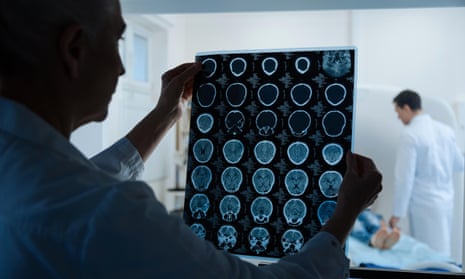
World-first blood test for brain cancer may increase survival rates, say experts
Inexpensive test can help diagnose even ‘inaccessible’ tumours earlier, speeding up treatment and improving outcomes
Andrew Gregory Health editor
Fri 26 Jan 2024 01.01 CET
Surgeons and scientists have developed a world-first blood test for brain cancer that experts say could revolutionise diagnosis, speed up treatment and boost survival rates.
For years, brain tumours have remained notoriously difficult to diagnose. They affect hundreds of thousands of people worldwide each year, and kill more children and adults under the age of 40 in the UK than any other cancer.
Now a research team has designed a simple blood test that could help diagnose patients with even the deadliest forms of brain cancer much more quickly, potentially sparing them from invasive and high-risk surgical biopsies. The breakthrough was reported in the International Journal of Cancer.
Experts said the inexpensive liquid biopsy could also lead to earlier diagnosis, which in turn would speed up treatment and potentially increase survival rates. The test would be particularly beneficial for patients with “inaccessible” brain tumours, who could benefit from starting treatment as soon as possible, they added.
Researchers at the Brain Tumour Research Centre of Excellence, run by Imperial College London and Imperial College healthcare NHS trust, found the test could accurately diagnose a range of brain tumours, including glioblastoma (GBM), the most commonly diagnosed type of high-grade brain tumour in adults, astrocytomas and oligodendrogliomas. The test had “high analytical sensitivity, specificity and precision”, the team reported.
“This groundbreaking research could lead to earlier diagnosis and improved outcomes for brain tumour patients,” said Dan Knowles, the chief executive of the charity Brain Tumour Research.
Scientists are already planning further studies to validate the results, and if successful, patients could benefit from the new test in as little as two years.
The TriNetra-Glio blood test, developed with funding from Datar Cancer Genetics, works by isolating glial cells that have broken free from the tumour and are found circulating in the blood. The isolated cells are then stained and can be identified under a microscope.
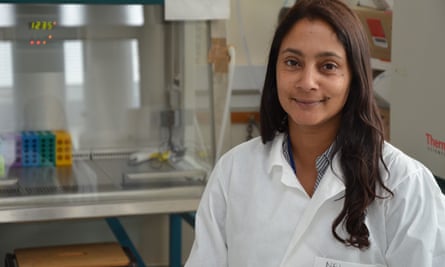
Dr Nelofer Syed, who leads the Brain Tumour Research Centre of Excellence, said: “A non-invasive, inexpensive method for the early detection of brain tumours is critical for improvements in patient care. There is still some way to go, but this solution could help people where a brain biopsy or surgical resection of the tumour is not possible due to the location of the tumour or other constraints.
“Through this technology, a diagnosis of inaccessible tumours can become possible through a risk-free and patient-friendly blood test. We believe this would be a world first as there are currently no non-invasive or non-radiological tests for these types of tumours.”

Kevin O’Neill, consultant neurosurgeon at Imperial College healthcare NHS trust and honorary clinical senior lecturer at Imperial College London, who leads the Brain Tumour Research Centre of Excellence with Syed, said: “This test is not just an indicator of disease, it is a truly diagnostic liquid biopsy.
“It detects intact circulating tumour cells from the blood, which can be analysed to the same cellular detail as an actual tissue sample. It’s a real breakthrough for treatment of brain cancers that rarely spread around the body.

 canisgallicus