
Mood-Lifting Game Aims To Lift Players Out Of Depression & Anxiety
By Ariel Grossman, NoCamels December 25, 2023 5 minutes
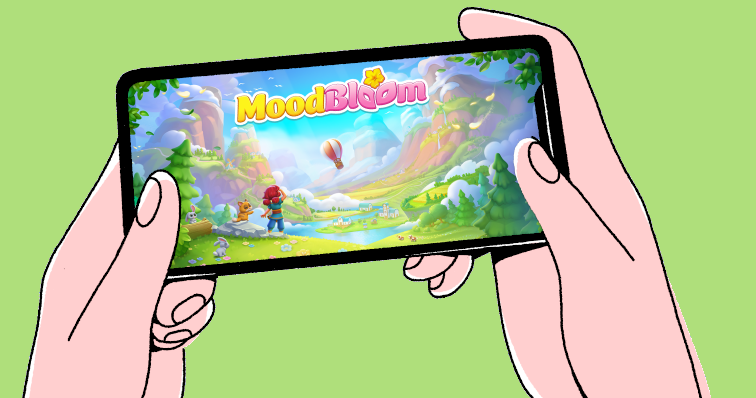
Hedonia’s Mood Bloom game has been proven to alleviate symptoms of anxiety and depression (Courtesy)
A new mobile game is being played by thousands of people – not to conveniently pass the time or to provide a quick source of entertainment, but to ease their symptoms of anxiety and depression.
Israeli startup Hedonia says that its Mood Bloom community-building game has been proven to reduce symptoms such as constant dwelling and negative feelings by up to 45 percent after just six to eight weeks of playing.

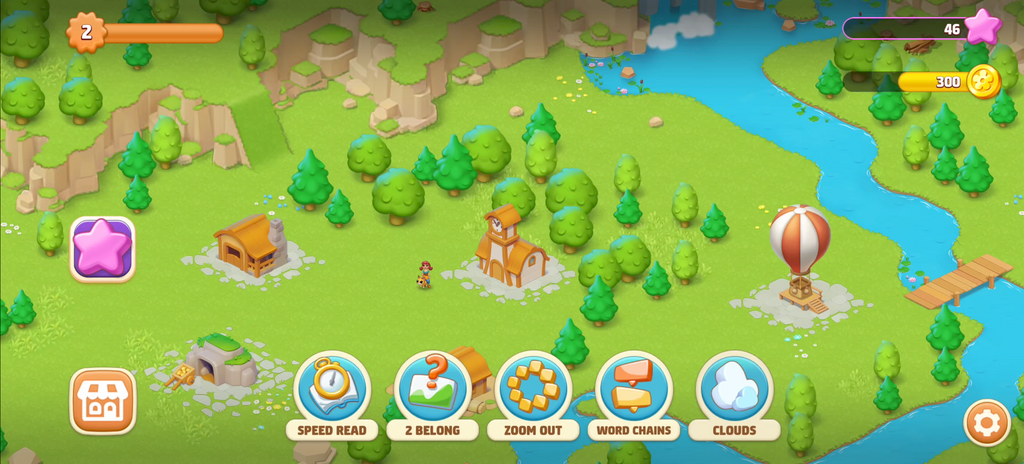
The application is much like any other city-building game that can be downloaded from an app store, requiring the user to play mini games in order to earn virtual currency that can then be used to build homes, farms and other kinds of infrastructure.
What sets Mood Bloom apart is its mini games, into which is integrated a clinically validated therapy known as Facilitating Thought Progression (FTP). This uses simple techniques such as word association and speed reading to break repetitive and narrow patterns of thinking in order to improve mood.
Ohad Barzilay, chief product officer at Hedonia, says that other apps aimed at improving symptoms of mental health disorders generally employ Cognitive Behavioral Therapy (CBT), a psychological treatment that changes thinking patterns by assessing the way they affect feelings and actions.
He explains however that these forms of games have a low retention rate, and that users do not stick around long enough for them to actually have an effect.
“What we’re trying to do is use games that instead have strong retention, as people play them over and over again,” Barzilay tells NoCamels.
“We take techniques from mobile games and employ them in a way that helps people stick with the program long enough for it to have an effect on them.”
According to the American Psychiatric Association, people with depression and anxiety have a tendency to ruminate and dwell on the same negative thoughts and feelings, making it difficult for them to move beyond and focus on problem solving.

Mood Bloom has five mini games, each focused on a different aspect of FTP.
One of the games, called Word Chains, asks the player to build a chain of five words from a bank at the bottom of the screen. Each subsequent word is more tangentially related to the first one in the chain – requiring the player to focus less on circular thoughts.
One chain, for example, goes from “shorts” to “clothing” to “jewelry” to “gold” and finally to “medal.” The Word Chains game helps the player break out of circular thinking.
Another game, Zoom Out, quickly flashes a letter on the screen that is made up of smaller letters. To proceed to the next level, the player must quickly choose the correct button to indicate the letter they saw.
These games, says Barzilay, train the brain to think more broadly and break out of ruminative thinking cycles.
It is only by playing the mini games that the user can earn virtual currency needed to progress and continue building their community.
“The mini games are woven in, and you need to play them in order to progress,” he says. “That’s what keeps people coming back.”
Sign up for our free weekly newsletter
Artificial intelligence built into the games sets an initial speed for each one. As the user plays, it analyzes the speed at which they answer as well as the number of correct answers, and adjusts the following levels accordingly.The Zoom Out game, like Mood Bloom’s other games, train the brain to think more broadly.
FTP was developed by neuroscientist and Hedonia co-founder Prof. Moshe Bar and is based on more than 20 years of research conducted in the Cognitive Neuroscience Lab at Harvard Medical School.
“[Bar] found that the brain can be trained to find different ways to cope with anxiety and depression, and that you can actually train your brain to think differently,” explains Barzilay.
“We’re trying to get you to be better mentally than you were before you started playing the game. We’re trying to change the way your brain actually works,” he says.
In fact, a recent clinical trial conducted at the Massachusetts General Hospital found that participants with mild to moderate depression who played Mood Bloom for four days a week over the course of eight weeks (and continued their conventional treatment of medication, therapy or both) saw their depression decrease by 43 percent.

The control group, on the other hand, experienced just an 18 percent decrease in their depression.
“The change we saw in the trial participants was remarkable,” said Dr. Bar of the results.
“Many participants moved from moderate to mild depression. That can be the difference between being able to get out of bed in the morning and not,” he said.
Hedonia was founded in 2021 by Bar, Waze co-founder Samuel Keret and VC investor Adi Pundak-Mintz, to provide an inexpensive method of easing symptoms of anxiety and depression that complements existing treatments.
The startup’s team includes psychologists and neuroscientists who develop the methods of treatment, as well as people from the gaming industry who create the mini games.

Barzilay says that this was initially a challenging combination, because the clinical and game development teams were used to progressing with their work at different paces.
He explains that the people from the gaming side – himself included – were used to moving fast, seeing the impact, and then adjusting very quickly.
On the clinical side, however, everything must be very calculated, as it involves real people. The overall game, he says, brings both sides together.
“[Mood Bloom] requires my team to be more thoughtful of the choices we make and to consult more and to understand the psychological effects of things, for example, that we do,” says Barzilay.
“We can’t solve the problem, but we can alleviate some of the symptoms so you can cope with it better.”
My mission to change the narrative of mental health (Glenn Close | TEDWomen 2023)

 canisgallicus